Why Buying Untreated Gemstones Online Actually Matters More Than Most People Think
Vikas July 12, 2026 in
Astrology Why Buying Untreated Gemstones Online Actually Matters More Than Most People Think
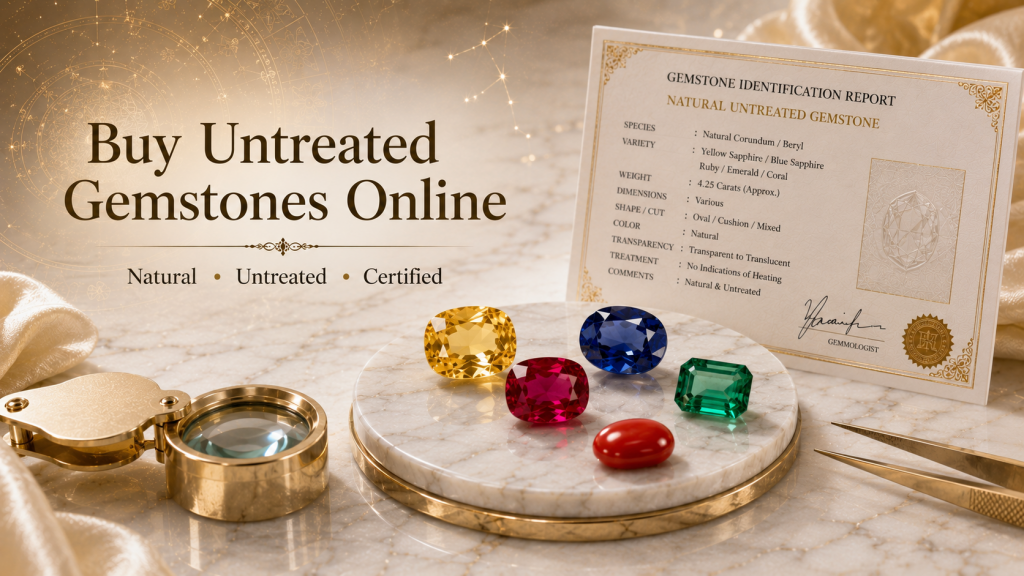
Gemstones have been used in jewellery and astrology for centuries, and the distinction between treated and untreated material has existed just as long. What’s changed is how easy it’s become to buy gemstones online without ever seeing the stone in person — which makes understanding this distinction more practically important than it was when physical inspection was part of every purchase.
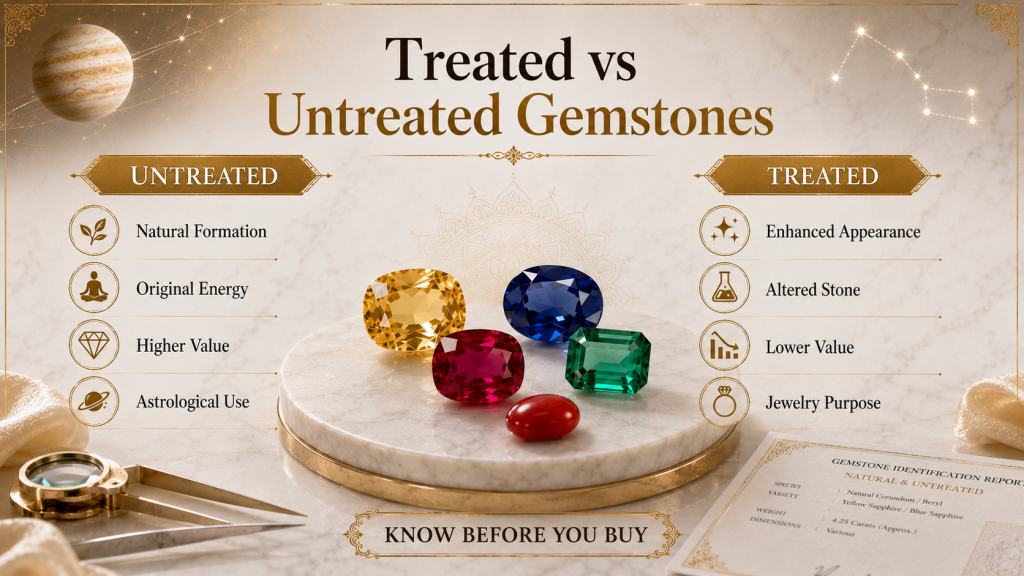
The short version: treated gemstones have been heated, dyed, coated, or otherwise altered after formation. Untreated gemstones have not. For jewellery purposes, treatment can be entirely reasonable. For astrological use, treatment is widely considered to compromise the very quality that makes the stone worth wearing.
What treatment actually does to a gemstone
Natural gemstones form over millions of years through geological processes that produce their colour, clarity, and internal structure simultaneously. Treatment intervenes after that formation to improve visual appearance — heat removes silk inclusions from sapphire, making it look cleaner; beryllium diffusion forces artificial colour into pale material; fracture filling makes cracked stones appear more transparent; dyeing makes pale coral or jade appear vivid.
These processes change how the stone looks. What the Vedic astrological tradition consistently holds is that they also change — or eliminate — the natural energetic signature that makes the stone function as a planetary remedy. The energy isn’t a mystical addition. It’s understood as inherent to the stone’s natural formation, arising from the same geological conditions that produced its colour and structure. Alter the structure artificially, and you alter or destroy the energy.
This is why the distinction matters so much for astrological purposes specifically. A heated blue sapphire and a natural untreated one look nearly identical. Their prices differ significantly. Their astrological function, within the tradition’s framework, differs entirely.
How treated and untreated gemstones actually differ in practice
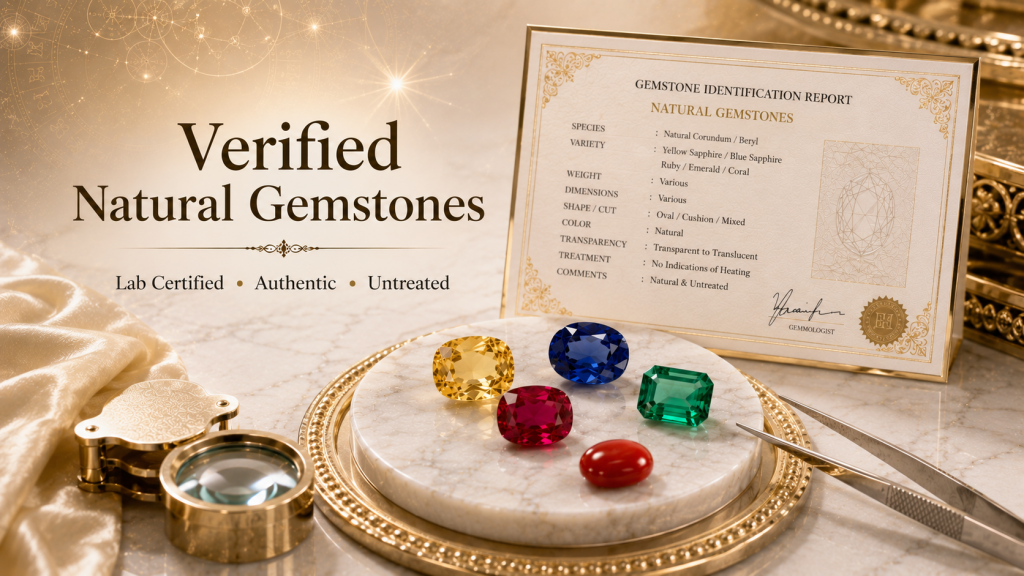
Appearance is where most buyers first notice something, though appearance alone can’t confirm treatment status. Treated stones often display unusually vivid or perfectly even colour because the treatment was designed to produce exactly that — a more attractive stone than the rough material would have yielded naturally. Untreated stones may show natural colour variation, small internal features, or subtle irregularities that confirm genuine formation rather than cosmetic enhancement.
That said, some untreated stones have excellent natural colour and clarity, and some treatments are applied to already-decent material. Appearance assessment is useful as a starting point but not sufficient as a final determination.
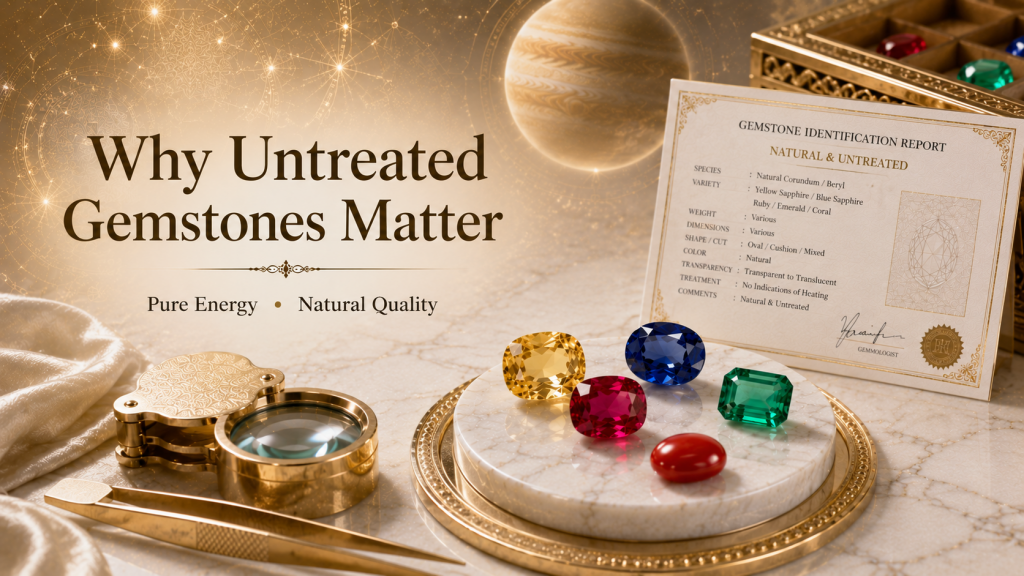
Energy and astrological effectiveness is the dimension that matters most for anyone buying with remedial intent. Non-treated gemstones retain their natural planetary energy in its original form. Treated stones may retain some of this depending on the treatment type and extent, but the tradition consistently places untreated natural material in a category above treated alternatives for serious astrological use.
Value reflects rarity. Natural untreated material with good colour and clarity is genuinely scarcer than the treated commercial alternative — which is exactly why it costs more. When a stone’s price seems surprisingly attractive for the quality being claimed, treatment is the most likely explanation.
Certification is the only reliable method of confirming treatment status. Natural inclusion patterns can suggest natural formation, and a stone that looks too perfect under magnification warrants questions, but laboratory testing is what provides actual certainty.
Which gemstones are most commonly offered as untreated
Ruby — Manik — benefits from untreated status particularly because heat treatment and glass-filling are so widespread in this category. Natural untreated ruby with genuine colour, especially from Burma or Ceylon origin, is among the rarest and most valuable gemstones available. The difference between a composite glass-filled ruby and a natural solid specimen is enormous in both price and astrological function.
Sapphire — blue, yellow, and other colours — is among the most frequently heat-treated stones in commercial trade, making “no heat treatment” confirmation especially important. Both blue sapphire (Neelam) and yellow sapphire (Pukhraj) should specifically be confirmed as unheated for astrological use.
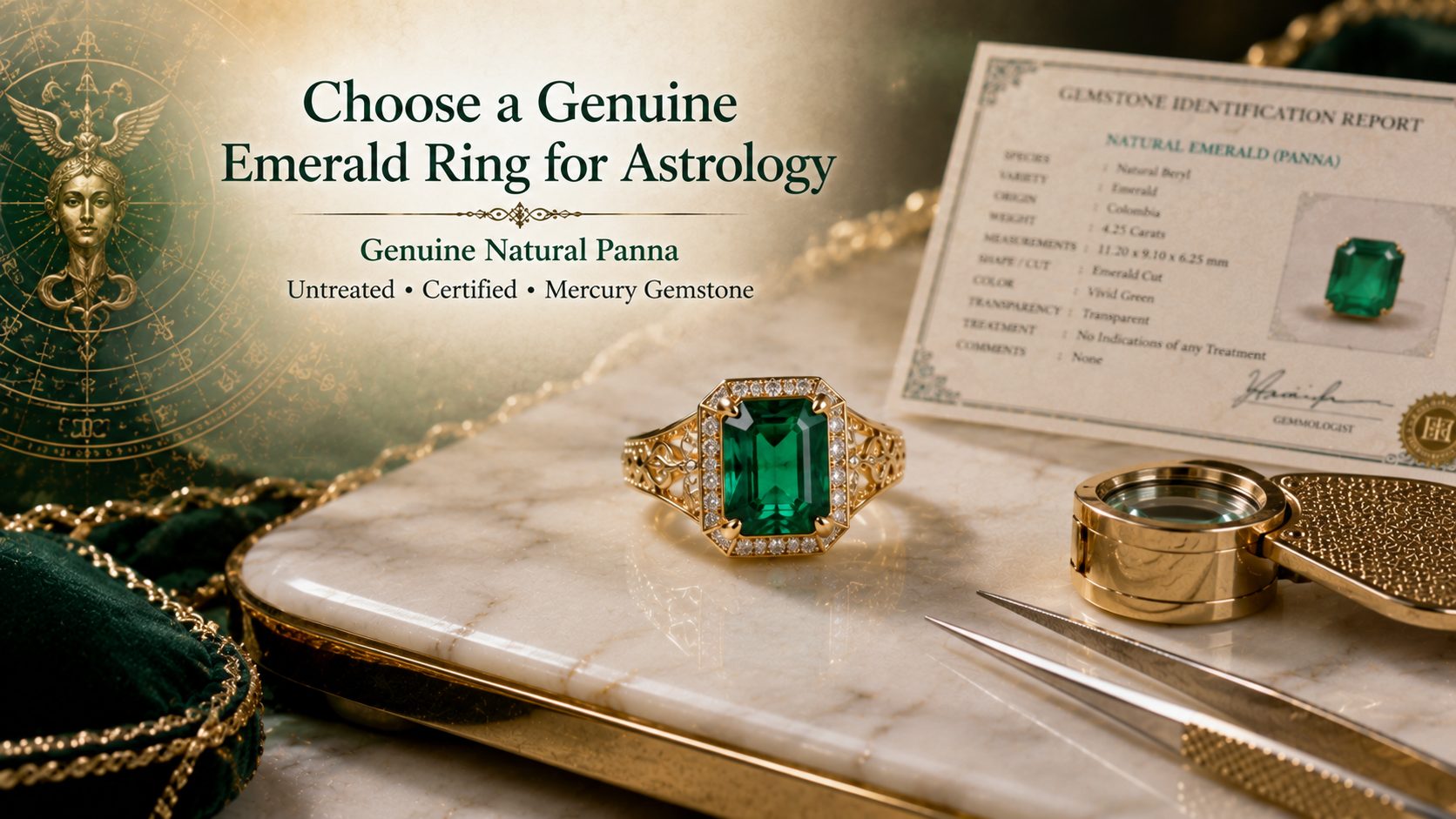
Emerald — Panna — is almost universally treated to some degree, with oiling or resin filling of natural fractures being standard practice. The treatment grade ranges from none through insignificant, minor, moderate, to significant, with each level affecting both value and astrological standing. “Minor oil” is widely accepted; “significant fracture filling” substantially alters the stone.
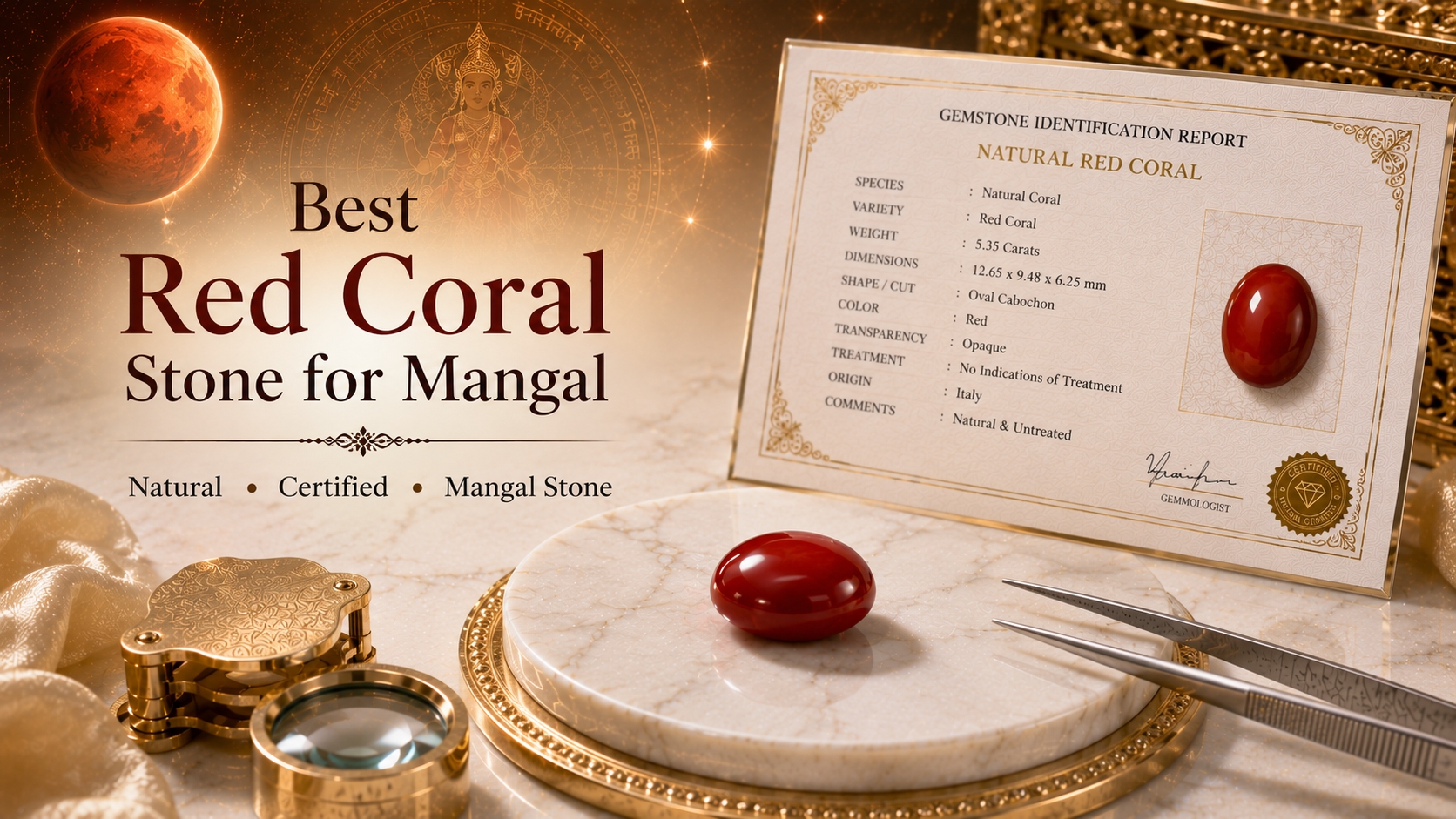
Garnet — including Hessonite — and Red Coral are less frequently treated than the major sapphire and ruby categories but still require verification, since lower-grade material from both categories does get enhanced.
How to identify untreated gemstones when buying online
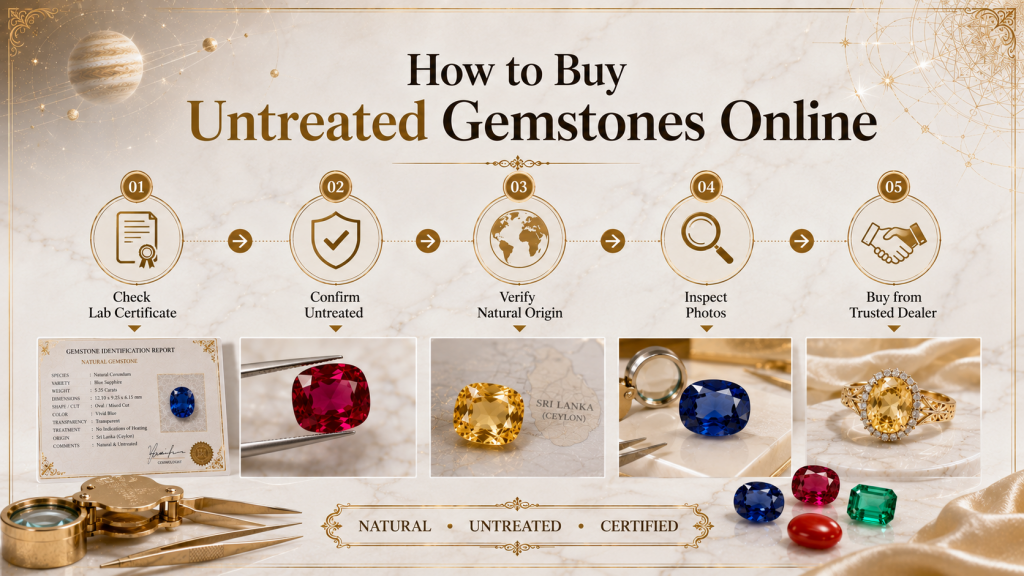
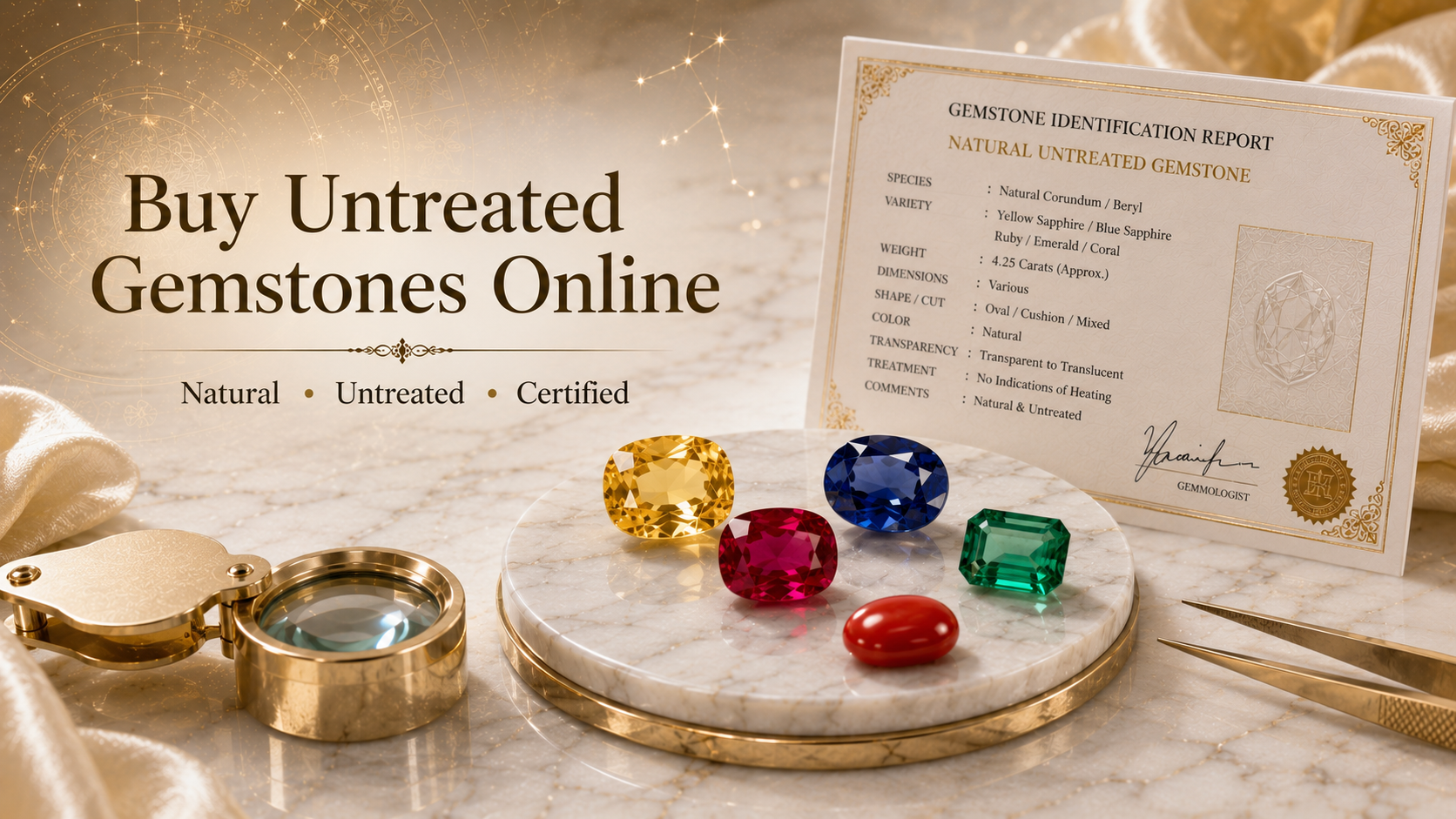
Certification from an independent recognized laboratory. GIA, GRS, Gübelin, SSEF, IGI, and IIGJ are the institutions whose certificates carry genuine weight. The certificate should explicitly state treatment status — “no indications of heating,” “unheated,” or “no treatment” — as a specific determination rather than leaving it unaddressed. Confirm the certificate number directly on the laboratory’s own website before trusting the document.
Natural internal features under magnification. Genuine untreated gemstones almost always contain inclusions — tiny crystals, growth lines, fingerprint patterns, silk needles depending on the stone type. A completely flawless stone under magnification is suspicious precisely because it’s rare for untreated natural material to form without any internal characteristics at all.
Colour behaviour under different lighting. Natural, untreated colour tends to behave consistently across different lighting conditions. Artificially enhanced colour sometimes shows unusual behaviour — concentrated near the surface, shifting under different lights, or appearing uneven in ways natural formation doesn’t produce.
Price relative to quality. Fine natural untreated gemstones across every category have genuine cost floors reflecting scarcity. A stone presented as premium quality natural untreated material at a price that significantly undercuts market rates is almost certainly treated, synthetic, or misrepresented in origin.
Request natural daylight photography or video. For online purchases specifically, seeing a stone under natural daylight rather than exclusively under studio lighting shows more accurate colour and helps assess whether the appearance is consistent with natural formation.
Why untreated gemstones hold their value
Beyond astrological considerations, natural untreated gemstones occupy a genuinely different position in the collector and investment market than treated alternatives. Treatment reduces the pool of serious buyers willing to pay premium prices, limits resale value, and in some cases — particularly fracture filling in ruby and emerald — creates durability considerations that don’t apply to solid natural material.
Collectors specifically prefer untreated natural stones because they represent what the earth actually produced rather than what skilled enhancement could approximate. That authenticity, confirmed through independent certification, is what holds value over time in ways that cosmetically enhanced material simply cannot match.
The short version
Buying untreated gemstones online successfully comes down to independent laboratory certification explicitly confirming treatment status, realistic pricing that reflects genuine natural material, natural lighting documentation for online assessment, and direct answers to direct questions about what enhancements if any have been applied. For astrological use specifically, untreated natural material isn’t a premium option — it’s the minimum condition under which planetary energy is considered intact and the remedy actually works.
Tags:
Authentic Gemstones India,
buy certified gemstones,
buy untreated gemstones online,
certified untreated gemstones,
gemstone buying guide,
gemstone treatment guide,
genuine gemstones online,
natural gemstone certification,
natural gemstone verification,
natural gemstones for astrology,
natural untreated gemstones,
unheated gemstones,
untreated emerald,
untreated gemstone benefits,
untreated gemstone guide,
untreated gemstones online,
untreated precious stones,
untreated ruby,
untreated sapphire,
Vedic astrology gemstones