Where to Buy Genuine Lapis Lazuli Stone Online in India at the Best Price
Vikas June 27, 2026 in
Astrology Where to Buy Genuine Lapis Lazuli Stone Online in India at the Best Price
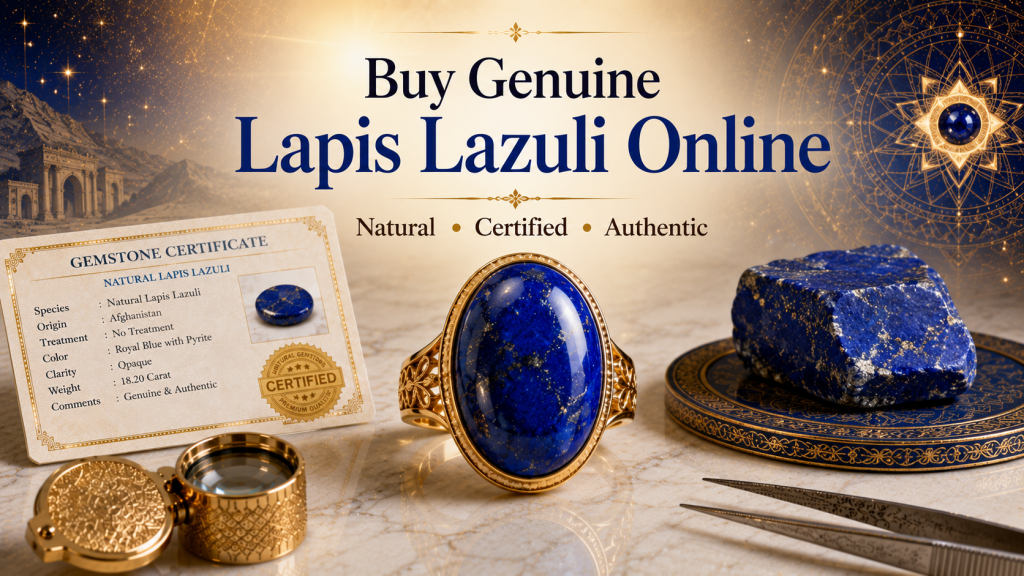
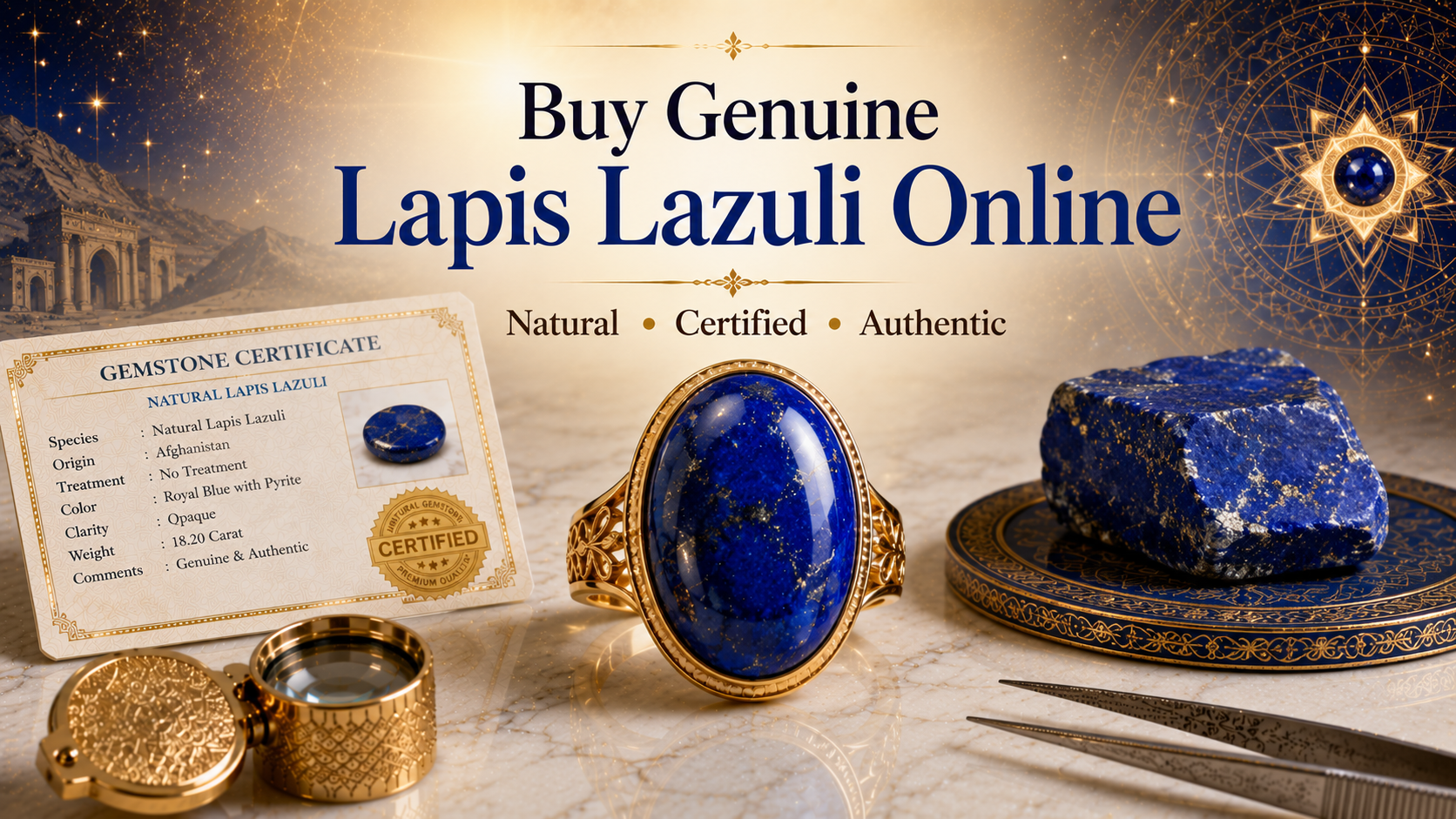
Lapis Lazuli has a habit of showing up in places you wouldn’t expect for a humble blue rock — pigments crushed for Renaissance masterpieces, amulets buried with Egyptian pharaohs, symbols of divine favor in ancient Mesopotamia. Somehow it’s also right at home on a minimalist pendant or a chunky boho cocktail ring today. That range, from sacred relic to fashion-forward accessory, is unusual for a gemstone, and it’s exactly why so many people end up searching for where to buy original Lapis Lazuli stone online in India at the best price without quite knowing what separates a genuine specimen from a convincing imitation.
This is worth sorting out before you spend anything.
What You’re Actually Looking At
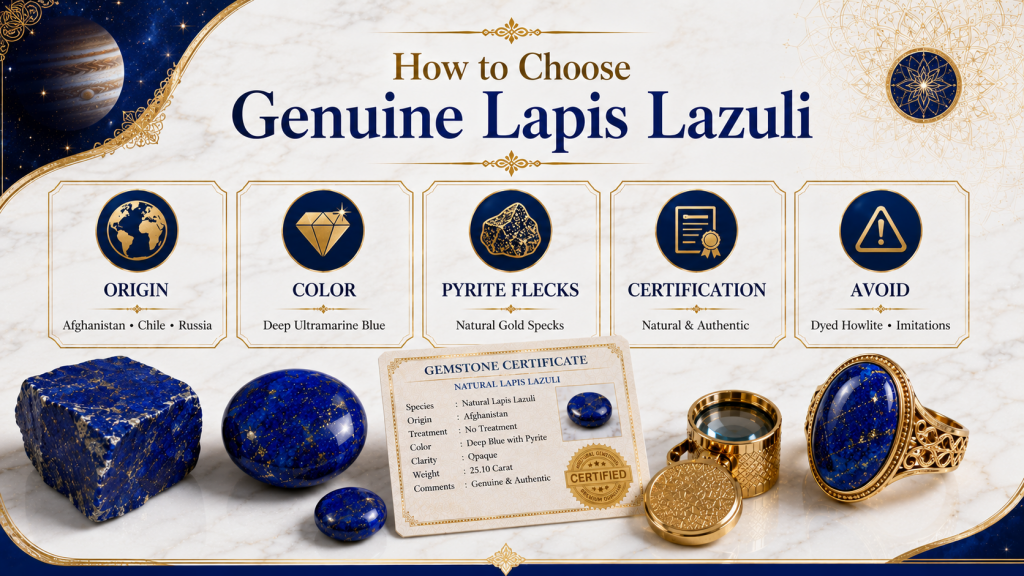
The deep ultramarine color is the first thing anyone notices, but the gold flecks scattered through it — pyrite, almost always — are what give fine Lapis its particular character. Together they’re meant to look like a piece of the night sky, stars and all, which is a poetic comparison that happens to be gemologically accurate rather than just marketing language.
That color has carried meaning for thousands of years. Persia and Mesopotamia associated it with power and divine favor. Egyptian pharaohs wore it as protective amulets. Renaissance painters ground it into pigment specifically because nothing else produced that particular ultramarine blue — which meant, for a long stretch of art history, the most prized paintings in Europe were quite literally made from crushed Lapis Lazuli.
None of that history has faded into irrelevance. It’s just been repackaged. The stone now turns up regularly in editorial fashion shoots and on red carpets, less as a relic people admire in museums and more as something people actually wear — an emblem of intellectual edge and bold authenticity rather than purely royal status. Designers favor it in both high-end and boho-chic jewelry precisely because that organic depth and unmistakable color don’t read as generic. They read as considered.
Why People Actually Want This Stone
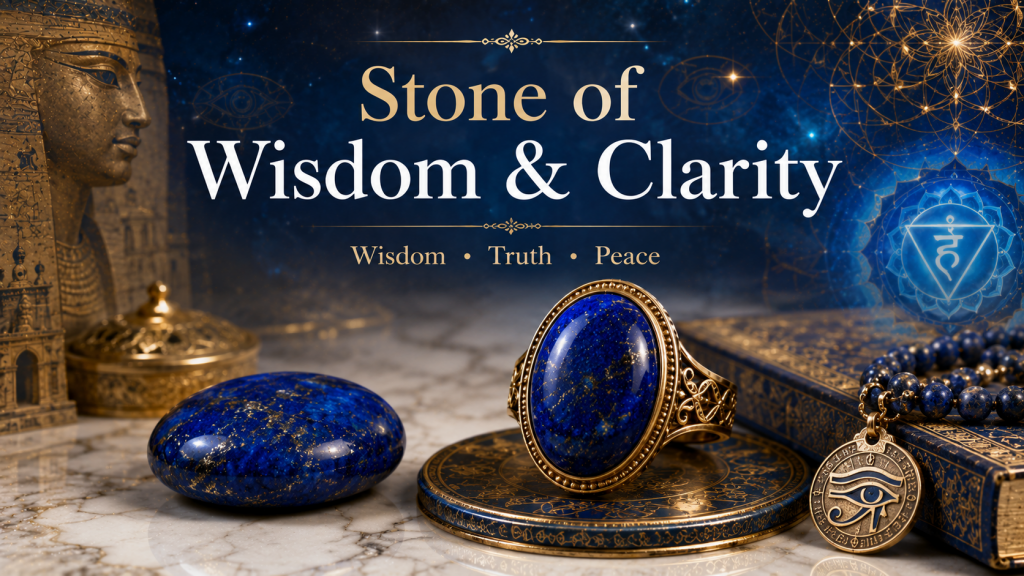
Strip away the aesthetics and there’s a consistent thread running through what Lapis Lazuli is believed to do — most of it centers on clarity, in one form or another.
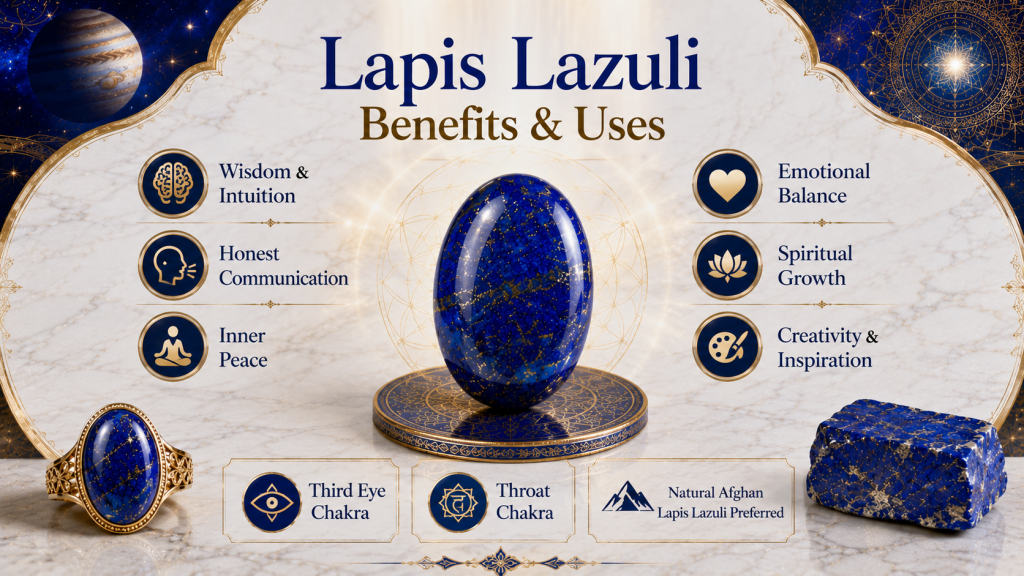
Self-awareness is where this starts. The stone is associated with the kind of introspection that doesn’t feel comfortable in the moment but pays off afterward — confronting things about yourself honestly rather than around them. People who work with Lapis regularly describe a sharper sense of their own patterns and motivations, which sounds abstract until you realize it’s really just describing emotional clarity with better follow-through. The personal growth angle isn’t separate from this. It’s the natural result of actually seeing yourself more clearly.
From there it moves into wisdom and intuition, tied specifically to the third eye chakra in traditional energy work. This is less about mystical visions and more about decision-making under complexity — the kind of clarity that lets you see through a confusing situation rather than getting lost in it. Anyone leaning into spiritual practice or creative work tends to be drawn toward this particular association, since both depend heavily on perceiving things others miss.
Communication is the throat chakra connection, and it’s a strong one. Lapis is specifically associated with speaking honestly without the usual fear of judgment getting in the way first. For anyone whose work depends on articulating ideas clearly — leaders, artists, or really anyone trying to build confidence in how they express themselves — this is probably the most practically useful association the stone carries.
Then there’s the calming effect, which is more straightforward. Anger, anxiety, emotional turbulence — Lapis is traditionally worn to settle all three, bringing a steadiness that holds up during actually stressful moments rather than just in theory. This is why it shows up so often in meditation practice specifically. It’s not flashy. It’s just reliably calming, which turns out to matter more than flashy most of the time.
And there’s a physical healing tradition too, worth mentioning honestly rather than overselling. Traditional crystal healing credits Lapis with purifying blood, easing inflammation, and supporting immune function, with particular emphasis on throat and respiratory health. This sits firmly in traditional belief rather than medical fact, and it shouldn’t replace actual treatment for anything serious — but it’s part of why the stone shows up so consistently in wellness-focused jewelry, and worth knowing the tradition exists even if you don’t personally subscribe to it.
What Actually Separates Genuine From Fake
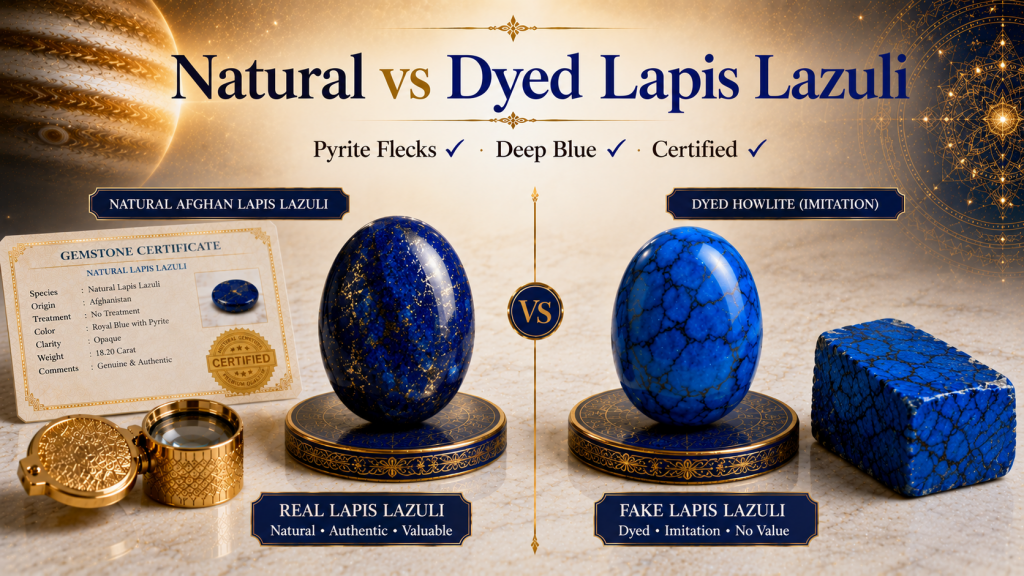
Color consistency is the first real test. Genuine Lapis Lazuli holds a deep, even ultramarine — not patchy, not faded in places, not artificially uniform in a way that looks dyed. Cheaper imitations and dyed substitutes tend to show color that’s either too perfectly even or unevenly saturated in ways natural stone formation doesn’t typically produce.
The gold flecks matter more than people initially assume. Natural pyrite inclusions scatter through genuine Lapis in an irregular, organic pattern — no two stones look quite the same. Synthetic versions or dyed howlite, which is the most common imitation in circulation, either lack these inclusions entirely or show a pattern that looks too mechanically regular to be natural.
Weight and texture tell you something too. Lapis Lazuli has a particular density and a slightly waxy luster that’s hard to fake convincingly. Lighter, glossier stones claiming to be Lapis are worth examining closely before buying.
And origin matters for anyone serious about quality. Afghanistan has produced the finest Lapis Lazuli for centuries, prized specifically for its deep, consistent blue and minimal calcite veining. Material from Chile and Russia exists too, generally with more visible white calcite streaking through the blue, which affects both appearance and value.
Before You Commit to a Purchase
A few practical things are worth confirming regardless of where you’re buying. Ask specifically whether the stone is natural Lapis Lazuli or a dyed substitute like howlite — these get conflated more often than they should, sometimes deliberately. Request clear photographs showing the gold pyrite inclusions up close, since these are difficult to convincingly fake. And if certification is available, even informally, it’s worth more than confident product descriptions alone.
Given how much this stone’s reputation depends on its specific, irreplaceable color and the genuine history behind it, buying carefully is the only way to make sure what arrives is actually the stone that’s been valued across civilizations for thousands of years, rather than a convincing stand-in riding on its name.
Tags:
afghan lapis lazuli,
authentic lapis lazuli,
blue lapis lazuli stone,
buy lapis lazuli online india,
certified lapis lazuli,
genuine blue gemstone,
genuine lapis lazuli,
lapis lazuli authenticity,
lapis lazuli benefits,
lapis lazuli buying guide,
lapis lazuli certification,
lapis lazuli crystal,
Lapis Lazuli Gemstone,
lapis lazuli healing properties,
lapis lazuli india,
lapis lazuli jewelry,
lapis lazuli meaning,
lapis lazuli online shopping,
lapis lazuli origin,
lapis lazuli price india,
lapis lazuli quality guide,
lapis lazuli spiritual benefits,
lapis lazuli stone,
natural blue gemstone,
natural lapis lazuli,
original lapis lazuli stone,
original lapis stone,
premium lapis lazuli stone,
pyrite lapis lazuli,
real lapis lazuli stone