What Actually Determines Tiger Eye Stone Price Complete Buying Guide
Vikas July 3, 2026 in
Astrology 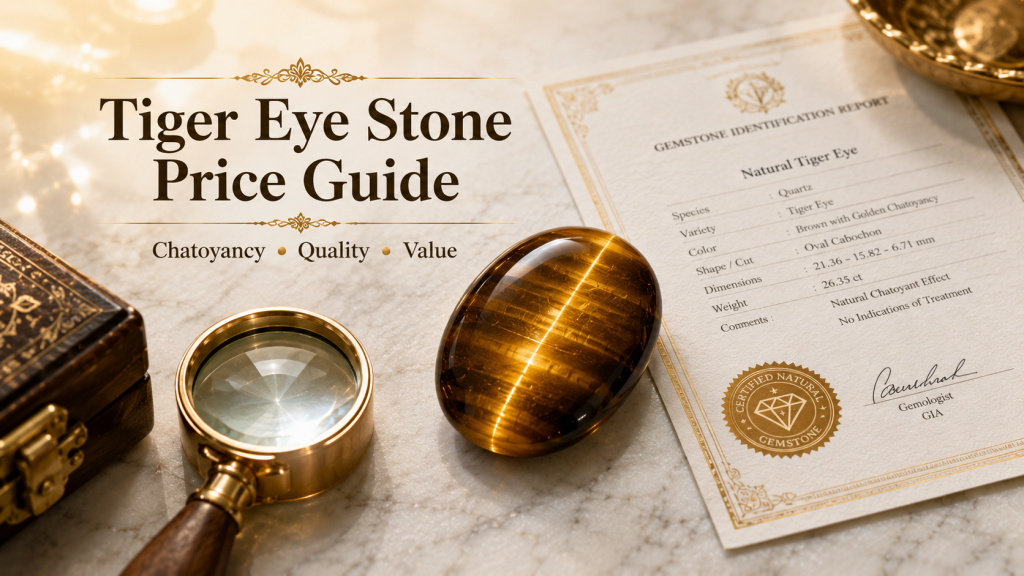
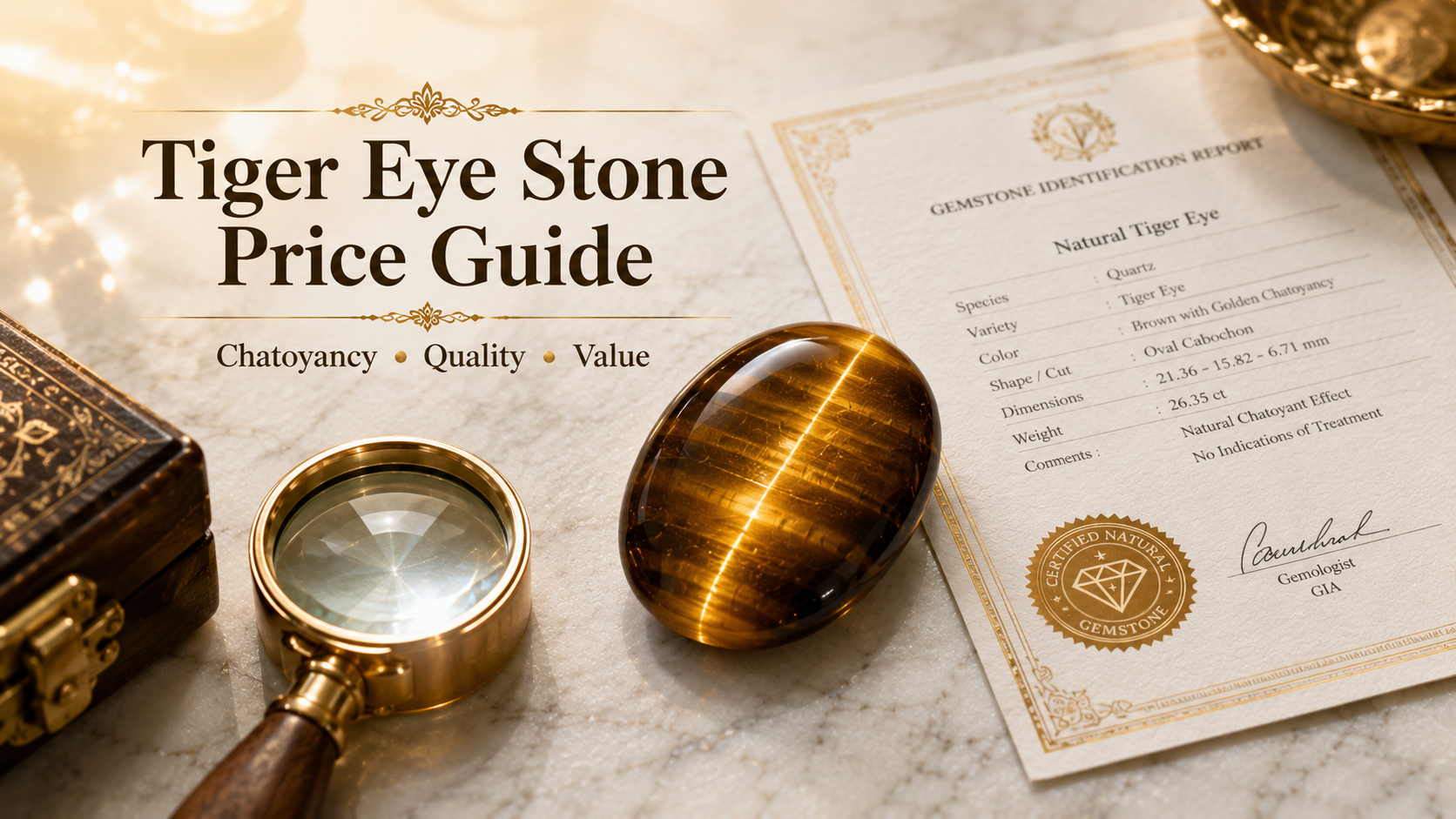
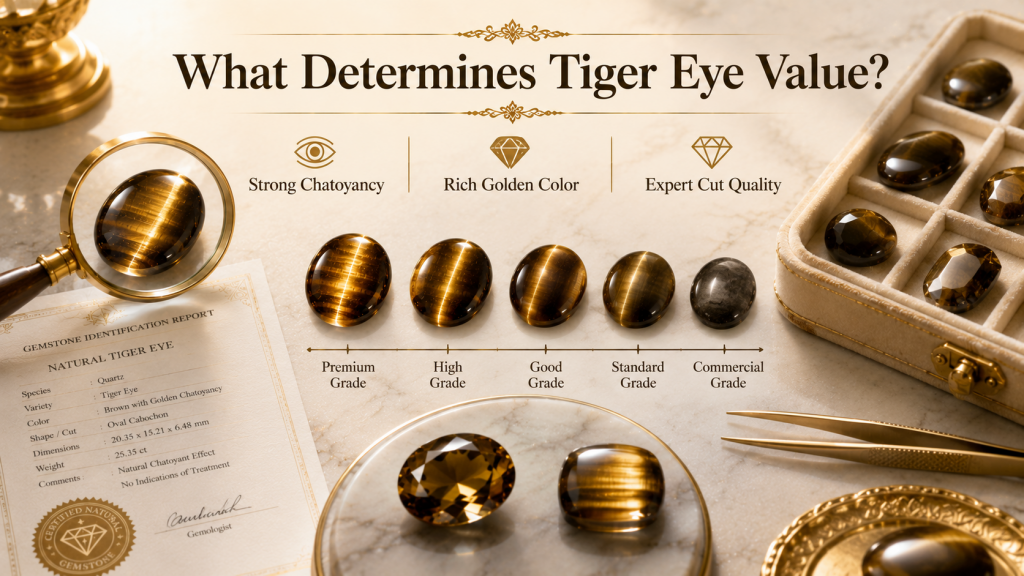
There’s a particular shimmer that catches your eye before anything else about this stone. A silky golden band of light that seems to move as you turn it in your hand, almost exactly like an actual tiger’s eye watching you from across a room. That optical effect is chatoyancy, and it’s the entire reason this gemstone commands real money rather than getting lumped in with the generic brown stones sitting in every street market. Understanding tiger eye stone price means understanding what separates a genuinely fine specimen from the countless mediocre pieces flooding online listings right now.
Why this stone is rarer than people assume
South Africa remains the primary source for quality material, and that geographic limitation is half the reason fine pieces stay expensive. You can’t source good tiger eye reliably from a dozen scattered countries the way you might with quartz or citrine. Supply is genuinely constrained here, and that constraint shows up directly in what serious buyers end up paying.
The banding itself, paired with those earthy golden-brown tones, isn’t just visually interesting — it’s carried symbolic weight across cultures for centuries, representing balance and courage rather than just looking nice in a ring. That combination of actual scarcity and accumulated meaning is exactly why people pay real premiums for strong, well-defined chatoyancy instead of settling for a dull piece that’s technically the same mineral but visually says nothing.
A stone that’s been trusted with people’s lives, historically
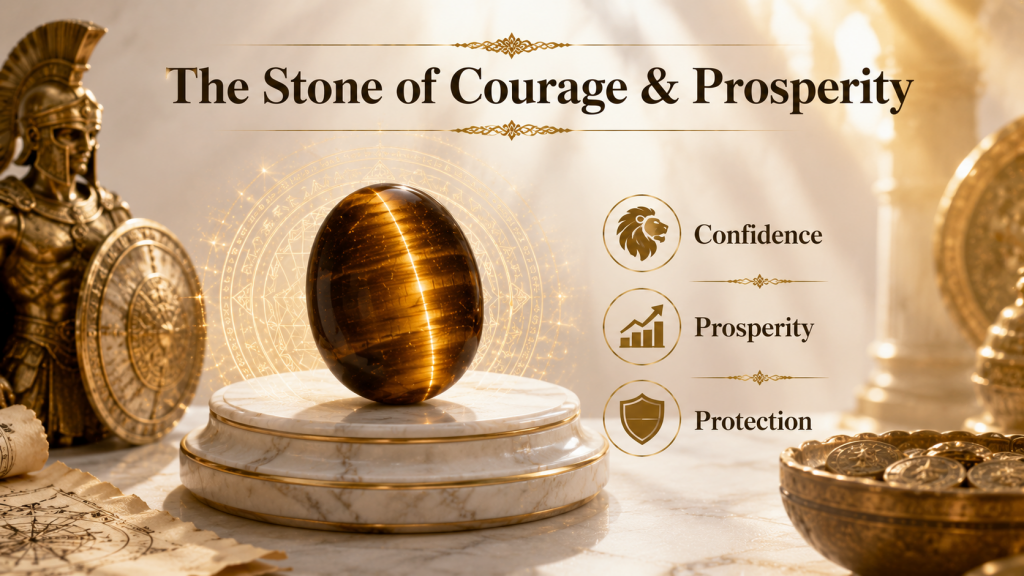
Ancient Egyptians believed tiger eye carried the power of Ra himself, offering protection and strength specifically to warriors before they went into battle. Roman soldiers picked up that same belief and ran with it, wearing the stone as an amulet meant to provide courage and clarity when things got genuinely dangerous. That’s worth sitting with for a second — soldiers trusted this stone with their actual survival. People don’t extend that kind of trust to something purely decorative.
The reputation held across multiple civilizations after that too, settling into a consistent role as a symbol of prosperity and protection against evil. Different cultures, different centuries, same basic association. That kind of staying power doesn’t happen by accident, and it’s a meaningful part of why genuine tiger eye still commands real value today instead of fading into novelty territory the way a lot of “lucky stones” eventually do.
What people actually believe this stone does for them
Confidence comes up constantly with tiger eye, and it’s not the vague kind of confidence claim every crystal makes. It’s specifically tied to overcoming fear and building real resilience — the stone gets reached for when someone needs to actually take a bold step they’ve been putting off, not just when they want to feel marginally better about themselves in general.
Prosperity follows right behind that. Entrepreneurs and working professionals have gravitated toward tiger eye specifically, wearing it in pursuit of wealth and new opportunity rather than vague good luck. That business-minded reputation tends to attract a noticeably different buyer than purely decorative stones do — people looking for something with a practical edge, not just a pretty accessory.
Then there’s the emotional side. The stone’s grounding energy is supposed to stabilize mood and ease stress, but specifically during genuinely hard stretches — staying composed under real pressure rather than just feeling calm when nothing’s actually wrong. That distinction matters more than it sounds like it should.
Focus sharpens too, according to this tradition, with mental blockages clearing in a way that helps students and professionals stay productive and goal-oriented. And finally there’s protection — tiger eye as a talisman warding off negative energy and bad luck, shielding the wearer while building genuine security rather than just defending against something vague and undefined.
What actually moves the price up or down
Once you understand what makes a piece valuable in the first place, price variation between specimens stops being a mystery.
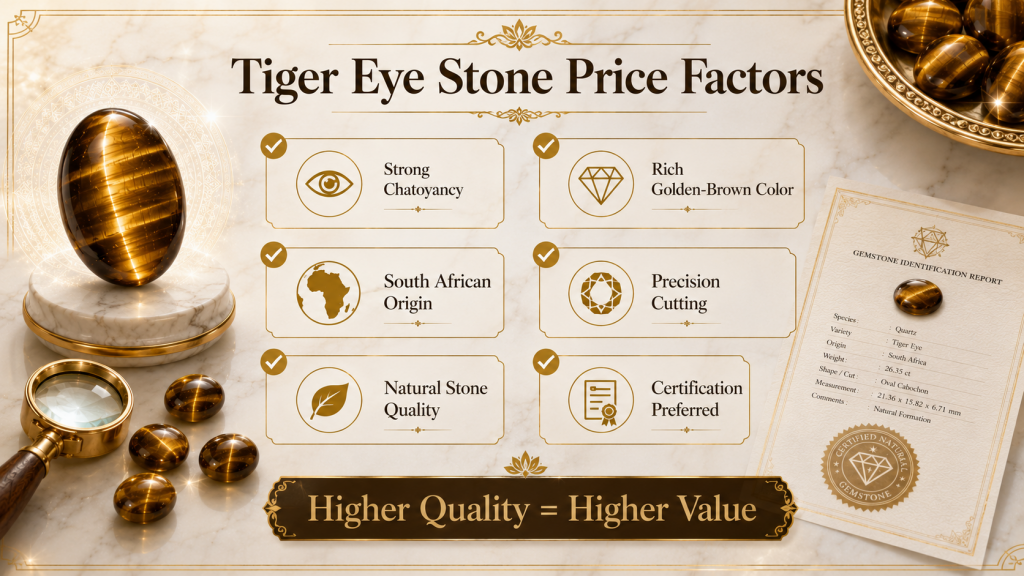
Chatoyancy strength matters more than almost anything else on this list. A sharp, well-defined golden band commands significantly more than a weak or barely-visible shimmer, even between two stones that are otherwise the same size and origin. This single visual quality does more work separating premium from forgettable than people initially expect.
Colour depth plays its own role. Rich, warm golden-brown reads as more desirable than pale or washed-out tones, and that preference translates directly into pricing.
Origin matters too, specifically because South African material carries a reputation that’s been built over a genuinely long time. Buyers chasing the stone’s traditional symbolism and protective associations tend to seek this origin out deliberately rather than accepting whatever’s cheapest.
Cut affects price differently here than with a lot of other stones. Size and shape matter the usual amount, sure, but cut specifically determines how well the chatoyancy actually displays. A poorly cut piece can genuinely waste perfectly good raw material by failing to show off the one optical effect that makes the whole stone worth buying.
What this actually means if you’re buying
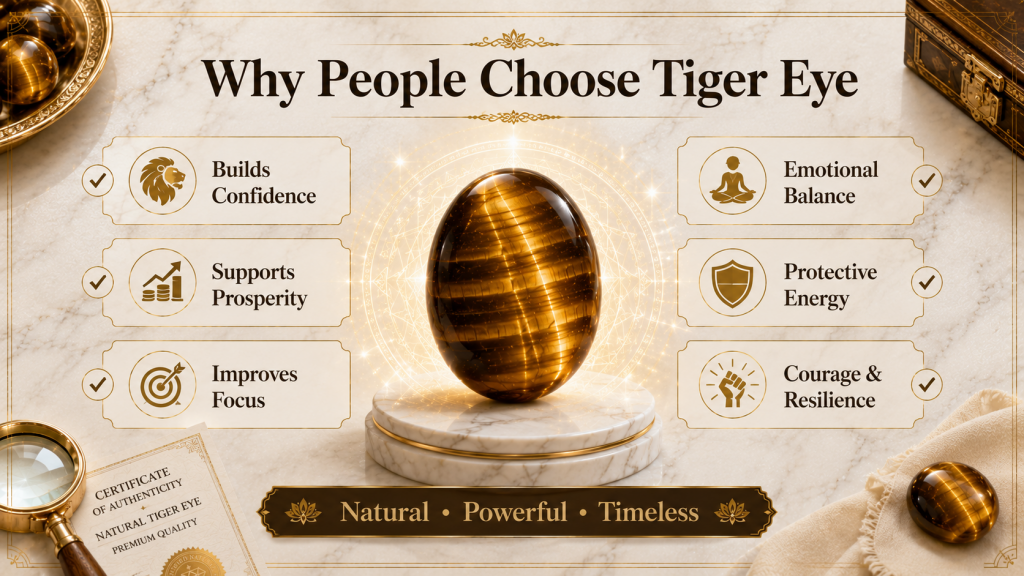
Given everything tiger eye is believed to offer — confidence, prosperity, emotional steadiness, sharper focus, real protection — it tracks that demand for genuinely good specimens hasn’t faded even slightly. This stone’s reputation has survived from ancient Egypt through Roman battlefields to modern desks and boardrooms, and that’s not the kind of continuity that happens to stones people stop caring about.
When you’re actually evaluating price, weigh chatoyancy and colour depth above size every time. A smaller stone with vivid, well-defined banding will almost always outperform a larger piece with weak or inconsistent shimmer, both visually and in terms of whatever symbolic value you’re actually buying it for. And if the protective or prosperity-related symbolism is part of why you want this stone in the first place, confirming origin is worth the extra question before you pay for it.