More than 4 generations old family tradition (Since 1937) of dealing in Pure Astro-Vedic quality jyotish gemstones, high quality genuine Rudrakshas and Authentic Vedic Yagyas.
Best Yellow Sapphire Gemstones Suppliers to Trust for Your Pukhraj Purchase
Buying a yellow sapphire is a bigger financial decision than most first-time buyers expect, and the market doesn’t make it easy on you.
The gemstone marketplace is genuinely full of imitations, synthetic material, and heated stones sold without disclosure. Finding the best yellow sapphire gemstones suppliers means understanding what actually determines quality and price before you start comparing sellers. Otherwise you’re just comparing marketing language that sounds identical across every listing, which tells you nothing about what’s actually in the box.
What You’re Actually Buying
Yellow sapphire belongs to the corundum mineral family — same family as blue sapphire and ruby. Hardness 9 on the Mohs scale, durable enough for daily wear without much worry. The color runs from light lemon yellow to deep canary yellow, and like most colored gemstones, color drives most of the value. That part isn’t complicated.
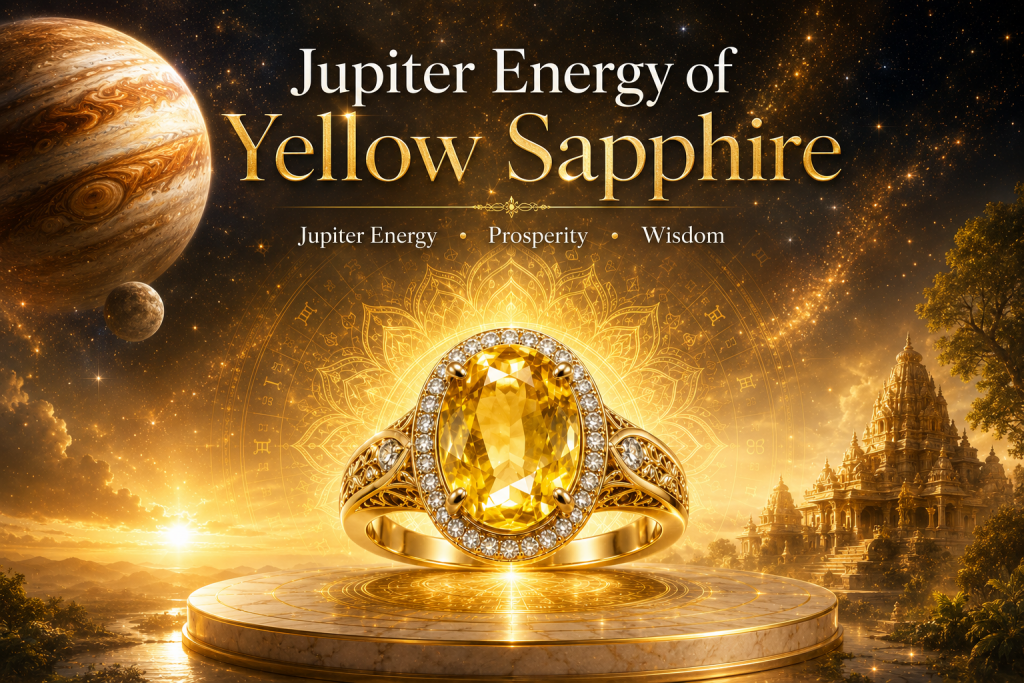
What gets complicated is the astrology. In Vedic tradition, yellow sapphire is known as Pukhraj and connected to Jupiter — Guru, generally considered the most benevolent planet in the Jyotish system. A weak Jupiter placement is associated with financial struggle, marital unhappiness, career stagnation. Wearing natural Pukhraj on the right index finger is believed to correct these difficulties.
There’s also a jewelry angle that has nothing to do with astrology at all. Yellow sapphire engagement rings have built a genuine following as an alternative to diamond — distinctive color, comparable durability, lower price point. Different buyer, different motivation, same stone.
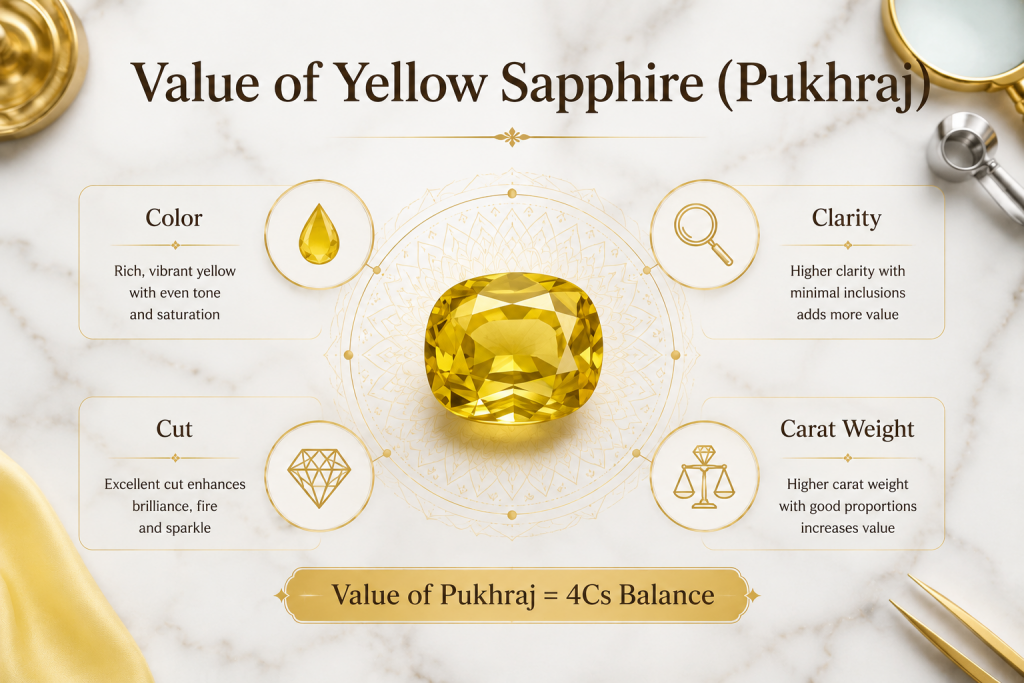
Color Is Doing Most of the Work
Color — hue, technically — is the single biggest factor in yellow sapphire price. Light to medium to dark yellow, sometimes with greenish or orangish secondary tones mixed in. The good stuff is vivid and pure with minimal secondary overtones diluting it.
For astrological buyers this matters even more than for jewelry buyers. A pale or muddy-colored stone is considered to carry weaker planetary energy regardless of size. You can’t fix color with carat weight. A big dull stone is still a dull stone.
Clarity Is Where Rarity Actually Shows Up
Natural yellow sapphire almost always has something going on inside it — feathers, rutile needles, fingerprint-looking inclusions, sometimes tiny air bubbles. Normal. Expected. What’s genuinely uncommon is eye-clean clarity, where nothing’s visible without magnification. Those stones cost considerably more, and they should.
Why Bigger Doesn’t Mean Proportionally Pricier
Here’s where a lot of buyers get tripped up. Price doesn’t scale linearly with weight — it scales exponentially. A 5-ratti stone isn’t five times the price of a 1-carat stone. The per-carat premium actually climbs as size increases, because large stones with genuinely good color and clarity get rarer fast.
Which means a smaller stone with excellent everything can outprice a bigger stone with mediocre everything. Carat weight by itself tells you almost nothing about value. It’s the combination — color, clarity, cut, weight together — that actually determines where a stone sits on the price spectrum. Buyers who shop by carat weight alone consistently overpay for the wrong thing.
Cut Gets Ignored and Probably Shouldn’t Be
A well-cut yellow sapphire reflects light evenly and looks noticeably more alive than a poorly cut stone of identical rough quality. Bad cutting can make decent color and clarity look flat and unremarkable. Cut gets less attention than color in most buying conversations, but it genuinely affects both how the stone looks and what it’ll resell for later.
Origin Matters More If You’re Buying for Astrology
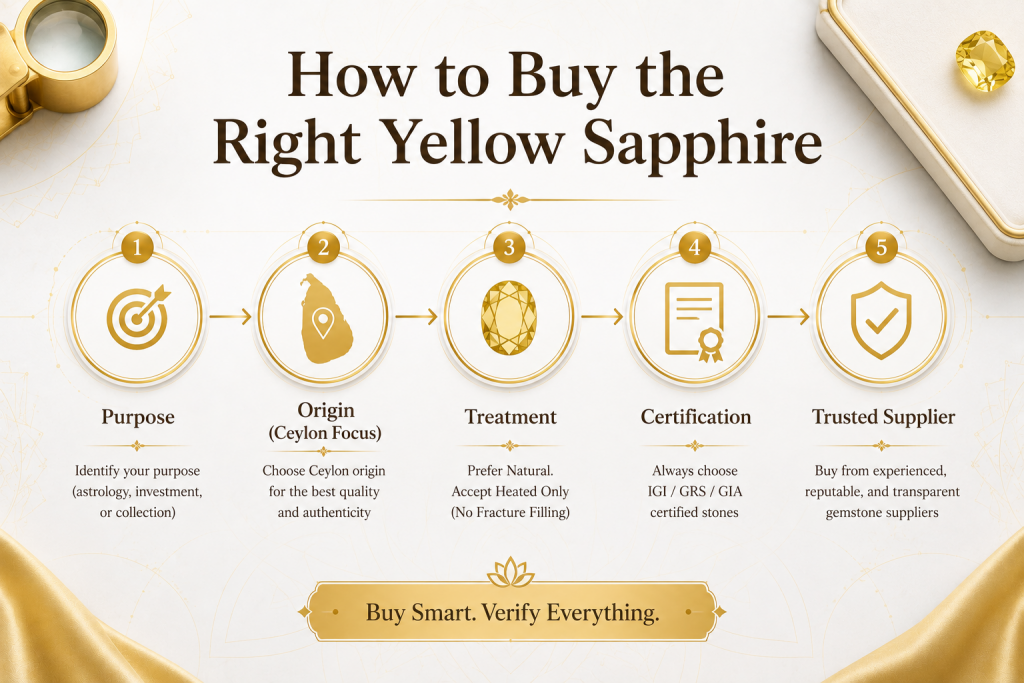
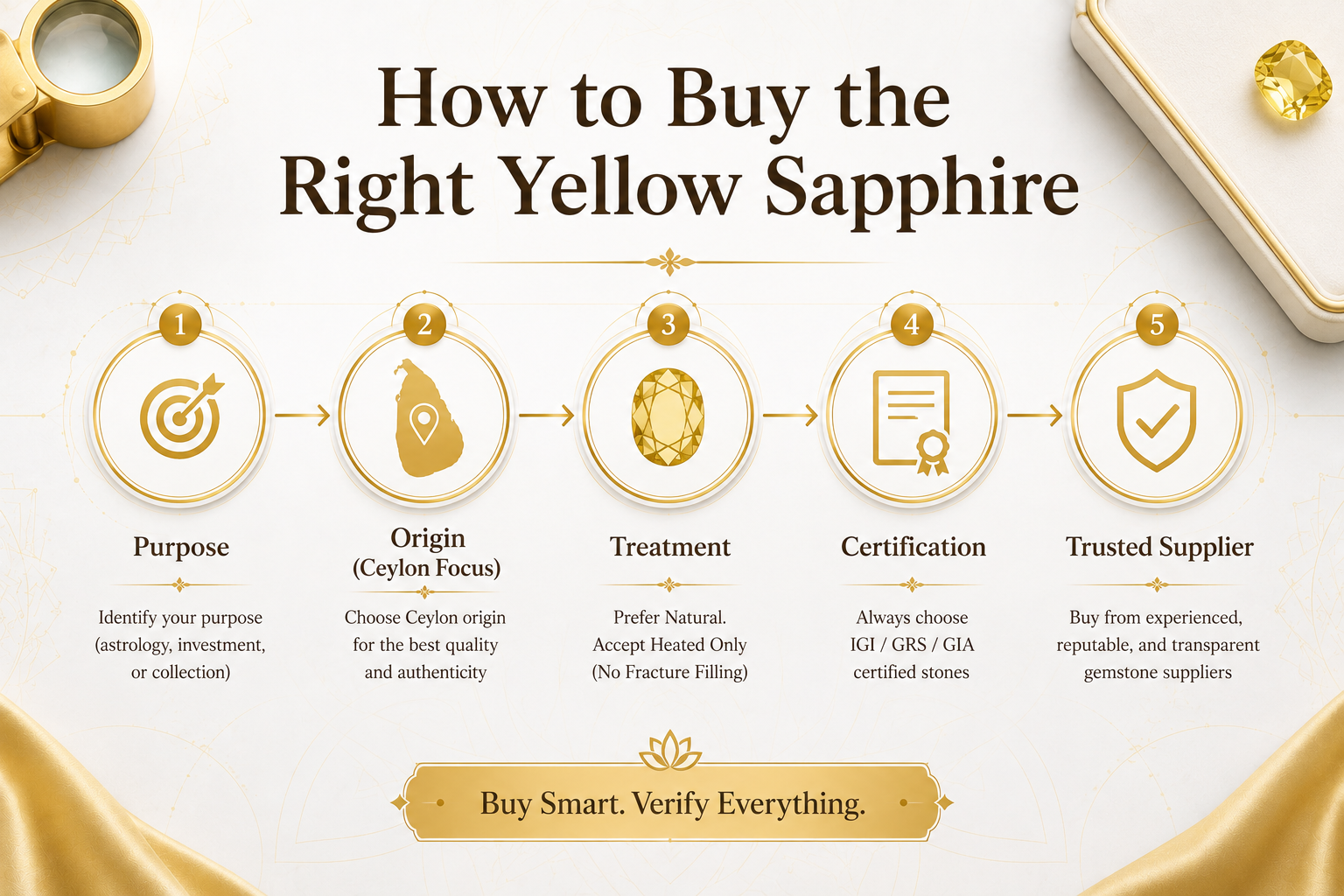
Sri Lanka — Ceylon — produces what’s generally considered the finest yellow sapphire available. Vivid color, comparatively fewer inclusions, and a reputation in Vedic astrological practice that’s been built over generations rather than marketing. Burma, Thailand, and Australia also produce quality material, but Ceylon remains the benchmark for buyers specifically chasing astrological benefit.
This premium is real, not just branding. Fine Ceylonese stones at higher weights cost noticeably more precisely because they combine actual rarity with that long-established reputation. You’re paying for both things at once.
Treatment Status Changes What You’re Actually Buying
Heat treatment is everywhere in the commercial market. It improves color, improves apparent clarity, and makes stones cheaper to produce — which is exactly why treated stones cost less than natural untreated material.
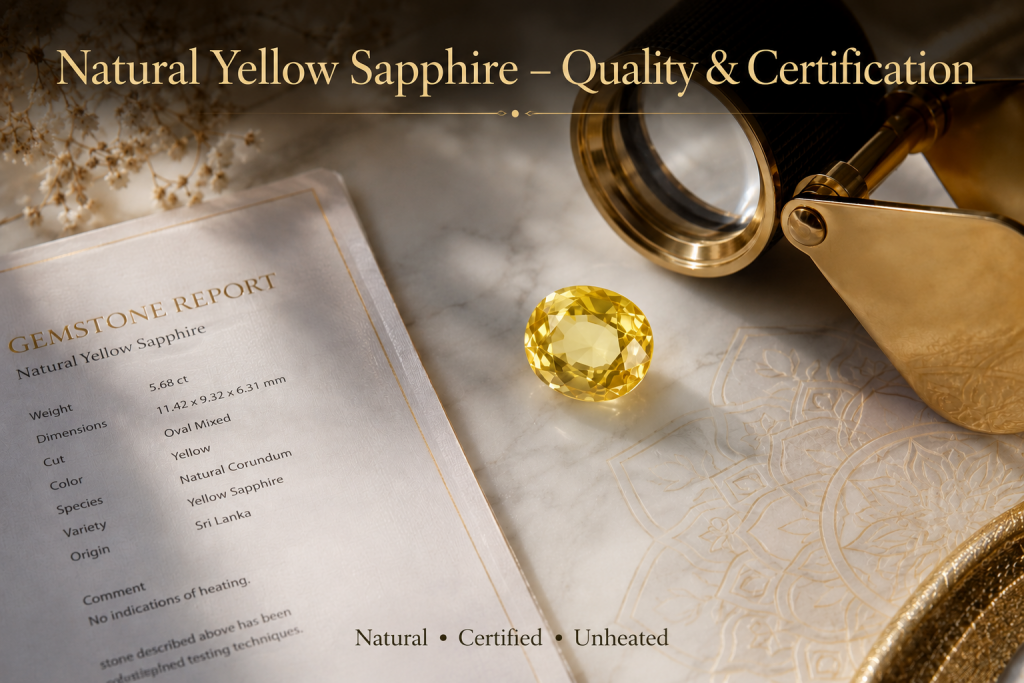
For jewelry purposes, that’s a perfectly fine tradeoff. For astrological purposes, the Vedic tradition treats this almost as a dealbreaker. Unheated yellow sapphire is believed to carry the vibrational energy needed to actually transmit Jupiter’s influence. Heated stones lose that quality — and notably, their color can fade over time, which is itself a visible sign the treatment wasn’t permanent.
So the question to ask yourself before shopping: are you buying this to wear, or to invoke something specific astrologically? Those are different purchases with different acceptable tradeoffs.
What a Certificate Actually Proves
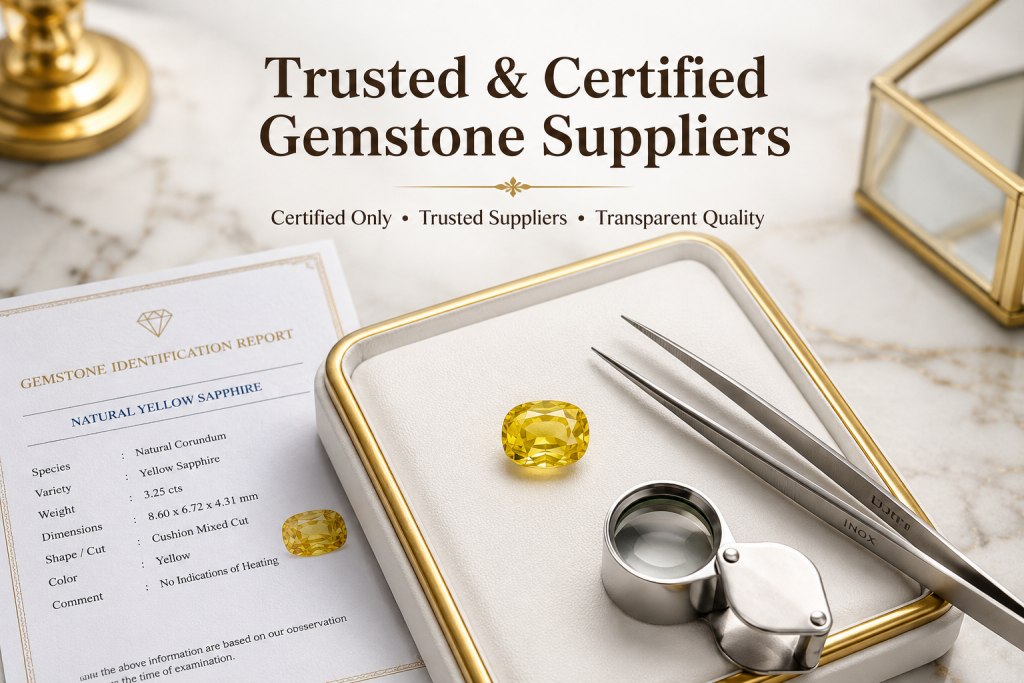
A real laboratory certificate specifies color grade, clarity, cut quality, carat weight, and — critically — origin and treatment status. This is the document that separates a verified purchase from one taken purely on faith.
Given how much imitation and synthetic material circulates in this market, certification from a recognized independent lab isn’t optional padding. It’s the floor. Find out specifically which laboratory issued it and whether that lab has any financial relationship with the seller. If it doesn’t show up under independent search, that’s information too.
What You’ll Actually Pay
Yellow sapphire pricing in India typically runs from roughly ₹4,000 to ₹1,00,000 per carat — and that enormous range exists precisely because color, clarity, cut, origin, and treatment compound rather than average out.
A one-carat stone nailing all four C’s can cost more than a much larger stone that’s compromised on several factors at once. This is why shopping by carat weight in isolation is a mistake almost every first-time buyer makes once.
For context: yellow sapphire generally costs less than diamond per carat despite being denser, while sitting well above semi-precious stones like citrine, topaz, or opal. Fine Sri Lankan stones with strong color, good clarity, and real size occupy the premium tier here and are priced like it.
How to Actually Evaluate a Supplier
Decide your purpose before you start comparing prices. Buying for jewelry? Heated stones are a legitimate, more affordable choice. Buying for astrological use specifically? Only natural unheated material will actually serve that purpose — paying for a heated stone here means paying for something that won’t do what you bought it for.
Look for suppliers who lead with independent laboratory certification rather than in-house guarantees that mean very little. Pay attention to how specifically different sellers talk about treatment — language like “enhanced” or “improved color” without the word “heated” anywhere nearby is usually avoiding something.
Compare across multiple platforms before committing, especially buying online where you can’t physically examine the stone first. Ask direct questions about origin, treatment, and certification, and notice how directly — or evasively — those questions get answered.
Where This Leaves You
The yellow sapphire market rewards buyers who actually understand what they’re looking at. Color, clarity, cut, and carat weight work together, not separately — a stone that’s strong in one and weak in the others is rarely good value no matter how it’s marketed. Origin and treatment matter most for astrological buyers, where natural unheated Ceylon material remains the standard despite costing more.
The best yellow sapphire gemstones suppliers are the ones who hand you independently verifiable certification and talk plainly about treatment status instead of dressing it up. That transparency, more than any single quality factor, is what actually protects what you’re spending.
Genuine Products and Satisfied Customers are our first and foremost priority
Firstly, I want to give compliment to the website. By chance, I came to know the shop from the Internet only. The design of the website attract me a lot as well as it gives many useful knowledge about Astrology, gemstones, etc. After that, I feel thankful to Mr.Vikas Ji and his staffs for their understanding, support me from A to Z and help me solve all my problems. Whatever I don\'t understand, they guide me very slowly, clearly and remove all my doubts. They are great people - I have to say!!! Thanks a ton. Finally, the products are very good and give me positive result till now (nearly 3 months). The rings are well-designed - even many Indians, they also gave me compliments on the rings; the gems are high quality - very stunning. Just only compliments - no any doubts. I definitely come back and purchase more products from this shop. In the future, if anyone need Astrology products, I will highly recommend Pure Vedic Gems to them!!! With love and all my best wishes to all of you! Yen Van (VietNam)
As recommended by Astrologer, I purchased the gemstones. I must say that they have a Unique role. After 3 months of wearing them, intuitively these have guided me in the right direction and given me a lot of strength in my convictions and getting beyond false sense of securities in life. Rest future will tell, how these prisms actually affect one. I am grateful to Vikas Mehra Ji for his time, his advice and detailed and patient way of dealing with customers. Thank you! Regards
The service was wonderful. Delivery and updates were very prompt and the pictures were incredibly appreciated. The ring itself has been fantastic. I wear it everyday and can feel the effects of it. Very grateful to have found you and will recommend you to friends looking for gamestones and use your service for any of my own future needs!
Hare Krishna All I bought two gem stones from Pure Vedic Gems. I was bit confused about gem stones because it was my first time experience. I cruised around many websites and made phone calls in India, but didn\'t get any satisfactory answers. I contacted Pure Vedic Gems, they followed up my quiries nicely. Vikas ji the owner of Vedic Gems gave me very valuable advices. It took me long time to finalize the products, but staff had lots of patience. Pure Vedic Gems team answered all my questions and helped me to select the products. They helped me on every step of this process. I will highly recommend Pure Vedic Gems to any customers especially Overseas Clients, because it is very hard to find right place to buy gems with complete package (including rings). They have given certificates of Gems and done the proper puja process too. And one more thing to mention, they have Astrologer Team which can help you out if you are not sure of right gem for you on very nominal charges. Full marks to Vikas Mehra ji and his team. Thanks a million Regards Baljit Bains
It was great talking to Vikas, I found him very knowledgeable, and he helped me choose the right product. Pure Vedic Gems team equally is very very helpful, He always sorted out all my quaries & was very responsive.I received the product on time & its a wonderful peace of gem. One doesn’t need to worry about product’s authenticity when buying from Purevedicgems.
Right away as soon as I started my order i was contacted by pure vedic gems team to make sure everything was set up perfectly for my ring to be made. They walked me through the whole process up to delivery. The stone was very good quality and well energized and I felt the difference as soon as I started wearing it. The craftsmanship of the ring was great aswell. I am grateful to have found purevedicgems and I cant wait to make my next purchase :)
Hi Vikasji, Its my pleasure to write feedback about the interaction that we had. I am very impress with the quality of the gemstone, reasonable pricing, finishing and perfection with with it is embedded into ring. The overall services such as - day to day interaction , resolving queries with quick responses and delivery on time in secure packing. I had received excellent customer service for first purchase of a another gemstone last year, the same experience this time as well. I would continue to use Purevedic for future purchases and would highly recommend to others.
A Final end, destination when u are searching for pure unheated untreated Vedic Gemstones. The Very first day when I saw website and videos of oceanic knowledge and an unsaid promise for pure Ratana and consultation. I wish Mr Vikas ( whom I have never met ). But I wish to..... But I bought Emerald from Pure Vedic Gems. It\'s really very nice quality as promised. Nowadays when every one in market promises for true stones, the one trusted stop is Mr Vikas whose true and valuable guidance will surely make u go for a real stone , none other than Pure Vedic Gems. My best wishes are with them and Vikas ji too.. May the supreme power, lord of us all shower blessings on them...
I bought 2 gemstones (Yellow Sapphire & Red Coral) from Pure Vedic Gems and I am very pleased with the products and customer services. The gemstones were high quality and very beautiful. PURE VEDIC GEMS teams was very helpful throughout the journey. He helped me from the purchase to delivery of the product. Thank you