Best Quality Yellow Sapphire (Pukhraj): How to Choose the Right Stone
Vikas June 13, 2026 in
Astrology Best Quality Yellow Sapphire: What It Actually Means and How to Find It
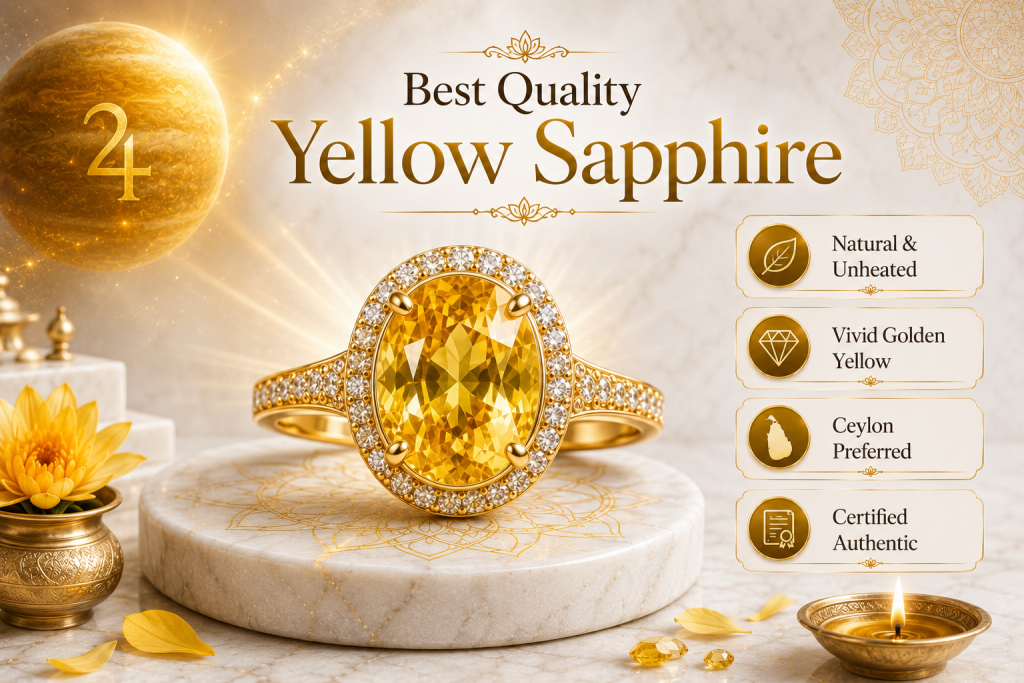
Yellow sapphire gets recommended more often than almost any other gemstone in Vedic astrology. Jupiter — Guru, Brihaspati — is considered the most naturally benefic planet in the Jyotish system, and Pukhraj is his stone. Unlike blue sapphire, which requires caution and testing, yellow sapphire is generally considered safe for a wide range of chart configurations. The question most buyers arrive with isn’t whether to wear it — it’s which one to buy.
That question has a specific answer. Best quality yellow sapphire isn’t a marketing phrase. It refers to a measurable combination of color, treatment status, origin, and clarity that determines both astrological potency and gemological value. Understanding what that combination looks like in practice is what separates a purchase that delivers results from one that looks good in a photograph.
Why Quality Determines Astrological Effectiveness
The Jyotish tradition is consistent on this point across virtually every classical and contemporary source: the quality of the stone directly affects the quality of the astrological result.
Jupiter’s energy flows through his stone. A low-quality, heavily treated, or synthetic Pukhraj channels that energy imprecisely or not at all — the tradition describes treated stones as having “marginal astrological value” compared to natural untreated material. This isn’t aesthetic preference. It’s the internal logic of a system that treats gemstones as vehicles for planetary energy, where the vehicle’s integrity determines how well the energy transmits.
Which means best quality yellow sapphire for astrological purposes and best quality yellow sapphire for gemological value are largely the same thing — they’re defined by the same factors, with treatment status being the most critical for astrological use specifically.
Color: The Primary Quality Indicator
Color determines more of yellow sapphire’s value than any other single factor.
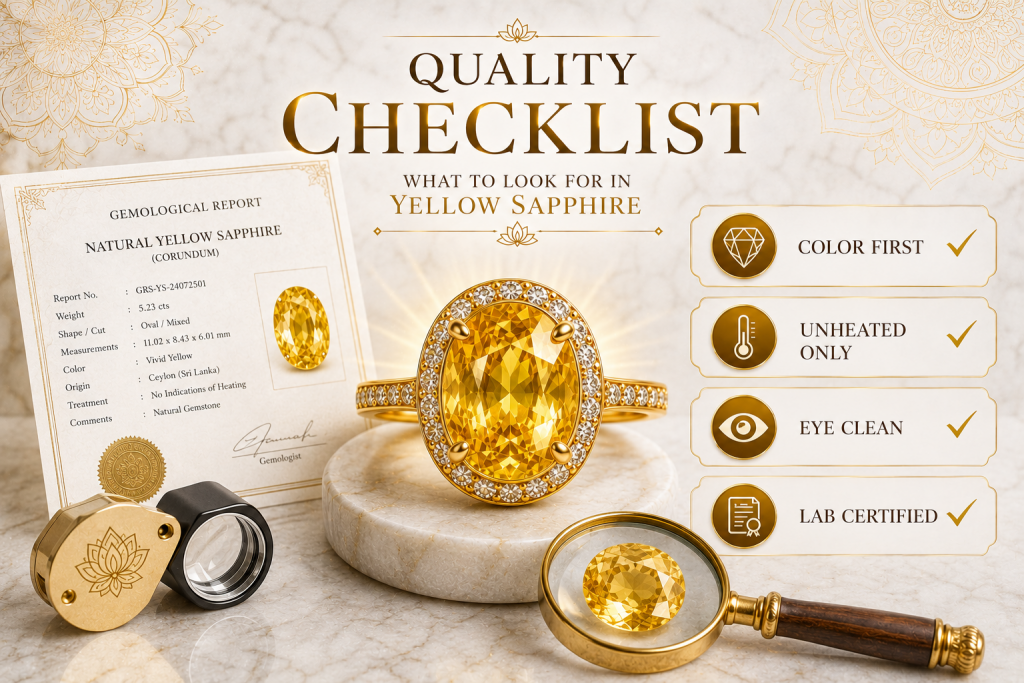
The finest Pukhraj displays a vivid, pure golden yellow — warm, saturated, and clean. No brown cast, no orange undertone, no greenish tint, no unevenness in color distribution across the stone. The color should look alive under different lighting conditions — not just vibrant under a jeweler’s warm lamp and dull or off-color in natural daylight.
The specific shade that’s most prized sits between bright lemon yellow and deep golden yellow. Canary yellow — an intense, bright pure yellow — is considered particularly valuable. Pale, washed-out yellow significantly reduces both price and astrological effectiveness. Overly saturated stones approaching orange-yellow are less desirable than pure golden specimens.
One practical test: examine the stone under natural daylight, not just indoor lighting. Color that shifts dramatically between lighting conditions — particularly color that looks vivid indoors and greenish or brownish outside — is a quality concern and sometimes an indicator of treatment.
Treatment Status: Non-Negotiable for Astrological Use
Most yellow sapphires in the commercial market have been heat-treated. A significant portion have been beryllium-diffused — a treatment that artificially infuses color into lower-grade or colorless material by driving beryllium into the crystal lattice at high temperature.
Heat treatment improves color and dissolves silk inclusions, making the stone appear cleaner and more vivid. Beryllium diffusion creates vivid color in stones that would otherwise be pale or colorless. Both are common. Both are sometimes sold without disclosure. And both are specifically associated with reduced astrological effectiveness in the Vedic tradition — the natural energetic signature of the stone is considered compromised by enhancement.
Natural unheated yellow sapphire is what the tradition recommends and what serious buyers should seek for astrological purposes. The word “unheated” needs to be confirmed in an independent laboratory certificate, not just stated in a product description.
The price premium for natural unheated Pukhraj over heated material of similar appearance is real and significant. This premium reflects genuine rarity — finding naturally vivid golden yellow in corundum without heat enhancement is uncommon, which is why fine natural unheated yellow sapphire commands the prices it does.
Origin: Why Ceylon Matters
Ceylon (Sri Lanka) is the most widely and consistently recommended origin for best quality yellow sapphire in Jyotish practice. The reasons are specific:
Sri Lankan yellow sapphires characteristically show a warm, bright golden yellow that Jyotish practitioners associate with Jupiter’s qualities — expansive, warm, full of light. The transparency of fine Ceylon material is excellent, allowing light to move through the stone cleanly. And Sri Lanka produces a higher proportion of naturally colored, unheated material than most other sources, which means finding genuinely natural unheated Pukhraj from Ceylon is more achievable than from origins where heating is near-universal.
Burma (Myanmar) produces excellent yellow sapphire with deep golden color at premium prices. Limited availability but high quality when found.
Madagascar and Thailand offer commercial quality at more accessible price points. Good for jewelry purposes. For serious astrological use, Ceylon is the consistent first recommendation.
Indian Pukhraj from Rajasthan and Karnataka exists and has historical significance in the tradition. Quality varies considerably. Ceylon material dominates contemporary astrological recommendations.
Clarity and What to Expect
Natural yellow sapphires contain inclusions — this is normal and expected. You’re not looking for flawless. You’re looking for eye-clean: no inclusions visible to the naked eye at normal viewing distance.
Under magnification, natural Pukhraj typically shows growth lines, fingerprint patterns, silk inclusions, or small crystal inclusions. These confirm natural formation. A stone that appears completely flawless under a 10x loupe at a price that doesn’t reflect exceptional rarity is worth questioning — genuinely inclusion-free natural yellow sapphire exists but commands prices that reflect how uncommon it is.
Heavily included stones with obvious cloudiness or disrupted transparency are less valuable and considered less astrologically effective. The tradition associates clarity with the stone’s ability to transmit Jupiter’s energy cleanly — which is why eye-clean is the practical quality benchmark.
How to Confirm Best Quality Before Buying
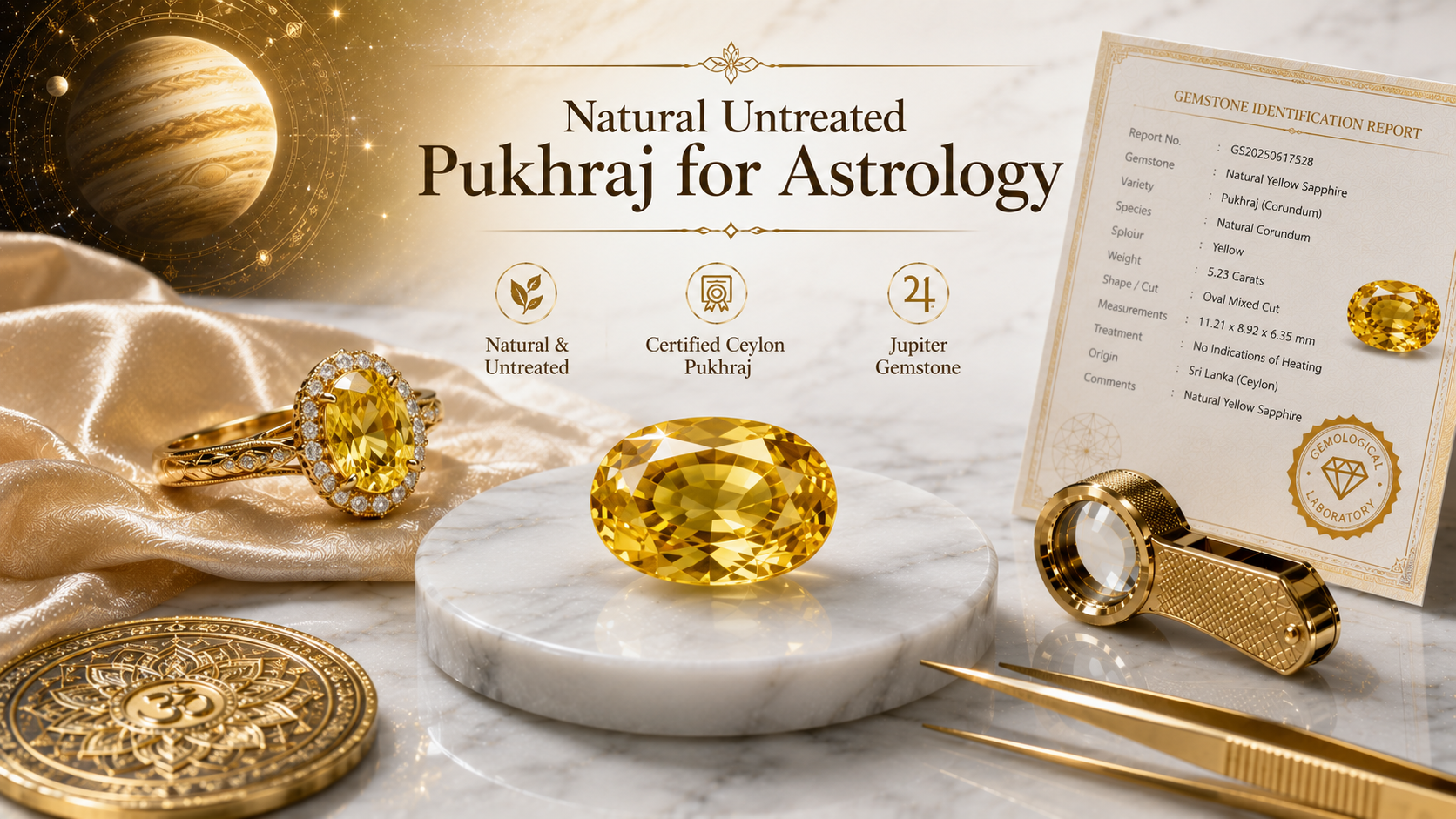
Independent laboratory certification is the only reliable way to confirm what you’re actually buying. A certificate from GIA, IGI, GRS, IIGJ, or GII should specify: natural origin, treatment status (specifically “no heat treatment” for astrological use), color description, and carat weight. Without these four elements confirmed in the certificate, quality claims are unverifiable.
The distinction between “natural” and “unheated” matters in the certificate. A stone confirmed as natural but not addressed for treatment status has incomplete documentation for astrological purposes. Confirm both separately.
Video under natural daylight before any significant online purchase. Studio photographs under controlled lighting make every yellow sapphire look more vivid than it does in normal conditions. Natural daylight video shows you the stone accurately.
Price as a signal. Fine natural unheated Ceylon Pukhraj with vivid golden yellow color has a real cost floor. Current market pricing runs from approximately ₹5,000 per ratti for entry-quality natural material to ₹40,000 to ₹50,000 per ratti for exceptional specimens. Stones presented as fine quality natural unheated Ceylon at prices dramatically below this range are almost always heated, beryllium-treated, or misrepresented in origin.
Wearing It Correctly
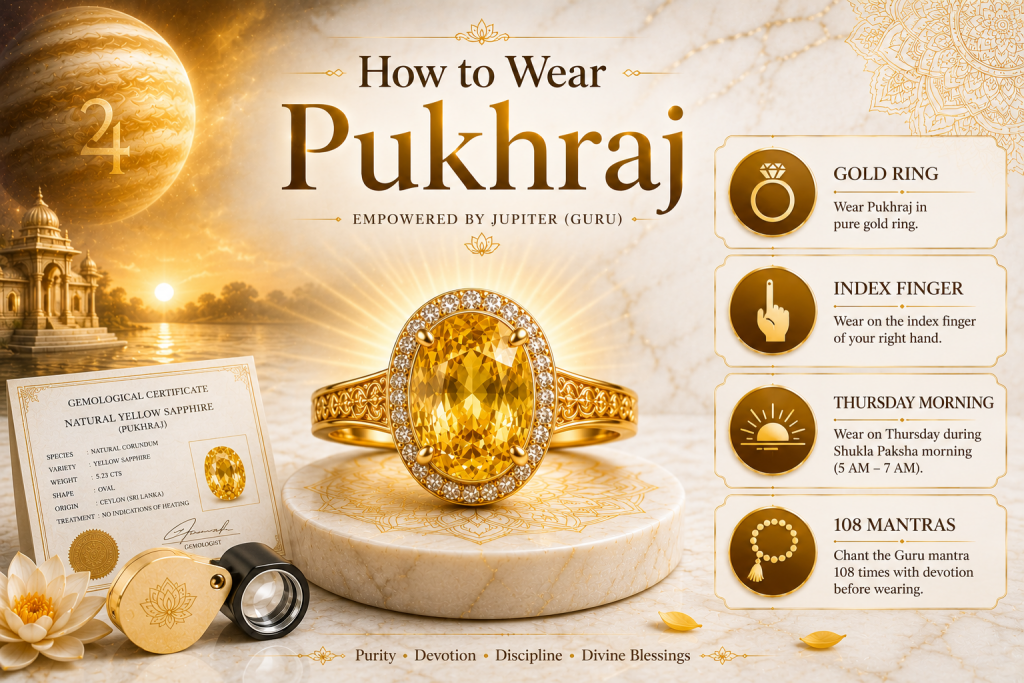
Gold setting. Index finger of the right hand. Thursday morning, 5 to 7 AM, Shukla Paksha.
Purify in Ganga Jal or milk before first wearing. Chant the Jupiter mantra 108 times:
Om Graam Greem Graum Sah Guruve Namaha
(ॐ ग्रां ग्रीं ग्रौं सः गुरवे नमः)
Weight: one-twelfth of body weight in ratti. A 60 kg person should wear approximately 5 ratti. Confirm with your Jyotish astrologer based on the individual birth chart.
The Short Version
Best quality yellow sapphire means natural, unheated, vivid golden yellow color, eye-clean clarity, ideally Ceylon origin, confirmed by independent laboratory certification. Every element of that description affects both the astrological potency and the market value of the stone. Color and treatment status matter most. Certification is how you verify both. And chart suitability confirmed by a Jyotish astrologer is the step that determines whether the best quality stone is also the right stone for you specifically.
Tags:
best pukhraj stone,
best quality pukhraj,
best quality yellow sapphire,
best yellow sapphire for astrology,
certified yellow sapphire,
ceylon yellow sapphire,
genuine yellow sapphire india,
natural pukhraj stone india,
natural yellow sapphire,
original pukhraj online,
original pukhraj stone,
premium yellow sapphire,
pukhraj buying guide,
pukhraj certification,
pukhraj stone for guru,
sri lankan pukhraj,
unheated yellow sapphire,
untreated yellow sapphire,
yellow sapphire for astrology,
yellow sapphire quality guide