Best Blue Sapphire Stone for Astrology: Quality Guide, Ceylon Neelam & Buying Tips
Vikas June 12, 2026 in
Astrology Best Blue Sapphire Stone for Astrology: What Actually Determines Quality
Not all blue sapphires work equally well for astrological purposes.
That’s not a marketing claim — it’s a practical reality that anyone who has consulted a serious Jyotish practitioner already knows. The same Saturn energy doesn’t flow equally through a glass-filled commercial stone and a natural untreated Ceylon sapphire. The tradition is consistent about this: the quality of the stone directly affects the quality of the astrological result. Which means answering the question of which is the best blue sapphire stone for astrology requires understanding exactly what quality means in this specific context.
Why Quality Matters More for Neelam Than Most Stones
Blue sapphire is Saturn’s stone. And Saturn — Shani Dev — governs karma, discipline, and consequence. His energy is precise and fast-acting in a way that most other planetary stones aren’t. Jyotish tradition describes Neelam as showing effects sometimes within 72 hours of first wearing. That speed is both its greatest asset and the reason quality isn’t negotiable here.
A weak stone channeling Saturn’s energy imprecisely is not a neutral outcome. It’s like having a poor conductor in an electrical circuit — the current still flows, but unpredictably. The tradition’s emphasis on wearing high-quality, natural, untreated Neelam isn’t aesthetic preference. It’s practical guidance about how the stone functions as a vehicle for planetary energy.
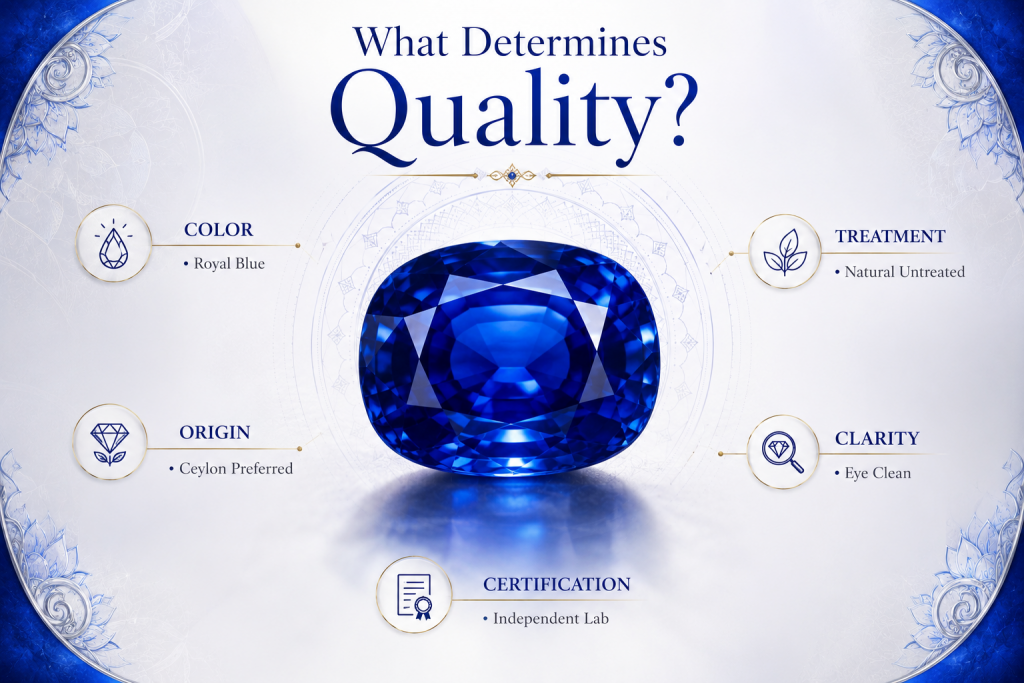
Color: The Single Most Important Factor
Of all the quality considerations, color determines more of the astrological value and market price of blue sapphire than anything else.
The best blue sapphire for astrology displays a vivid, deep royal blue — sometimes called cornflower blue at the lighter end or velvety blue at the deeper end — with even color distribution throughout the stone and no color zoning, no undertone of grey or green, no blackish murkiness that kills the saturation.
The color should look alive. Not flat, not washed out, not so dark it becomes opaque. A stone that seems to hold light within it rather than simply reflecting off the surface — that’s the quality the tradition describes as most potent.
Specifically:
- Royal blue and cornflower blue are the most prized shades. Vivid, pure, and clean. Kashmir sapphires — now extremely rare because the original mines are largely depleted — are the historical benchmark for this quality. Their characteristic velvety blue with a slight silky sheen from fine needle inclusions is unlike anything from other origins.
- Pale or washed-out blue indicates lower quality. The color is there but lacks intensity. Less valuable both astrologically and gemologically.
- Overly dark, near-black blue is also less desirable. Color too dark to transmit light loses the vibrancy that makes fine sapphire distinctive. These stones often look impressive in photographs but flat in person.
- The color should hold consistently under different lighting conditions — natural daylight, indoor incandescent light, fluorescent light. Color that shifts dramatically or looks different in a jeweler’s display case versus outside is a quality concern.
Treatment Status: Non-Negotiable for Astrological Use
The Jyotish tradition is unambiguous: natural untreated blue sapphire is required for maximum astrological benefit. This point appears consistently across classical and contemporary sources with virtually no dissent.
Heat treatment — applied to the overwhelming majority of commercial sapphires — improves color and clarity but is believed to alter the stone’s natural energetic signature. The treatment doesn’t destroy the stone; it changes it. For jewelry purposes, a well-heated sapphire with excellent color is entirely legitimate. For astrological purposes where the stone’s interaction with Saturn’s energy is the point, the tradition says untreated is necessary.
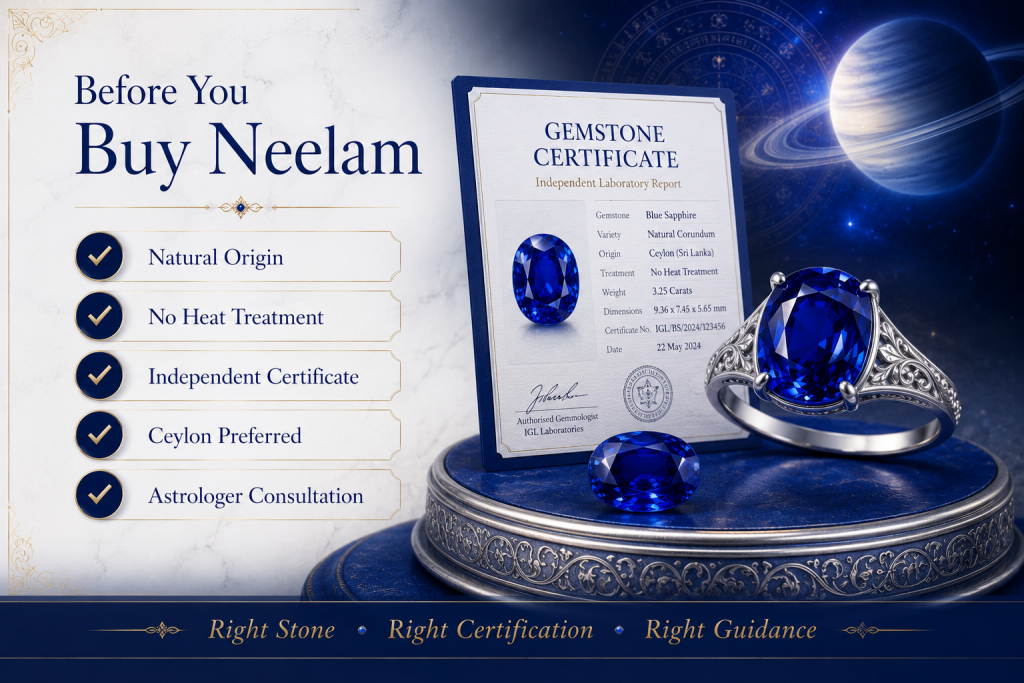
What this means practically:
Most blue sapphires in the commercial market are heated. When you see a vivid blue sapphire at a price that seems reasonable, it has almost certainly been heat-treated. Fine natural untreated sapphire with vivid color is genuinely rare and priced to reflect that. If you’re buying Neelam for Saturn’s blessings rather than for its appearance alone, confirming untreated status through independent certification is not optional — it’s the entire point of the purchase.
Other treatments to be aware of: beryllium diffusion creates artificial color that penetrates only the surface. Fracture filling improves clarity using glass or resin. Both are common and both are considered far more problematic than heat treatment — they alter the stone more substantially and are sometimes difficult to detect without advanced laboratory testing.
Origin: Where the Stone Comes From
Origin affects both price and astrological recommendation in ways that matter.
Kashmir produces what many consider the finest blue sapphire in the world — that characteristic velvety blue that collectors chase across the globe. The original Kashmiri mines are effectively exhausted now, which means genuine Kashmir-origin sapphire is extraordinarily rare and commands prices that reflect that scarcity. If Kashmir origin is claimed without a laboratory report confirming it through geological analysis, treat the claim skeptically.
Ceylon (Sri Lanka) is the most widely recommended origin for astrological use, and for practical reasons: excellent color, good clarity, high frequency of natural untreated material available at quality levels appropriate for Jyotish use. Ceylon blue sapphires consistently rank among the finest available and remain accessible compared to Kashmiri material. Most serious Jyotish practitioners recommend Ceylon Neelam as the best everyday choice for astrological purposes.
Burma (Myanmar) produces exceptional blue sapphires with deep royal blue color. High quality, high price, lower availability than Ceylon.
Thailand and Madagascar produce good commercial material at more accessible prices. Both are legitimate sources for jewelry-quality sapphire. For serious astrological use, Ceylon or Burmese material is generally preferred.
Clarity
Sapphires are Type II gemstones — meaning minor natural inclusions are expected and normal. You’re not looking for a flawless stone. You’re looking for eye-clean: no inclusions visible to the naked eye at normal viewing distance.
Internally, natural sapphires often contain silk — fine needle-like rutile inclusions that, in fine Kashmir material, contribute to the characteristic velvety light scattering. This silk is considered natural and acceptable. What’s undesirable is heavy inclusions that disrupt transparency, create obvious cloudiness, or compromise the stone’s structural integrity.
Astrologically, the tradition recommends stones that are clear and transparent — that transmit Saturn’s energy cleanly rather than being blocked or scattered by heavy internal flaws. A stone with heavy visible inclusions is considered less effective regardless of its color or origin.
The characteristic inclusions of natural sapphire — growth lines, silk, fingerprint patterns, small mineral crystals — confirm natural origin. A completely flawless stone under magnification is worth questioning: it may be synthetic or heavily treated.
Cut and Carat Weight
Cut doesn’t directly affect astrological efficacy in the Jyotish framework — the tradition’s concern is with the stone’s natural qualities rather than how it’s been shaped. What cut does affect is how the color and transparency are expressed visually, which in turn affects how well the stone serves its purpose.
A poorly cut stone — shallow pavilion, asymmetric proportions, disproportionate depth — produces a flat, lifeless appearance even in otherwise quality material. Well-cut sapphire shows its color evenly and holds light well. Oval and cushion cuts are most common for sapphire; round brilliant cuts are also widely used.
Weight follows the classical guideline: 1 ratti per 12 kg of body weight. Someone weighing 60 kg should wear approximately 5 ratti — roughly 4.5 to 5 carats. Confirm with your astrologer based on the individual birth chart. Some charts call for adjustments to this baseline.
How to Confirm You’re Buying the Right Stone
Independent gemological certification is what separates a quality purchase from a gamble when buying blue sapphire for astrological use.
A certificate from GIA, GRS, Gübelin, SSEF, or an equivalent laboratory should confirm: natural origin, no heat treatment, color description, and weight. For higher-value purchases from premium origins, origin determination through geological testing should also be part of the report.
Without certification, “natural” and “untreated” are just claims. With certification, they’re documented facts.
When evaluating options online specifically: request video under natural daylight alongside studio photographs. Color in natural light tells you more than any studio image. Ask specifically about treatment status and request the certificate confirms it in writing before purchase.
The Short Answer
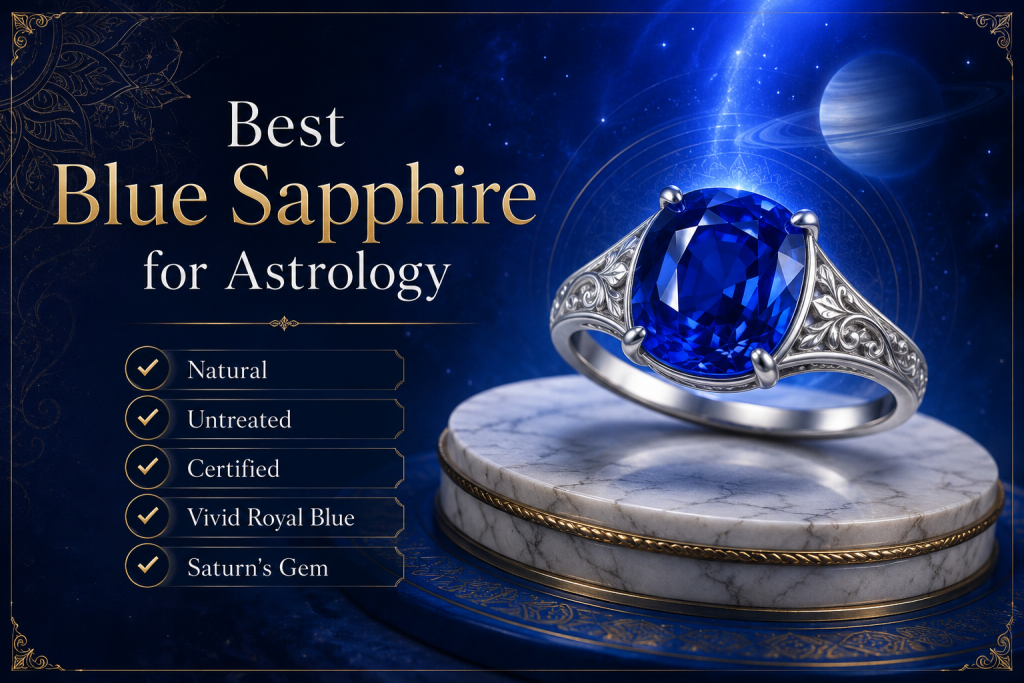
The best blue sapphire stone for astrology is natural, untreated, eye-clean, vivid royal blue, ideally from Ceylon or Kashmir origin, certified by an independent gemological laboratory confirming both natural origin and absence of heat treatment, and worn in a weight appropriate to your body weight and confirmed by your Jyotish astrologer.
Every element of that description matters. The color determines the quality of Saturn’s energy transmission. The treatment status determines whether the stone’s natural signature is intact. The certification is how you verify both without relying on a seller’s word. And the astrologer confirmation is how you verify the stone is right for your chart — because all of the above means nothing if Saturn isn’t beneficial in your natal horoscope.
Tags:
Astrological Blue Sapphire,
Best Blue Sapphire in India,
Best Blue Sapphire Stone for Astrology,
Best Ceylon Neelam,
Best Neelam for Astrology,
Best Neelam Stone,
Best Quality Neelam,
blue sapphire benefits,
Blue Sapphire Buying Guide,
Blue Sapphire Certification,
Blue Sapphire Clarity,
Blue Sapphire Colour,
Blue Sapphire for Astrology,
Blue Sapphire for Shani,
Blue Sapphire Origin,
Blue Sapphire Price India,
Blue Sapphire Quality Guide,
Buy Blue Sapphire Online,
Certified Blue Sapphire,
Ceylon Blue Sapphire,
Ceylon Neelam,
Cornflower Blue Sapphire,
Heat Untreated Blue Sapphire,
Jyotish Blue Sapphire,
Kashmir Blue Sapphire,
natural blue sapphire,
Natural Certified Neelam,
Natural Neelam Online,
Natural Neelam Stone,
Natural Untreated Blue Sapphire,
Neelam Stone Benefits,
Original Blue Sapphire Online,
Original Neelam Stone,
Premium Blue Sapphire,
Royal Blue Sapphire,
Saturn gemstone,
Shani Gemstone Guide,
Shani Stone,
Sri Lankan Blue Sapphire,
Untreated Blue Sapphire