A Complete Guide to Precious Stones in India and How to Choose One
Vikas June 28, 2026 in
Astrology A Complete Guide to Precious Stones in India and How to Choose One
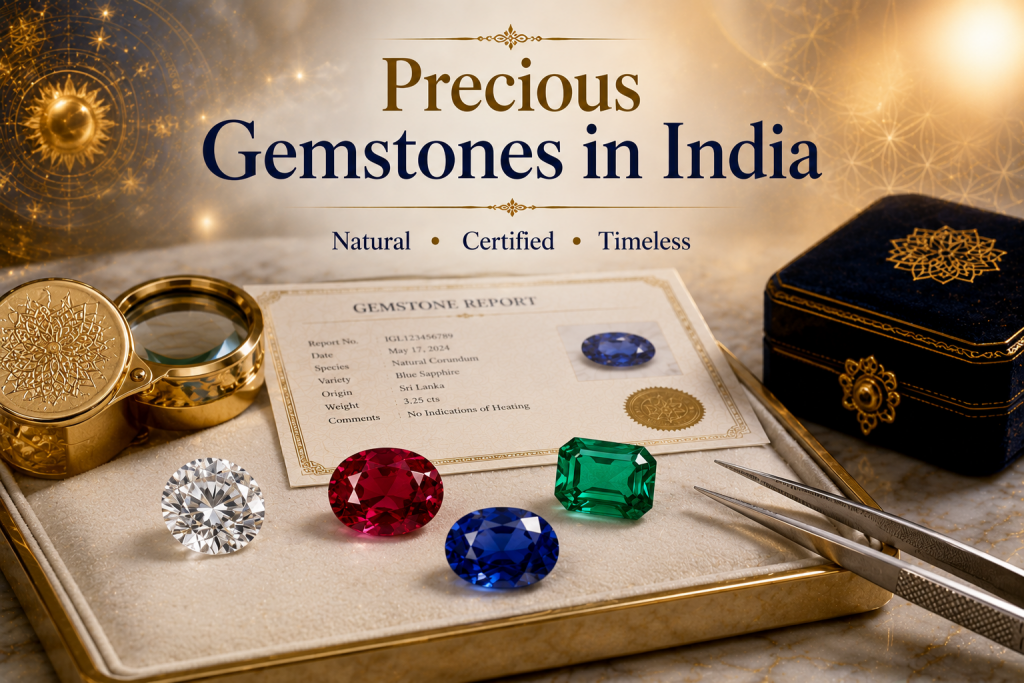
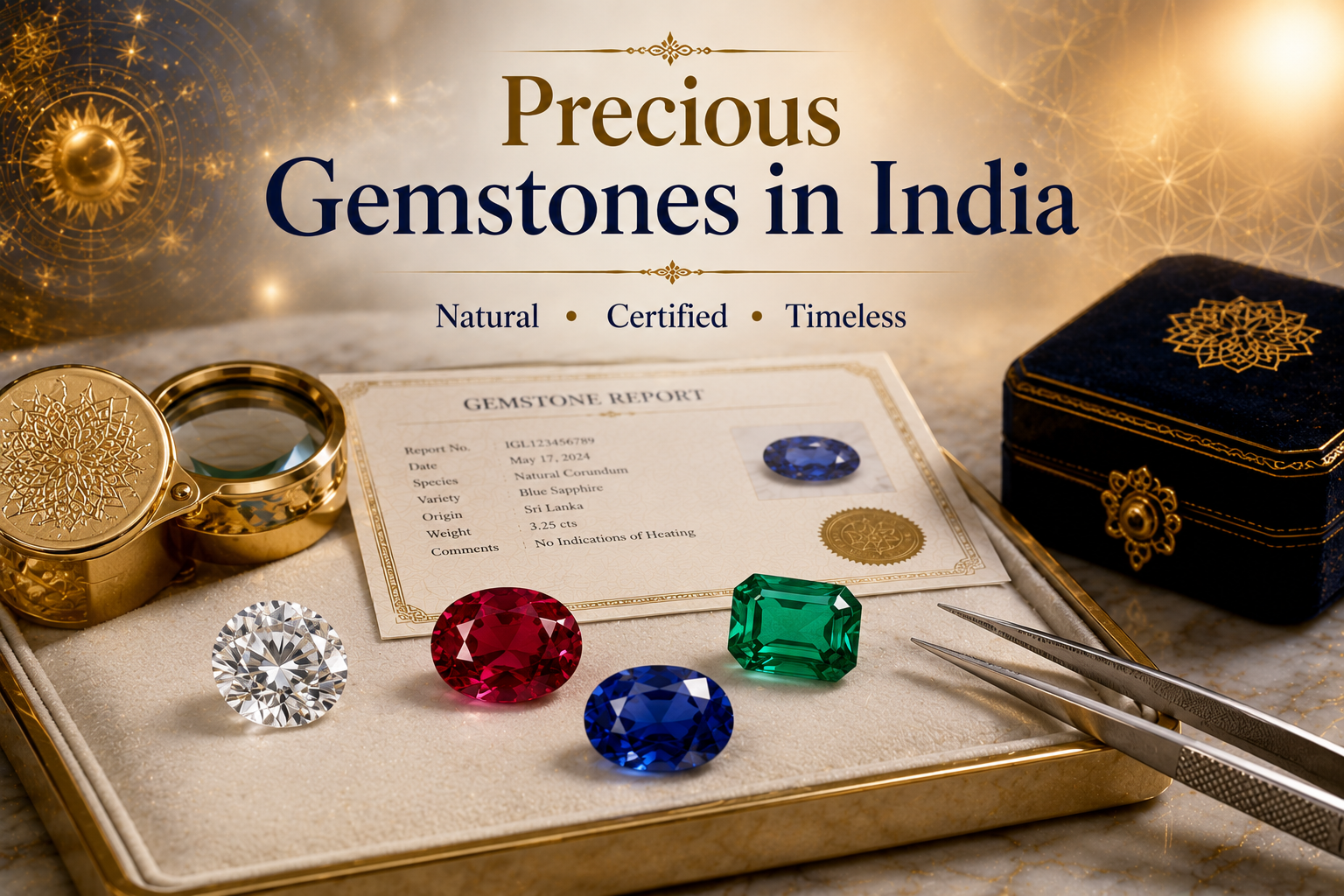
Walk into any gemstone conversation in India and you’ll notice something quickly — people don’t just ask “which gemstone.” They ask which one suits their chart, which one their grandmother wore, which one a particular astrologer recommended after looking at their date of birth. Precious stones in India carry weight that goes well beyond decoration, and understanding that weight is the first step before buying anything.
What Actually Makes a Gemstone Precious
Rarity is the short answer, but it’s worth sitting with for a moment. A gemstone earns the label “precious” because it’s genuinely scarce in nature, and that scarcity, combined with durability and visual appeal, has historically separated a small handful of stones from everything else.
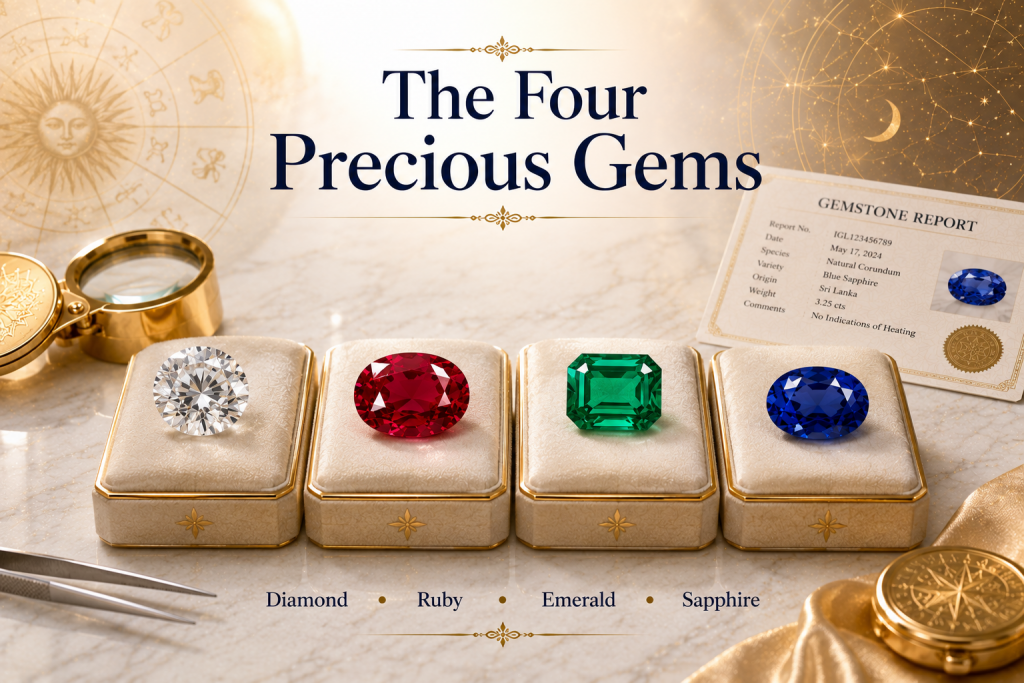
Four stones make up the traditional precious gemstone category — diamond, ruby, emerald, and sapphire. Everything else, regardless of beauty or price, technically falls under semi-precious. Lapis Lazuli, Cat’s Eye, Onyx, Pearl — all genuinely valuable, all widely worn, but more abundant in nature than the core four, which is exactly why the classification exists in the first place.
In India specifically, this distinction matters for a reason that goes beyond gemology. Each stone is traditionally connected to a specific planet in Vedic astrology, and that planet’s position at the time of a person’s birth is believed to shape events throughout their life. Wearing the corresponding gemstone is meant to help balance whatever effect that planetary placement creates — which is precisely why gemstone buying in India so often starts with a horoscope rather than a jewelry catalog.
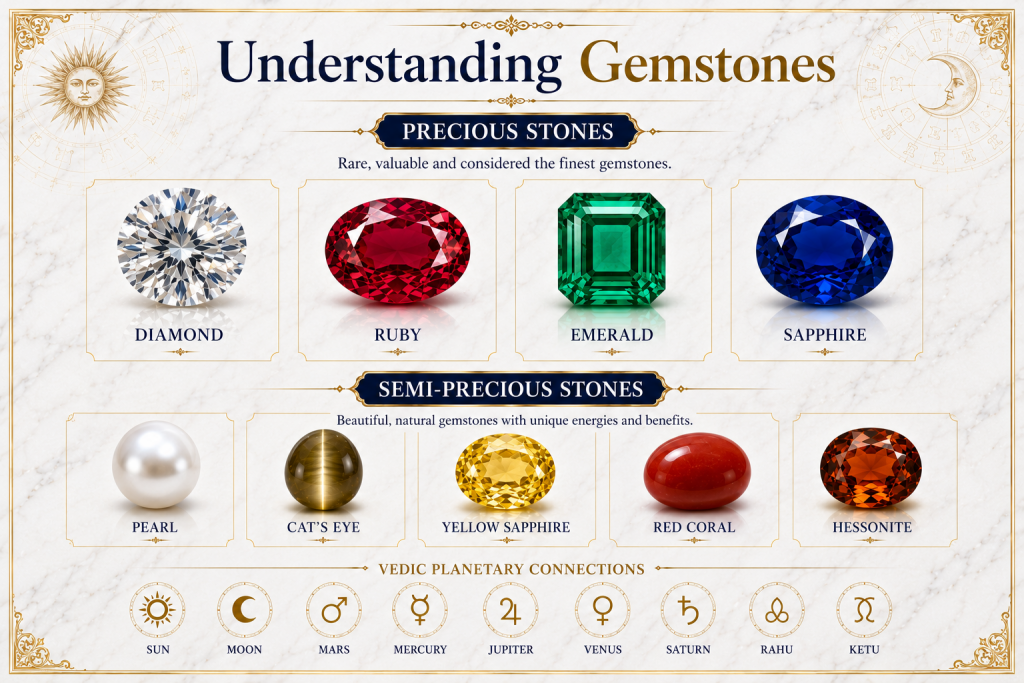
Diamond sits at the top for hardness and brightness. Nothing in nature scratches it, and that durability is exactly why it holds its appearance for decades when properly cared for. It shows up everywhere — rings, pendants, earrings, wedding jewelry — partly because it suits both everyday wear and major occasions equally well. Buyers evaluating diamond typically focus on cut, clarity, and weight, in roughly that order of attention.
Ruby carries a different kind of reputation. Deep red, often associated with confidence and authority, and commonly set into rings and pendants across Indian jewelry traditions. Natural ruby ranges from a lighter red to a much deeper, richer shade, and when people are choosing between specimens, color strength and surface clarity tend to be the two things they actually look at closely.
Emerald, known widely as Panna stone, brings green into the precious category and carries associations with balance — which is part of why it’s frequently chosen by people in education, communication, or business roles specifically. One thing worth knowing upfront: natural emerald almost always contains internal lines or inclusions, and this is completely normal rather than a defect. What separates a good emerald is fresh, vivid green color paired with a stable, well-executed cut.
Sapphire is the most varied of the four. Blue sapphire — Neelam, in everyday Indian usage — is by far the most recognized, durable enough for genuinely regular wear. But the sapphire family extends further than most people realize, including yellow and white varieties that have built their own dedicated followings. Given how closely sapphire ties into astrological practice, proper guidance before wearing any variety is generally considered worthwhile rather than optional.

Beyond the Core Four
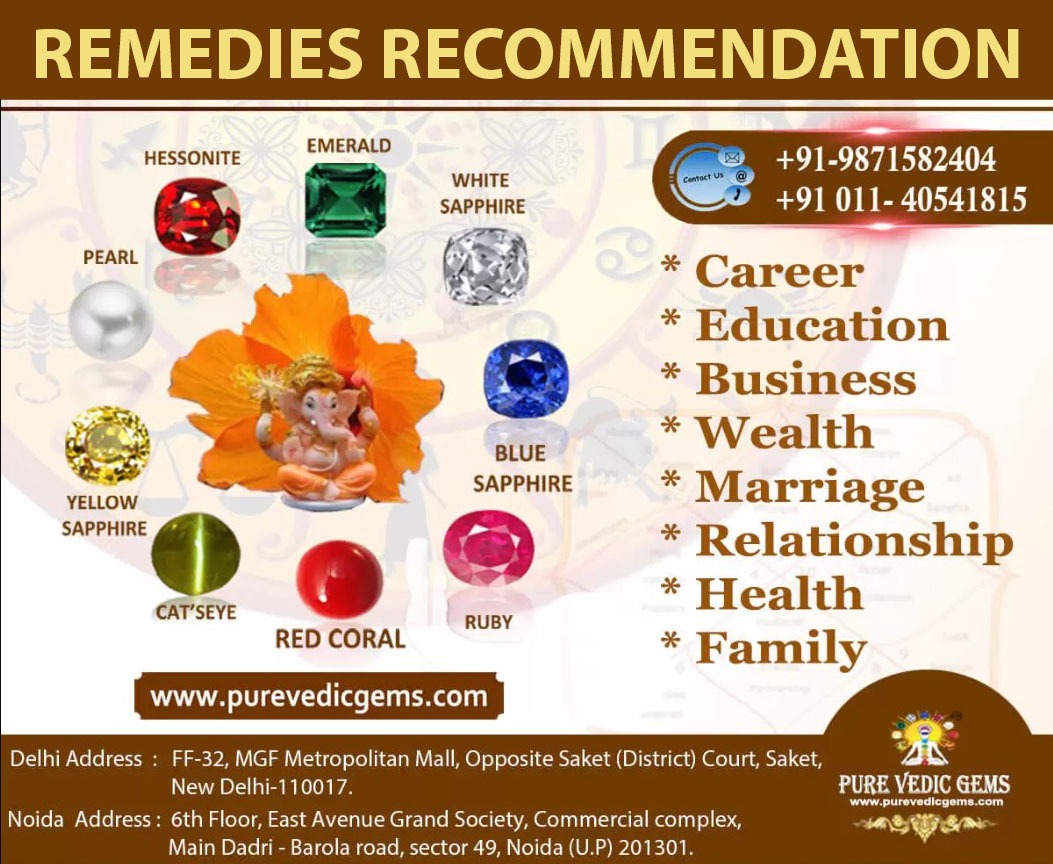
The broader category of natural gemstones widely used in India extends past diamond, ruby, emerald, and sapphire into stones like Pearl, Red Coral, Cat’s Eye, and the secondary sapphire varieties — yellow and white among them. People choose these for reasons that are just as personal as the ones driving precious stone purchases — family tradition, specific astrological recommendation, or simply genuine aesthetic preference.
Most buyers searching online don’t draw a sharp line between “precious” and “semi-precious” in their actual search behavior. They search broadly for gemstone, which is exactly why a complete collection needs to represent this wider category rather than narrowing in on only the four classical precious stones.
How to Actually Choose One
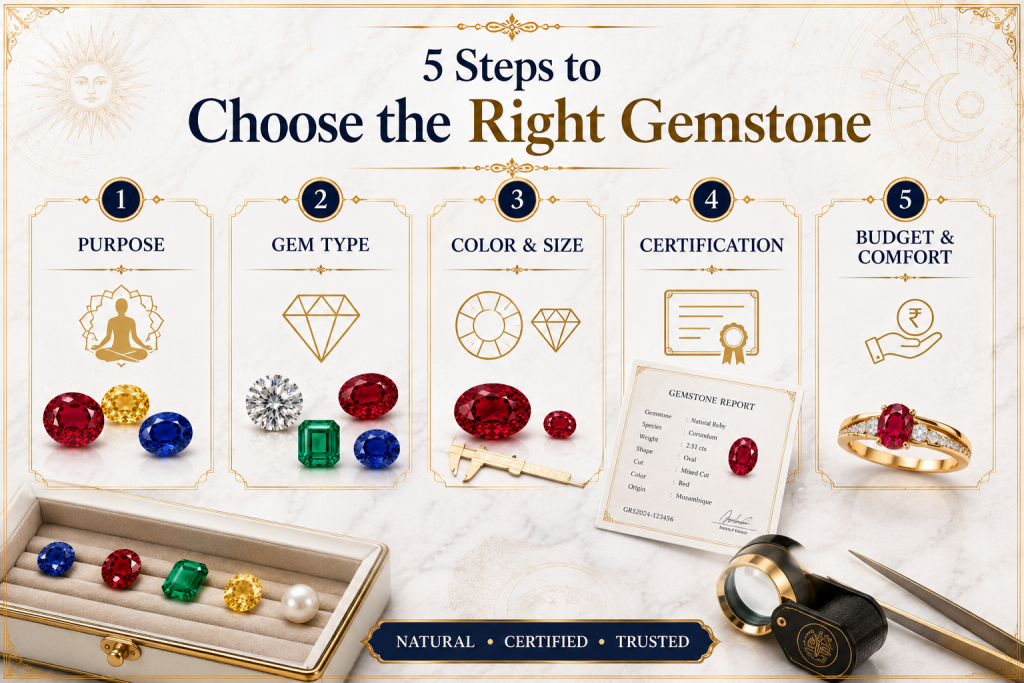
Buying a gemstone doesn’t need to be complicated, even though the surrounding information often makes it feel that way. Start with why you actually want it — astrology, personal style, gifting, or simply collecting. From there, narrow down the gemstone type itself, then look closely at size and color, since these two factors affect both appearance and astrological suitability simultaneously.
Testing details deserve real attention at this stage rather than being treated as paperwork to skim past. And finally, balance your decision against comfort and budget realistically, since the most expensive option in any category isn’t automatically the right one for every buyer’s specific situation.
Why Testing and Quality Information Actually Matter
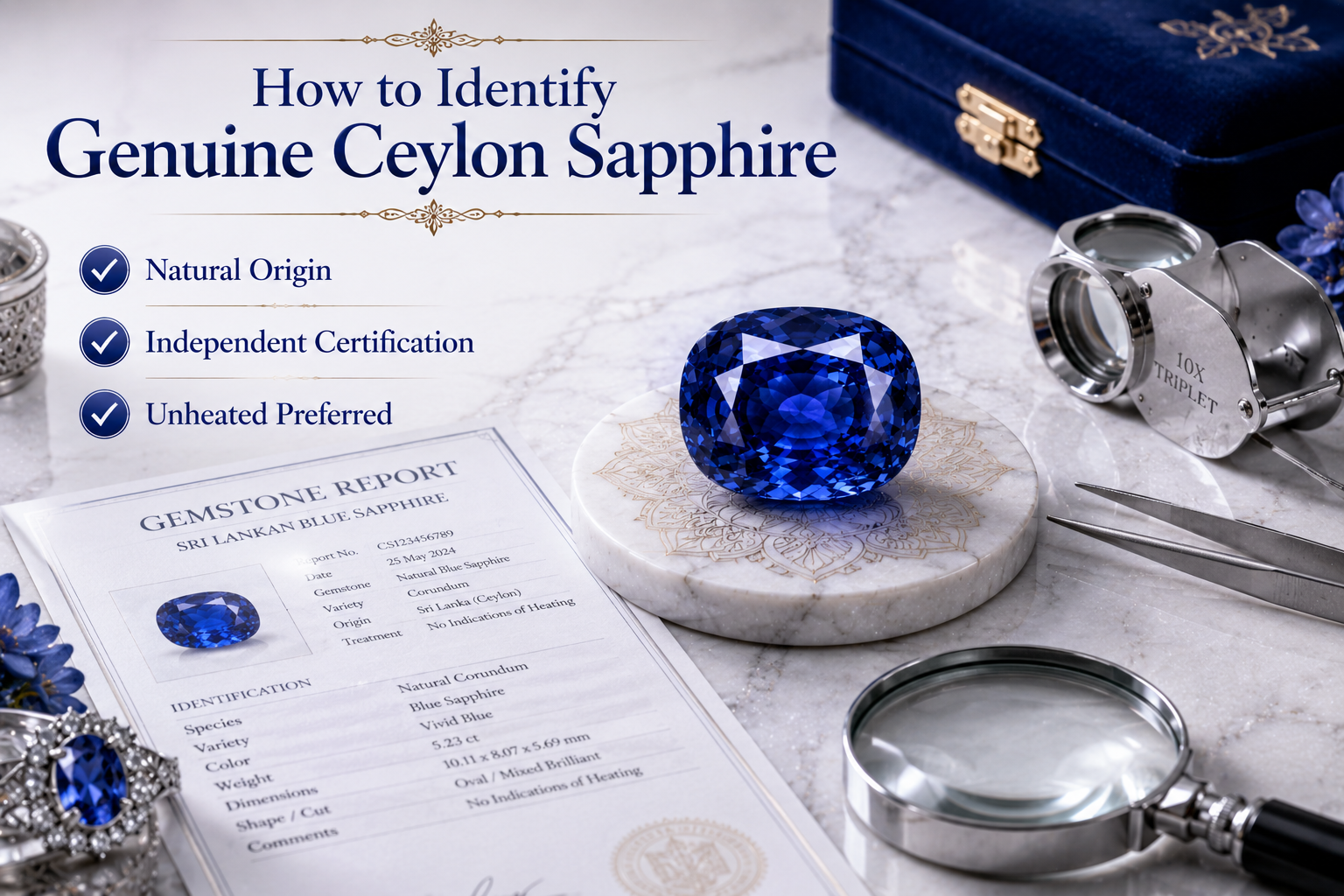
A proper gemstone test confirms three things that genuinely matter: whether the stone is natural, whether any treatments have been applied, and its accurate weight and dimensions. For anyone buying online specifically, where physical inspection isn’t possible before purchase, this information is what builds genuine confidence rather than blind hope that everything will turn out fine.
Buying gemstones online in India has become increasingly common, and the reasons are fairly practical rather than complicated. Better variety than most physical stores can stock in one place, easier side-by-side comparison between options, convenient home delivery, and genuine time savings compared to visiting multiple shops in person.
What buyers consistently expect when they search for buy gemstone online is straightforward — clear product images that actually show the stone accurately, and information that’s easy to read without requiring a gemology background to decode.
Keeping a Gemstone in Good Condition
Caring for a precious gemstone doesn’t require anything elaborate. Clean it gently with a soft cloth on a regular basis. Keep it away from harsh chemicals, which can dull or damage certain stones over time. Store each piece separately rather than letting gemstones knock against each other or against harder jewelry. And remove rings or pendants before any physically demanding work where impact or excessive friction is likely.
These habits, simple as they are, genuinely extend how long a gemstone holds its original appearance.
Who Actually Buys These Stones, and Why
Different people reach for gemstones for genuinely different reasons. Some wear them daily as a core part of their personal style. Others reserve them for special occasions only. Many buy specifically to gift someone for a birthday, wedding, or milestone event. And a meaningful number simply collect gemstones as a long-term interest, independent of wearing them at all.
This range of motivations is exactly why gemstones remain among the most consistently searched jewelry-related categories online in India — the audience isn’t one type of buyer, it’s several distinct ones overlapping in the same market.
Common Questions Worth Addressing Directly
A precious gemstone is a natural stone recognized for durability and long-term value — diamond, ruby, emerald, and sapphire are the classic examples. Gemstone itself is a broader, more general term, while precious gemstone refers to a specific, narrower category within it.
Identifying a natural gemstone reliably comes down to a proper lab test report rather than visual inspection alone. Yes, many gemstones including diamond and sapphire are entirely suitable for daily wear given their durability. For beginners specifically, pearl and emerald are often recommended starting points, generally alongside some guidance on what to look for.
Special care requirements are minimal for most gemstones — basic cleaning and sensible storage cover the majority of situations. Gemstones do make genuinely good gift options, particularly for meaningful occasions. And with proper care, most gemstones maintain their appearance reliably over many years rather than degrading noticeably with time.
Tags:
Authentic Gemstones India,
buy gemstones online India,
Certified gemstones,
diamond gemstone,
emerald panna stone,
gemstone buying guide,
gemstone care,
gemstone certification,
gemstone collection,
gemstone gifts,
gemstone guide India,
gemstone jewelry India,
gemstone shopping online,
gemstone testing,
Indian gemstones,
natural emerald,
natural gemstones India,
natural ruby,
natural sapphire,
Precious Gemstones,
precious stone selection,
precious stones in India,
Ruby Stone,
sapphire neelam,
semi precious stones,
Vedic astrology gemstones