Where to Buy Real Gemstones Online Trusted Source for Certified Natural Gemstones
Vikas June 28, 2026 in
Astrology Where to Buy Real Gemstones Online Trusted Source for Certified Natural Gemstones
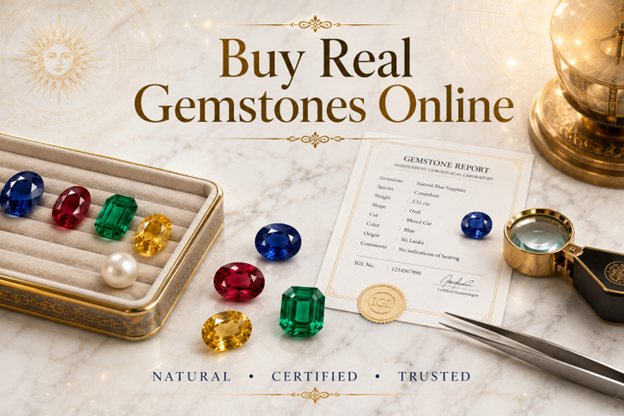
The search for where to buy real gemstones online almost always starts the same way — a few listings open in different tabs, every single one claiming 100% natural, lab tested, fully certified, completely trustworthy. The language across sellers is nearly identical. What’s actually behind that language varies enormously, and that gap is precisely where buyers run into trouble.
Knowing what real authenticity actually looks like, and what genuine certification should confirm, is what separates a confident purchase from an expensive guessing game.
Why “Certified” Doesn’t Automatically Mean Trustworthy
Almost every gemstone listing online uses the word certified. Very few specify which laboratory issued that certification, what standards it followed, or how a buyer might independently verify it. That vagueness benefits sellers offering lower-quality material at prices that don’t reflect what’s actually being sold.
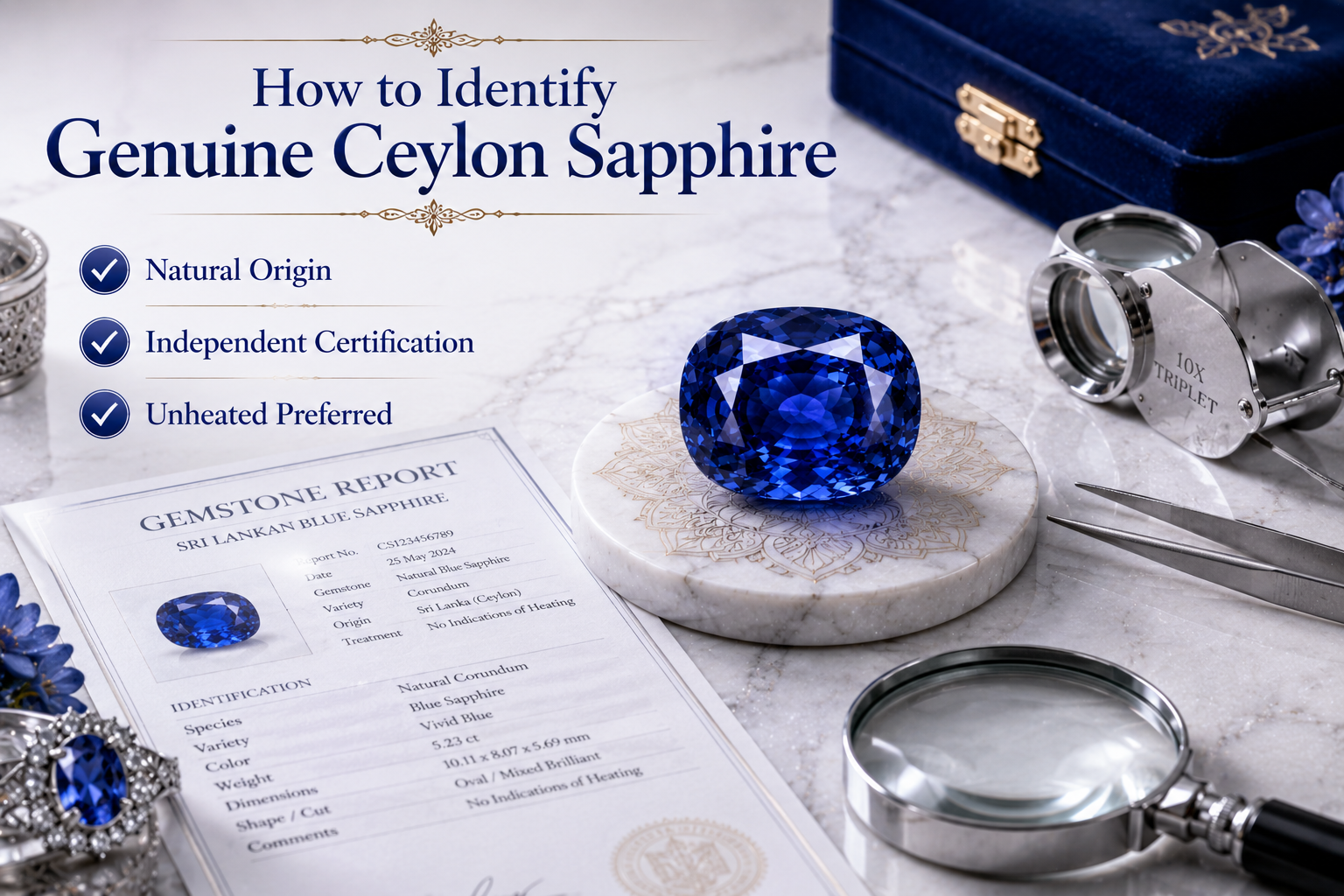
A genuine certificate from a recognized laboratory confirms specific, testable details — whether a stone is natural or lab-grown, whether it’s been heat-treated or otherwise enhanced, its geographic origin where that can be determined, and its quality grading across colour, clarity, and weight. The laboratories whose certificates carry real evidentiary weight include GIA, GRS, Gübelin, SSEF, IGI, IIGJ, and GII. Each operates independently from the sellers whose stones pass through their testing process.
A certificate from an in-house lab, or from a laboratory nobody outside that particular seller’s ecosystem has ever heard of, isn’t doing the same job. It’s simply a more official-looking version of asking buyers to trust the seller’s word.
What Genuine Documentation Should Look Like
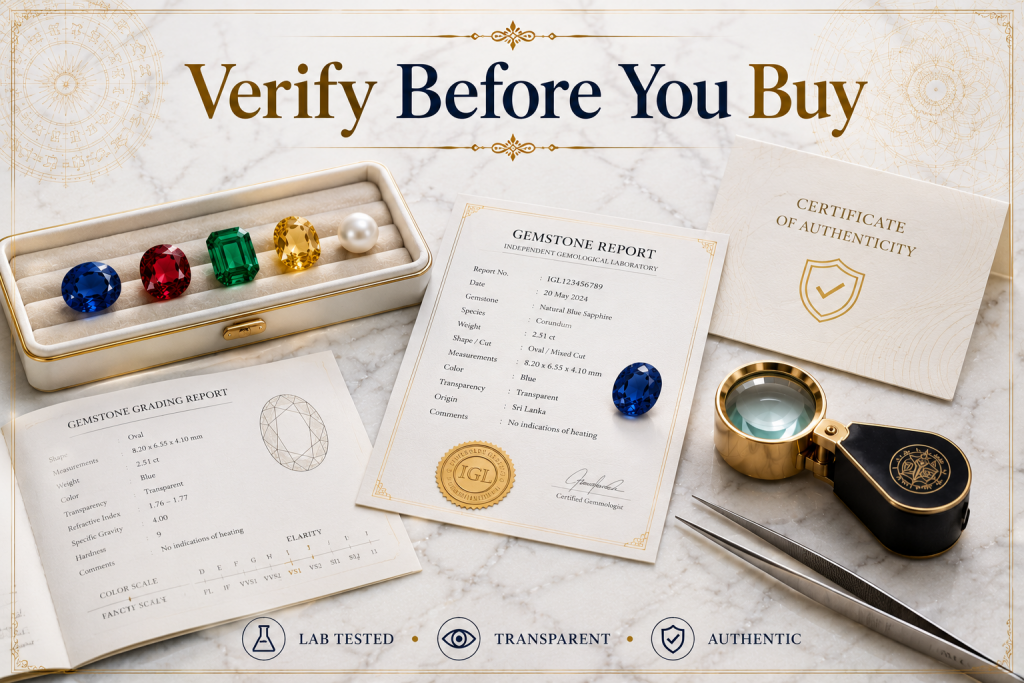
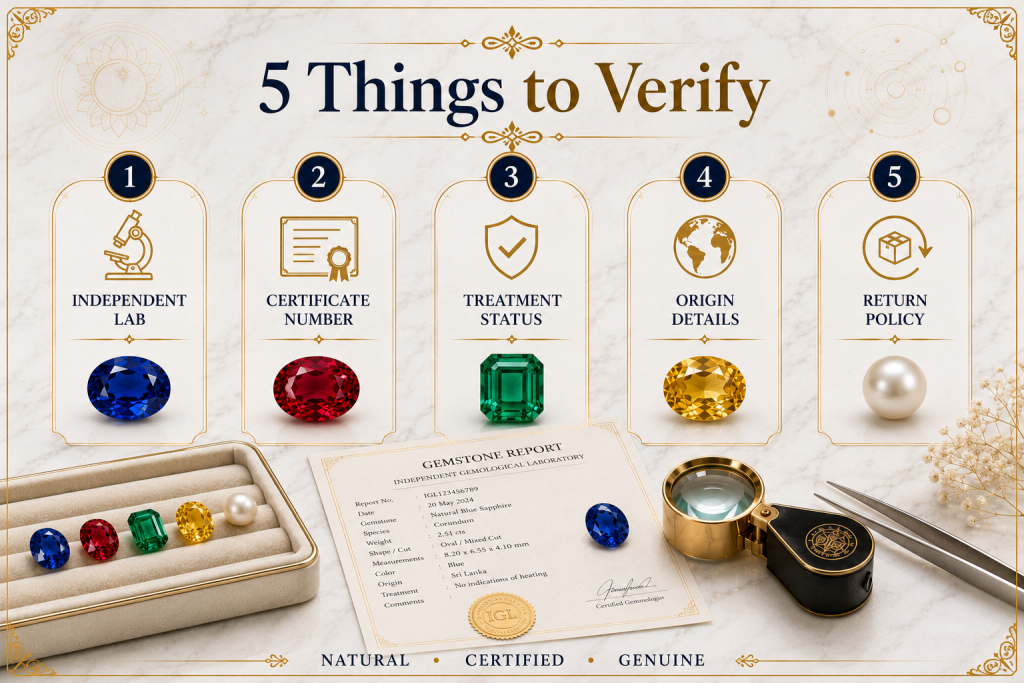
Before relying on any certificate, there’s a simple verification worth running. Does it carry a specific certificate number, and can that number be checked directly on the issuing laboratory’s own website. If the answer is yes, that’s a real document doing what documents are supposed to do. If the number doesn’t appear anywhere outside the paper it’s printed on, the certificate isn’t actually verifying anything.
Treatment disclosure is where reliable and unreliable sellers diverge most clearly. A trustworthy listing states plainly whether a sapphire has been heated, whether a ruby contains fracture-filling, whether an emerald has undergone minor oiling or something more extensive. Vague phrasing — enhanced, clarity improved, natural colour without further detail — usually signals a treatment exists and isn’t being stated directly.
This distinction matters for every gemstone category, but it matters most for stones bought with astrological intent. Heat treatment in blue sapphire and ruby is common and broadly acceptable for purely decorative jewellery. For astrological purposes specifically, treatment status changes how effective the stone is considered to be entirely. A buyer who doesn’t know to ask ends up paying natural-stone prices for treated material without ever realizing there was a meaningful distinction to begin with.
What a Genuinely Comprehensive Source Should Offer
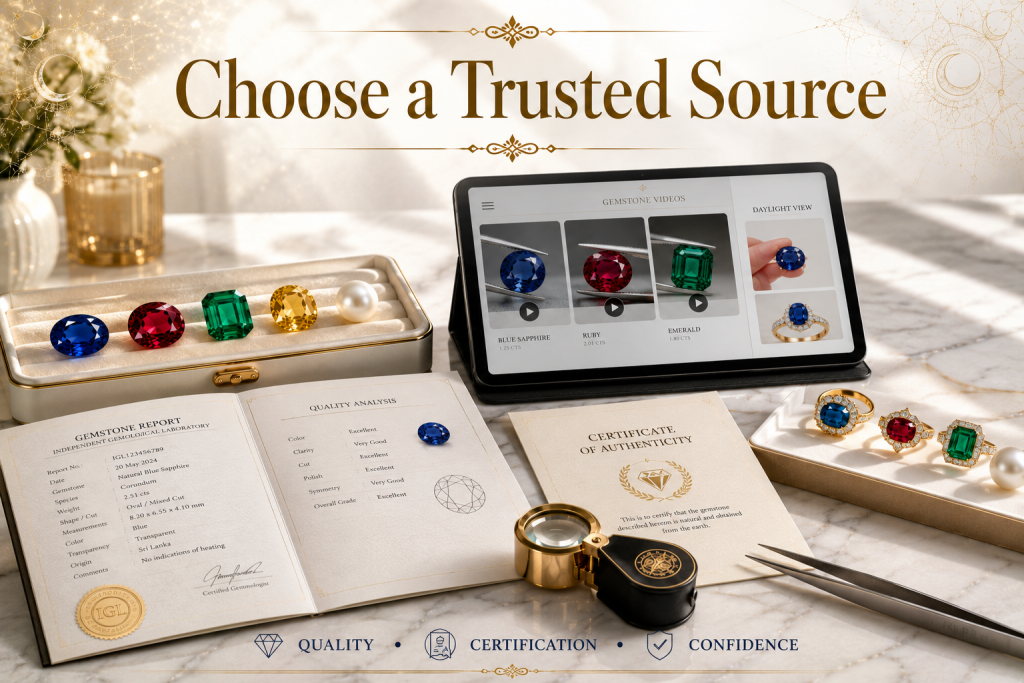
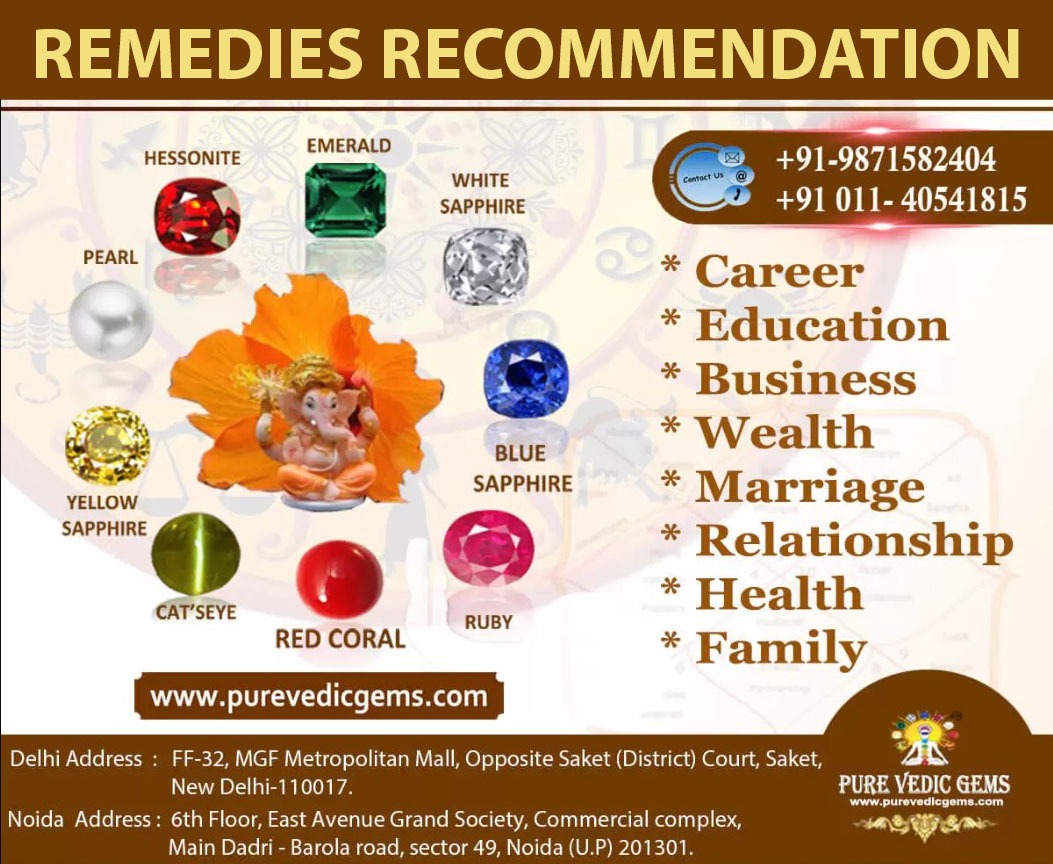
A real gemstone business with actual depth doesn’t stop at blue sapphire and ruby and call its range complete. The full spectrum — sapphires across every colour, pearls, ruby, emerald, opal, hessonite, and the broader set of Navagraha planetary stones — each comes with its own specific certification requirements that a generic “certified natural” label simply can’t address.
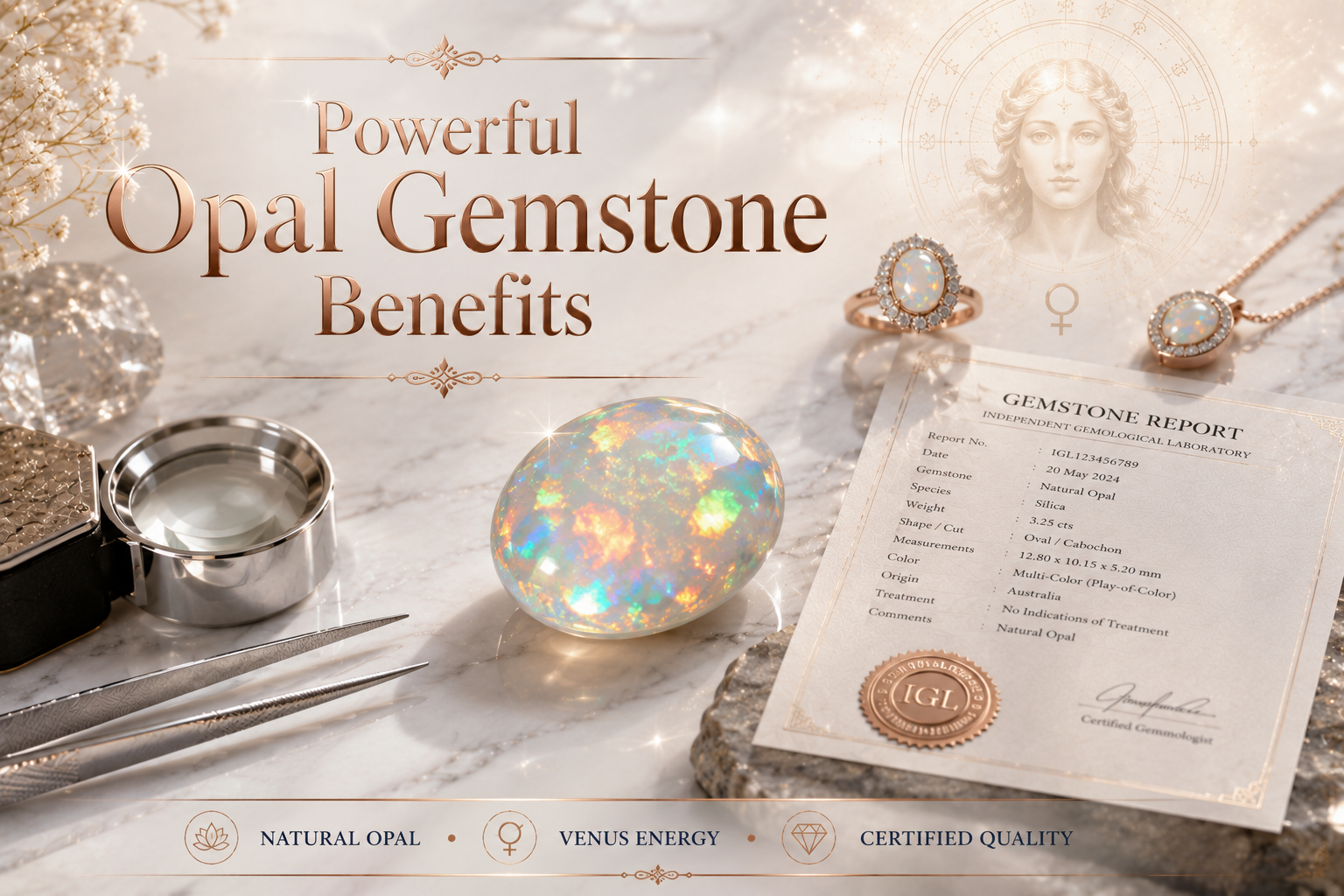
Sapphire and ruby certification needs to address heat treatment directly. Pearl certification should clearly distinguish natural from cultured origin, since these get conflated constantly in casual listings. Opal requires confirmation of whether it’s solid natural material or a doublet or triplet construction, which can look identical to an untrained eye while differing enormously in actual value. Yellow sapphire specifically should be checked for undisclosed beryllium diffusion, a common treatment that significantly alters appearance while reducing both market value and traditional astrological standing.
A source offering genuine breadth across these categories, with certification standards matched to what each particular stone actually requires for proper verification, is operating very differently from one that applies the same generic label to everything regardless of what that label is supposed to mean.
Practical Signals Worth Watching For
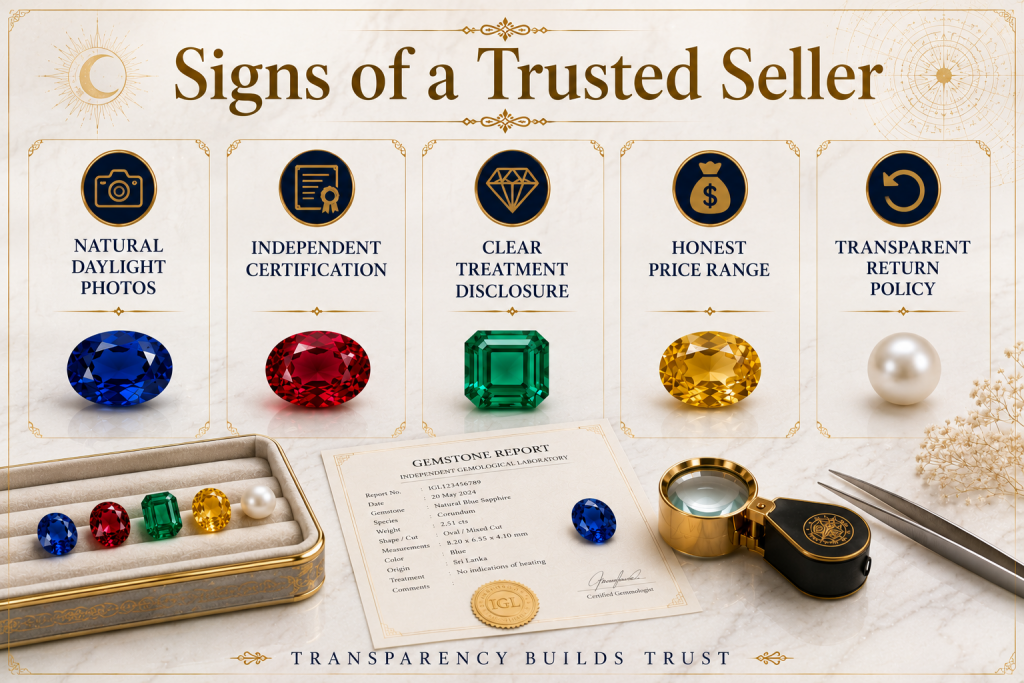
Natural daylight photography or video, not just studio shots, says something meaningful about a seller’s confidence in their material. Studio lighting is chosen specifically to flatter gemstones — not necessarily dishonest, but also not the complete picture. A seller willing to show a stone under ordinary daylight is showing something closer to how it’ll actually look once it belongs to you.
Direct answers to direct questions matter just as much. Ask whether a specific stone has been heat-treated. Ask which laboratory issued its certificate and whether that number can be independently checked. A seller who answers plainly is operating in good faith. One who deflects toward general reassurances about decades of experience and trust, without addressing the actual question asked, is communicating something through that evasion alone.
Honest range across price points is another marker worth paying attention to. Real inventory includes both commercial-grade and premium material, with that difference clearly reflected in both description and price. A seller whose every single listing reads as exceptional, with barely any price variation across similarly sized stones, either isn’t differentiating its actual inventory or isn’t being entirely straightforward about what it has on hand.
A clear return policy rounds this out, and it matters particularly for blue sapphire specifically. The Jyotish-recommended practice of a brief trial period before fully committing to wearing a Neelam stone requires the ability to return it if it turns out not to suit the wearer. A seller unwilling to accommodate this makes that entire precaution impossible to follow in practice.
What to Actually Verify Before Buying
Confirm the certificate originates from an independently recognized laboratory rather than an in-house or unverifiable one. Confirm the certificate number can be checked directly on that laboratory’s own verification system, rather than simply taking the document at face value. Confirm treatment status is stated specifically rather than implied vaguely — heated or unheated, oiled or not, fracture-filled or solid, whichever genuinely applies.
For premium origin claims — Kashmir sapphire, Burmese ruby, Colombian emerald — confirm there’s actual laboratory geological testing supporting that claim rather than just the listing’s own assertion. Request video under natural daylight before committing to anything significant. And compare the asking price against realistic market ranges for the quality being claimed, since gemstones priced well below what genuine natural untreated material commands at that quality level are rarely a genuine bargain and very often something other than what’s being advertised.
If the purchase is intended for astrological use specifically, confirm with a qualified astrologer that the stone in question actually suits your birth chart before finalizing anything. No source, however reputable it claims to be, can make a gemstone right for a chart where its ruling planet simply isn’t favourably placed.
Where This Leaves You
Finding where to buy real gemstones online comes down to substance over language. Verifiable certificate numbers from genuinely recognized independent laboratories, specific rather than vague treatment disclosure, documented origin claims for premium varieties, natural daylight transparency, and direct answers to direct questions are the practical markers separating a source actually worth trusting from one simply repeating the same reassuring phrases as everyone else. The words “100% natural” and “fully certified” mean nothing on their own. What backs them up is everything.
Tags:
authentic gemstone shopping online,
authentic gemstones online,
Burmese ruby certification,
buy certified gemstones,
buy gemstones safely online,
buy real gemstones online,
Certified Blue Sapphire,
certified emerald,
certified gemstone supplier,
certified natural gemstones,
certified ruby,
certified yellow sapphire,
Colombian emerald certification,
gemstone authenticity verification,
gemstone buying guide,
gemstone certification,
gemstone investment guide,
gemstone origin verification,
gemstone quality verification,
gemstone return policy,
gemstone transparency,
gemstone treatment disclosure,
gemstone verification guide,
genuine gemstone dealer,
genuine gemstones online,
GIA certified gemstones,
GRS certified gemstones,
Gübelin certified gemstones,
high quality gemstones online,
IGI certified gemstones,
independent gemstone laboratory,
Kashmir sapphire certification,
Lab Certified Gemstones,
Natural Emerald Online,
natural gemstone certificate,
natural gemstone collection,
natural gemstones for astrology,
natural ruby online,
natural sapphire online,
Navagraha gemstones,
online gemstone store,
original gemstones online,
premium natural gemstones,
real gemstones online,
SSEF certified gemstones,
trusted gemstone seller,
trusted gemstone source,
trustworthy gemstone source online,
untreated gemstones,
Vedic astrology gemstones