Where to Buy a Genuine Natural Turquoise Gemstone Online
Vikas June 27, 2026 in
Astrology Where to Buy a Genuine Natural Turquoise Gemstone Online
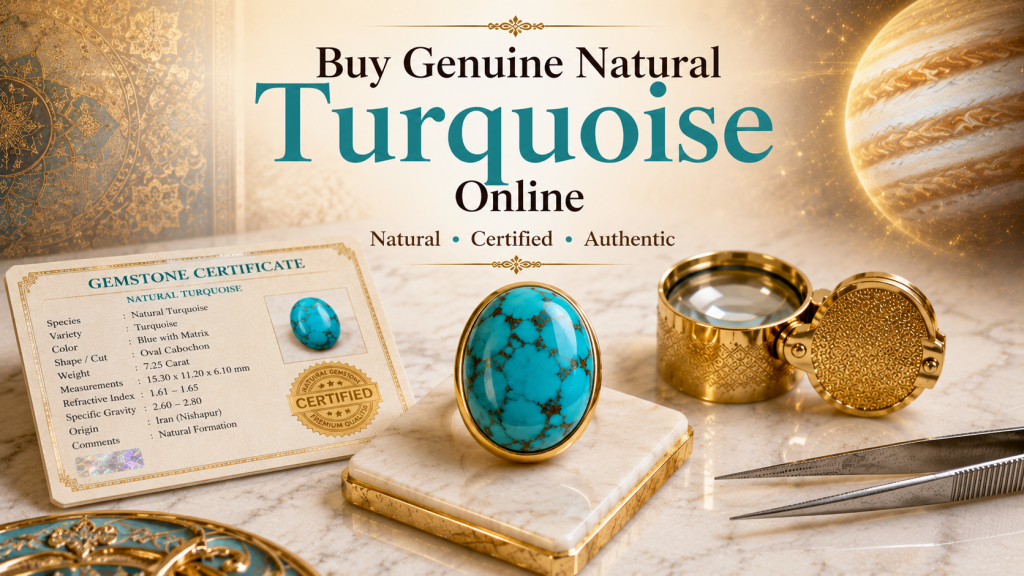
There’s something strange about turquoise once you actually dig into it. It’s mined out of the ground in Iran, Tibet, Mexico, the American Southwest — places with no shared history, no trade routes connecting them in ancient times — and yet every one of those cultures independently decided this stone meant roughly the same thing. Protection. Connection to something larger. A warning system, in some traditions, that changed color when danger was near.
That kind of cross-cultural agreement doesn’t happen by accident with most gemstones. It happens with turquoise.
Which makes it slightly frustrating that buying a genuinely natural specimen online today requires more diligence than the stone’s modest price tag might suggest. Reconstituted material, dyed substitutes, and stabilized treatments are common enough in the current market that knowing what you’re looking for matters more than it would for, say, a diamond.
What the Stone Actually Is
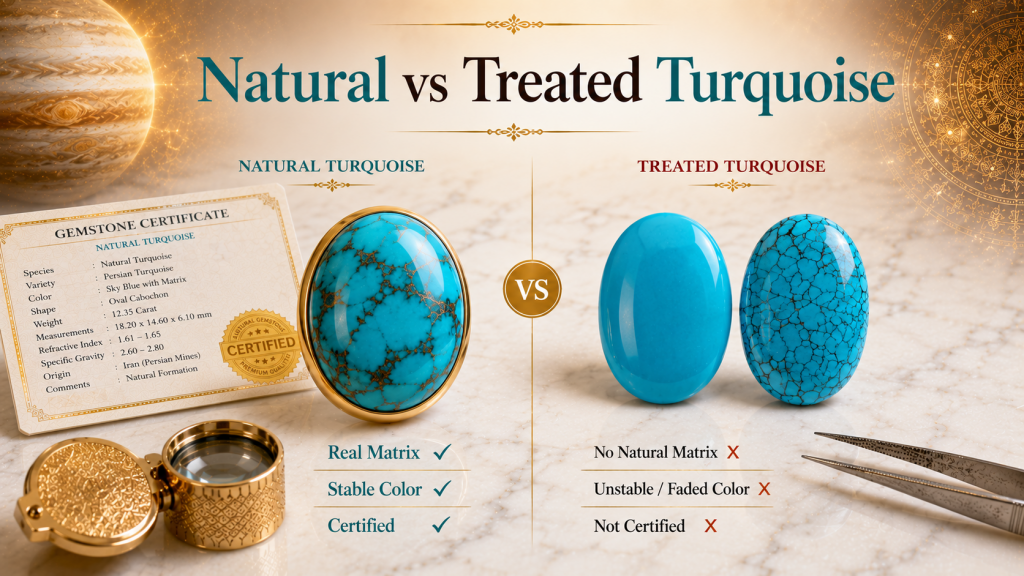
Turquoise is opaque — phosphate mineral family — color running from soft sky blue through to deeper green. The copper and aluminum deposits inside the stone are responsible for that color, and they’re also why genuine turquoise tends to show fine veining running through it. Matrix, it’s called. Not a flaw. Evidence.
Firoza, in Hindi. Connected Vedic astrology — the planet of knowledge and expansion. December’s birthstone in the West. Three completely different naming and classification systems, all pointing at the same rock.
The Mythology Is Genuinely Old, Not Marketing
Five thousand years of mining history. That’s not a rounded-up estimate for effect — it’s roughly how long Persian mines, in what’s now Iran, have been producing turquoise. And Persian turquoise still sets the quality benchmark today: pure sky-blue, minimal veining, the standard everything else gets measured against.
Native American tribes saw it as something that bridged earth and the heavens — a stone that guided warriors toward victory and ensured hunts went well. Persian folklore had its own version, but with a specific twist worth mentioning: the stone was believed to warn its wearer of danger or illness by changing color. Not metaphorically. Literally shifting hue as an early warning system. Kings and shamans and travelers carried it specifically because of that reputation.
Egypt had it. China had it. Tibet and Mexico still treat it as more than decoration — closer to heritage, something that carries identity along with whatever protective qualities people believe in.
What People Actually Wear It For
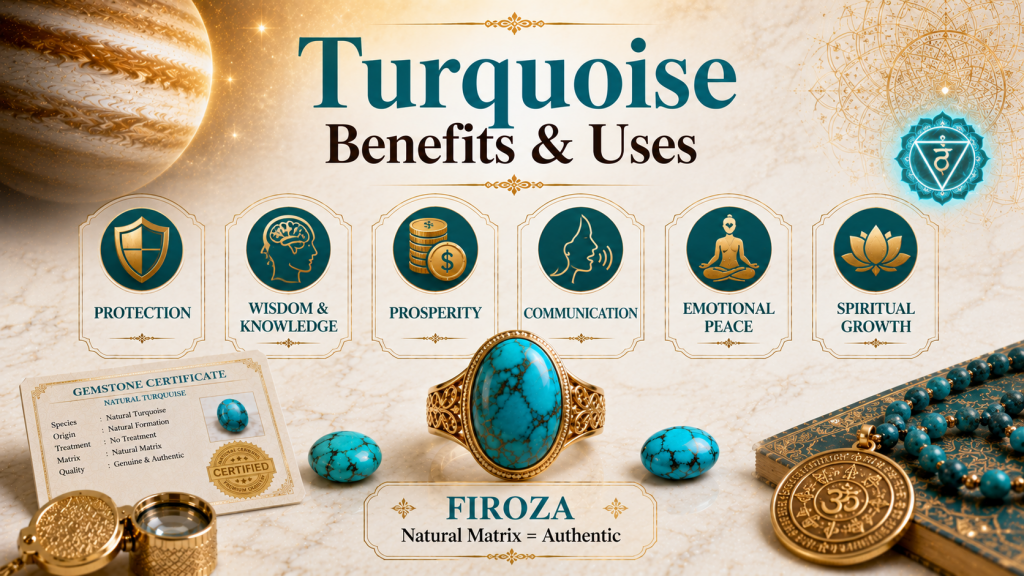
Governs knowledge in the Vedic system, so turquoise ends up recommended for exactly the people you’d expect — scholars, researchers, lawyers, teachers. Anyone whose work depends on sharp judgment and clear thinking. The belief isn’t that the stone makes you smarter. It’s that it removes some of the noise getting in the way of decisions you’d already be capable of making well.
Financially, the same connection extends into wealth and prosperity. Astrologers who work with turquoise specifically point to financial stability rather than sudden gains — and there’s a secondary claim worth noting, that wearing the stone affects social standing too. Not just how much money someone has, but how they’re perceived moving through the world.
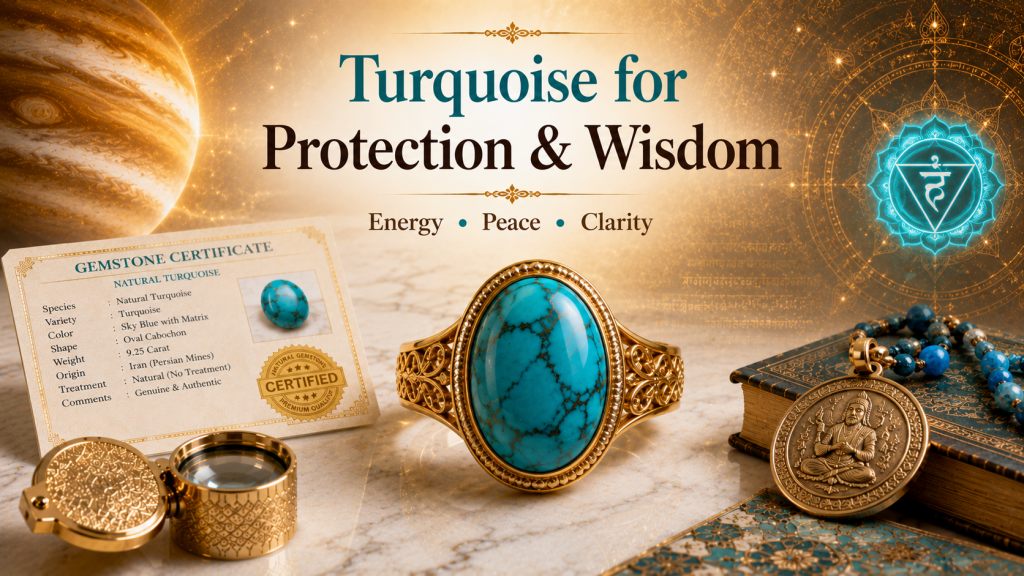
Emotionally is where the stone’s reputation gets quieter and, honestly, more interesting. It’s known for calming qualities — easing stress, anxiety, fear. Not in a dramatic way. More like a steady lowering of background noise that builds toward something resembling actual peace over time. The protective quality people describe isn’t really about blocking specific threats. It’s resilience. The capacity to get through something hard without falling apart.
Then there’s the throat chakra connection, which sounds esoteric until you realize what it’s actually pointing at: communication. Self-expression. People drawn to turquoise for spiritual reasons often describe wanting to speak more clearly, or write more honestly, or simply feel less blocked when trying to say what they mean. That’s a specific enough claim to be worth taking seriously rather than dismissing as vague spirituality.
Physically — and this is squarely traditional belief, not medicine — turquoise has a healing reputation going back centuries for liver, kidney, and immune function. Contemporary gem healers still reference it for jaundice, tuberculosis, diabetes. None of this replaces actual medical treatment. It’s worth knowing the tradition exists, and worth being clear that it’s tradition, not clinical evidence.
What Actually Matters When You’re Buying
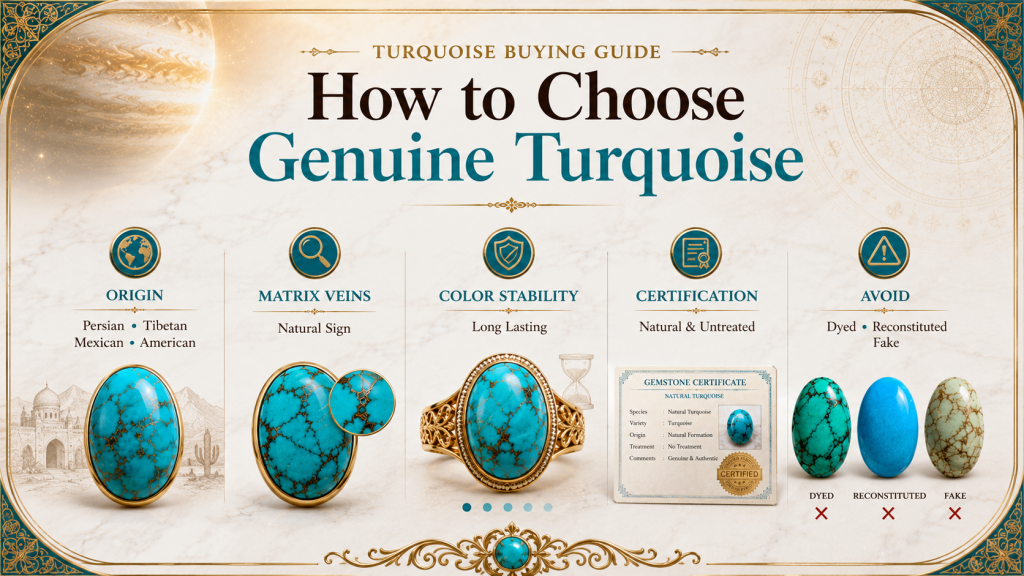
Origin is the first thing worth checking. Persian material remains the gold standard — that pure sky-blue with almost no visible matrix — but it comes priced accordingly. Tibet, Mexico, and the American Southwest all produce legitimate turquoise with their own characteristic look. None of these origins are fake. They’re just different, and worth knowing which one you’re actually getting.
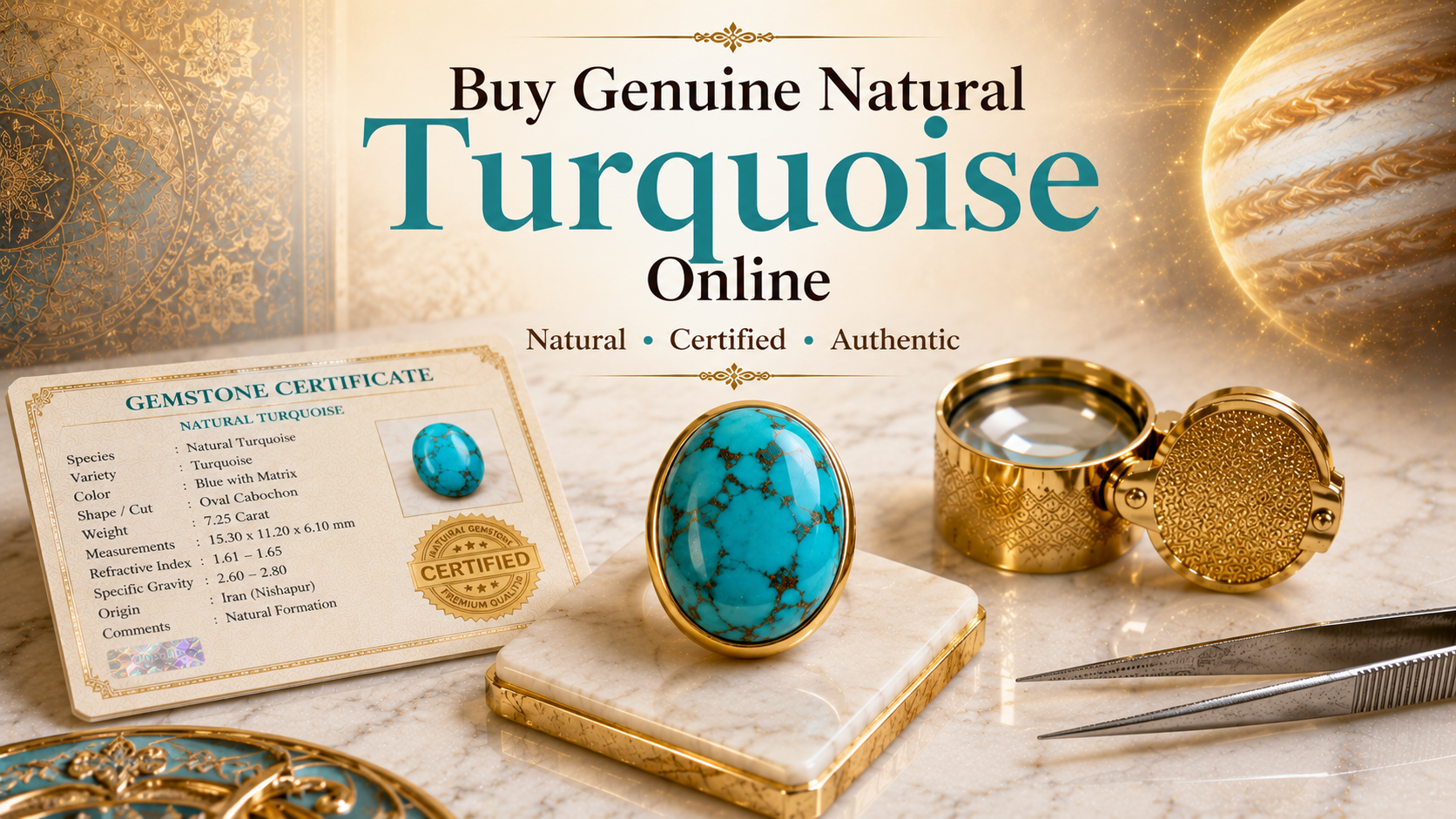
Here’s something counterintuitive: veining is good. The matrix patterns running through natural turquoise are a direct result of how the stone forms — copper and aluminum deposits creating those delicate lines. A turquoise with zero visible matrix, perfectly uniform color, sold at a bargain price, should make you suspicious rather than pleased. That’s usually reconstituted material or dye, not the real thing behaving unusually well.
Color stability over time tells you something too. Genuine, untreated turquoise holds its color reasonably well under normal wear. Stabilized or dyed material tends to shift or fade more visibly, sometimes within months rather than years. If a seller can’t speak to how the stone has held up over time, that’s worth asking about directly.
And independent certification, while less universally available for turquoise than for sapphire or ruby, still matters when it exists. A certificate specifying natural origin, treatment status, and source region — when a seller can provide one — is worth more than any amount of confident-sounding product description.
Is It Actually Right for You
Because the astrological dimension ties specifically, suitability isn’t universal the way the stone’s general reputation might suggest. People with a weak or afflicted in their birth chart, or those working in education, law, or intellectually demanding creative fields, are the ones traditionally pointed toward this stone. December birthdays get an independent connection through Western birthstone tradition, with no Vedic chart requirement attached.
But honestly — zodiac sign alone, Vedic or Western, only gets you so far. A proper birth chart reading, talked through with someone who actually knows what they’re looking at, tells you more than any general rule could.
Before You Buy Anything
Know what you’re actually looking for: visible natural matrix rather than flawless uniformity, documented or at least claimed origin, color that’s reasonably likely to hold over time, and certification where it’s available. None of these guarantee perfection. They just shift the odds heavily in your favor.
Turquoise earned its reputation the hard way — five thousand years of continuous use across cultures that never spoke to each other, all arriving at roughly the same conclusions about what this stone means. That’s worth more than most marketing copy can capture. Buying carefully is the least you can do to make sure what’s reaching you is actually the stone that earned that reputation, and not a convincing imitation riding on its name.
Tags:
Authentic Turquoise Gemstone,
Buy Original Turquoise Stone,
Buy Turquoise Gemstone Online,
Certified Firoza Stone,
Certified Turquoise Gemstone,
Firoza Stone Buying Guide,
Genuine Natural Turquoise Gemstone Online,
Genuine Turquoise Stone India,
Natural Blue Turquoise Gemstone,
Natural Firoza Gemstone,
Natural Turquoise Jewelry Stone,
Natural Turquoise Stone,
Original Firoza Stone Online,
Original Turquoise Gemstone India,
Persian Turquoise Stone,
Real Turquoise Stone Online,
Turquoise Gemstone Price India,
Turquoise Stone Benefits,
Turquoise Stone for Astrology,
Where to Buy a Genuine Natural Turquoise Gemstone Online