Best Ruby Gemstone Dealers What to Look Before Buying Manik
Vikas June 20, 2026 in
Astrology Best Ruby Gemstone Dealers What to Look Before Buying Manik
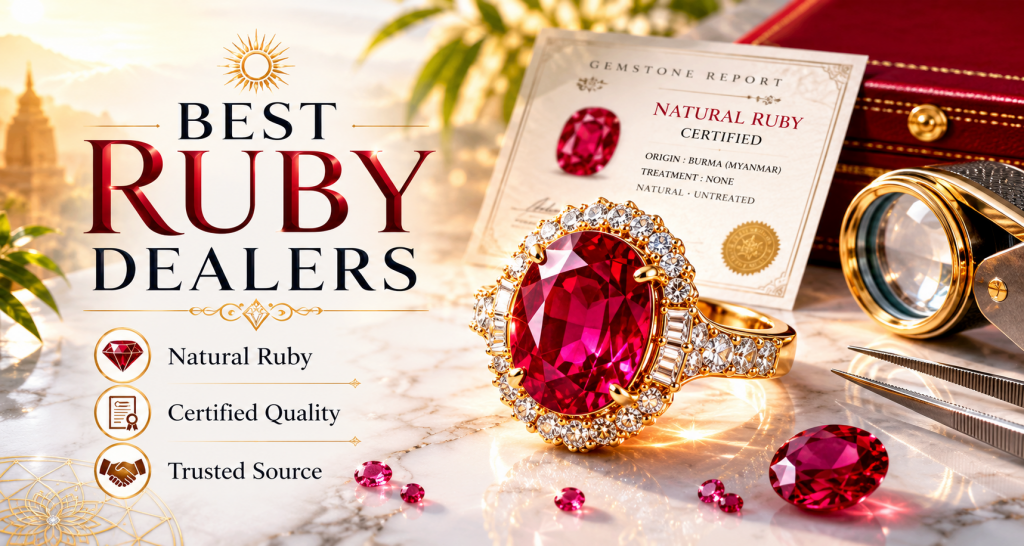
Ruby is one of the most counterfeited and treated gemstones in the entire colored stone market — which makes finding the best ruby gemstone dealers a genuinely consequential decision rather than a casual one.
Glass imitations, garnet substitutes, synthetic lab-grown ruby, and composite stones filled with leaded glass all circulate at every price point. Some are obvious to spot. Others require laboratory equipment to identify with confidence. The dealer you buy from matters enormously here, because the gap between what’s claimed and what’s verified determines whether you end up with genuine Manik or an expensive imitation.
What Separates a Trustworthy Ruby Dealer From the Rest
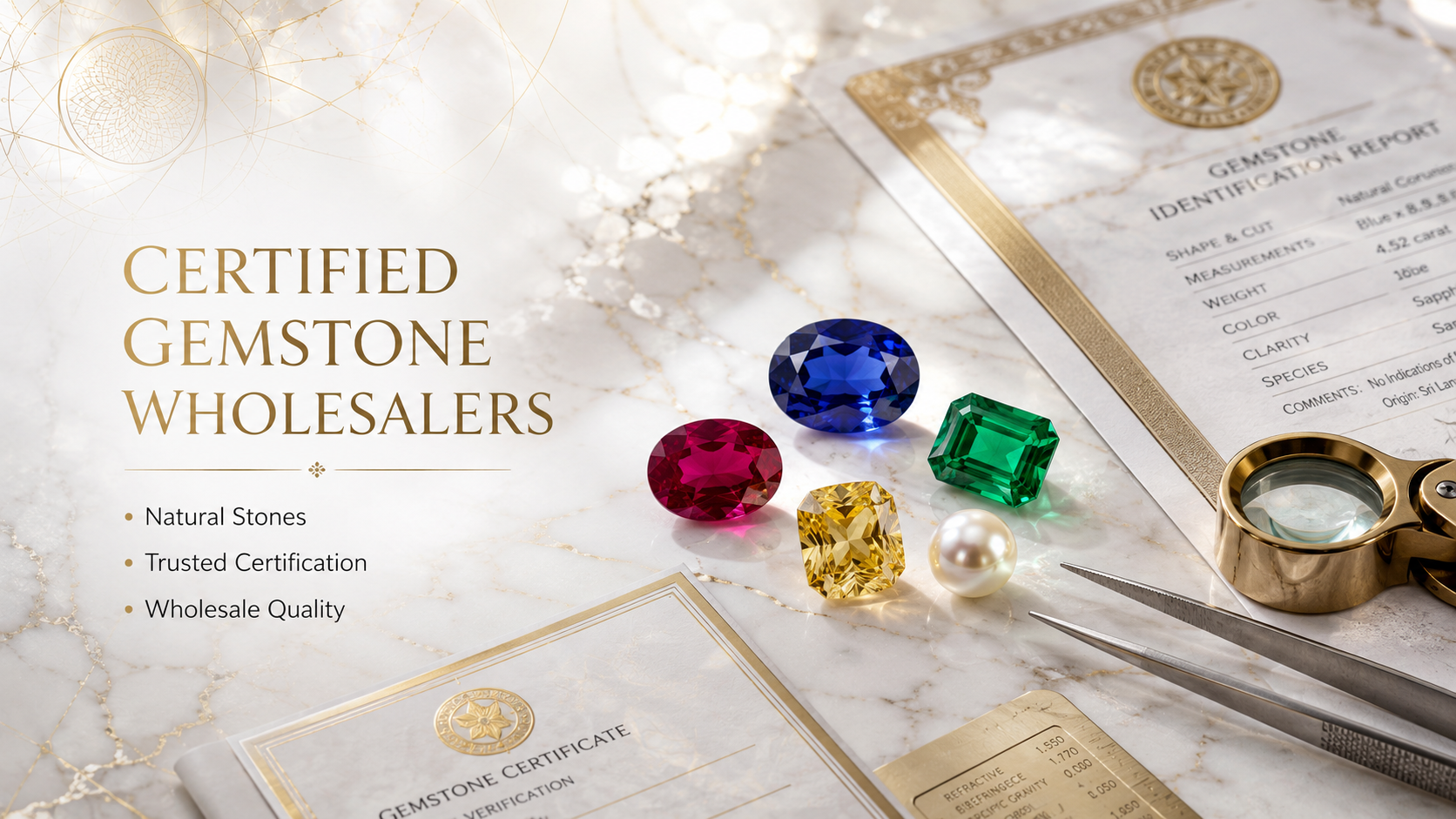
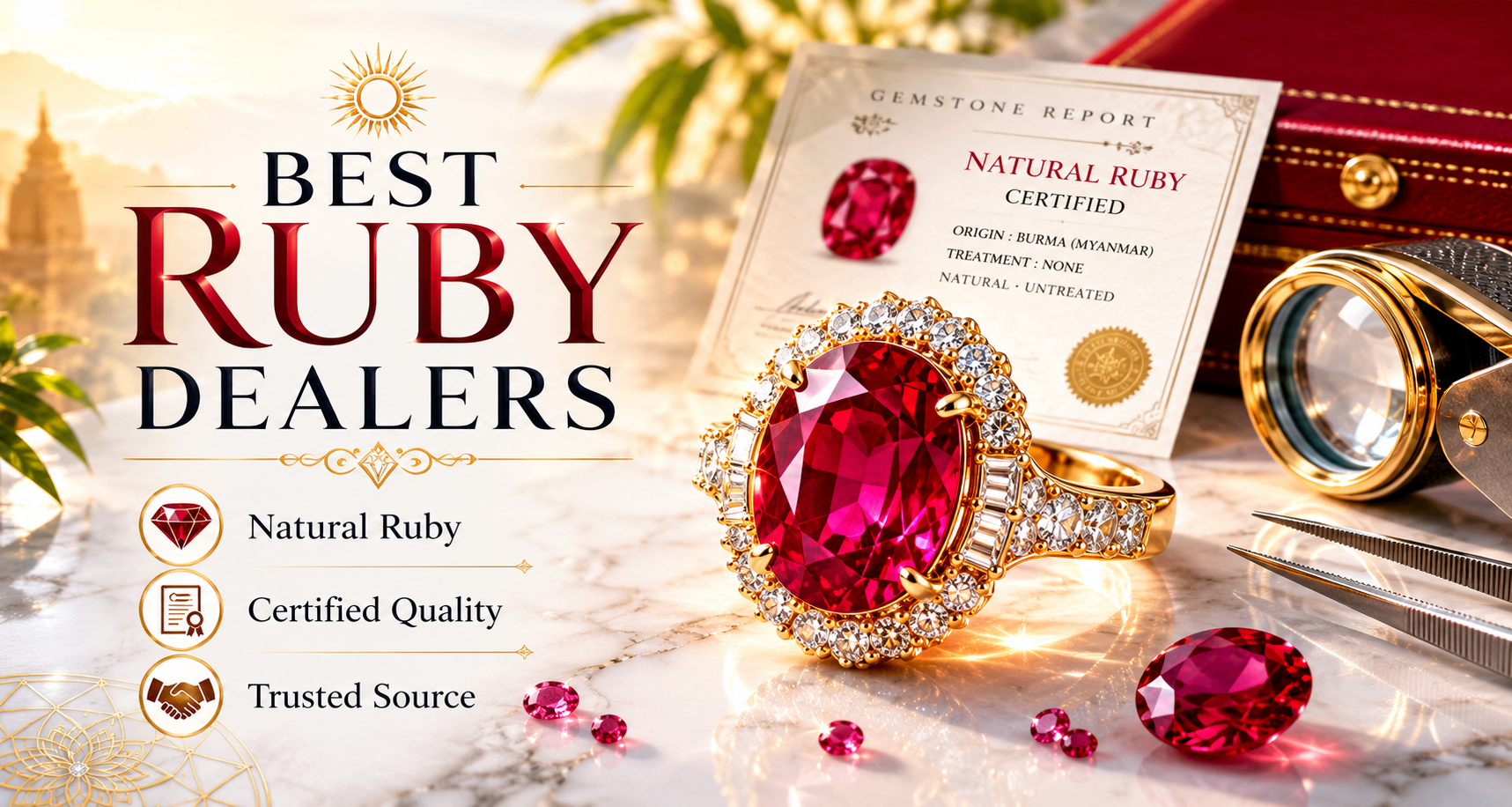
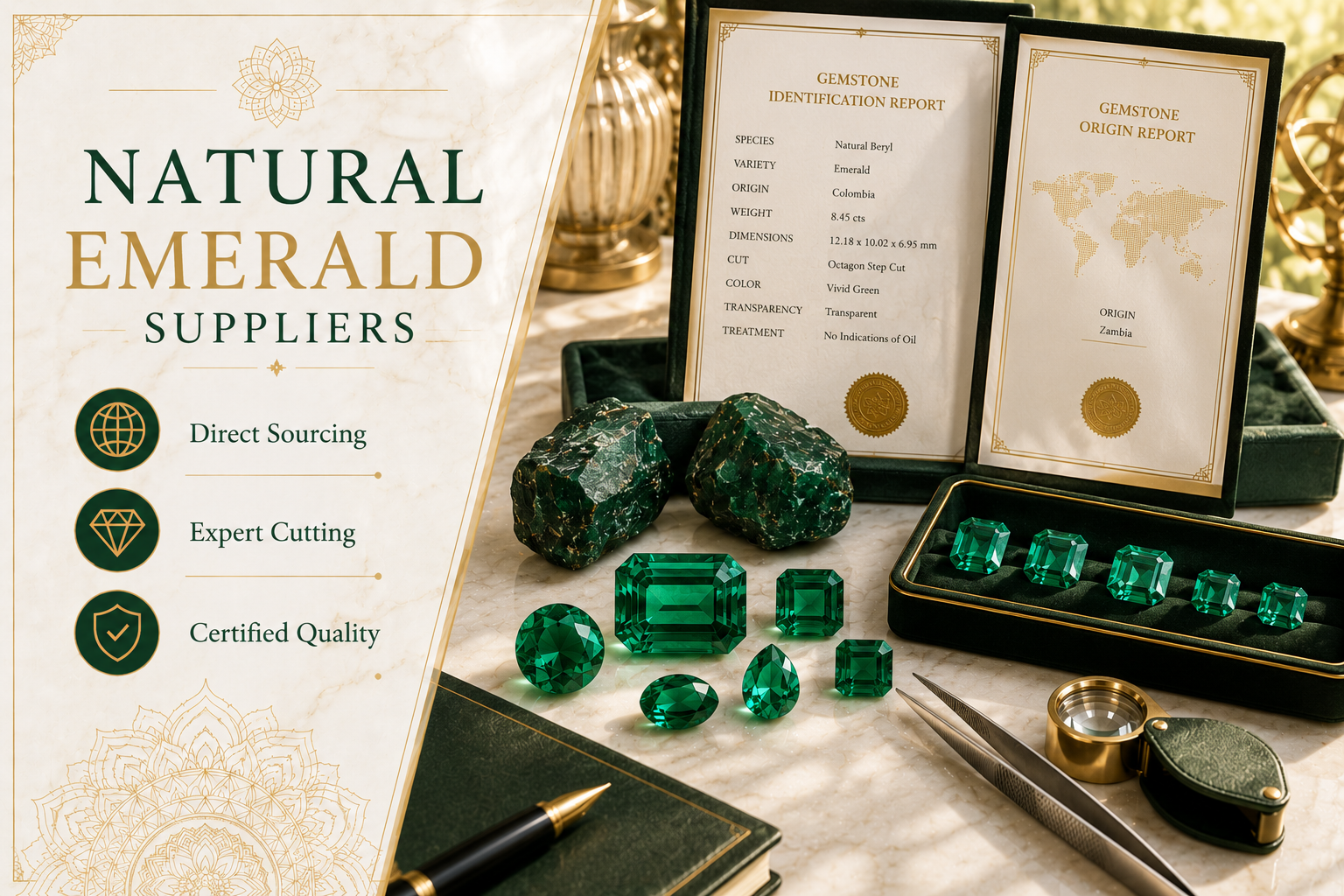
Independent certification accompanies every significant stone. The best ruby gemstone dealers provide certificates from recognized laboratories — GIA, GRS, Gübelin, SSEF, IGI, or IIGJ — as standard practice. These certificates confirm natural origin, treatment status, geographic origin where determinable, and quality grade. A dealer who only offers in-house certification or vague “lab tested” language without naming an independent laboratory isn’t providing verifiable documentation.
Treatment status is disclosed precisely, not generically. Ruby treatment exists on a spectrum from none to heat treatment to fracture filling with glass. Each level affects value and durability differently. The best dealers specify exactly what’s been done to a stone — “no heat treatment,” “heated, no other enhancement,” or “fracture-filled with glass” — rather than using blanket terms like “natural” or “genuine” that leave the actual treatment status unaddressed.
This distinction matters enormously for ruby specifically because composite rubies — natural ruby material fused with leaded glass to improve clarity — are common enough in the market that “contains real ruby” and “is a natural ruby” are meaningfully different claims. Dealers who blur this distinction are not serving buyers honestly.
Origin claims are backed by documentation. Burmese ruby from the Mogok Valley commands the highest premiums in the market, known for pigeon blood red color and characteristic fluorescence. Sri Lankan (Ceylon) ruby offers excellent quality at more moderate prices. Thai and African material provides accessible options. These origins carry real price differences, and Burmese origin specifically is frequently claimed without the geological testing needed to confirm it. The best dealers provide origin documentation proportional to the premium being charged.
Color assessment is honest across lighting conditions. Ruby color can look dramatically different under studio lighting versus natural daylight. Trustworthy dealers provide video or in-person viewing options under natural light, not just curated studio photography designed to make every stone look like pigeon blood red.
Quality Factors That Determine Ruby Value
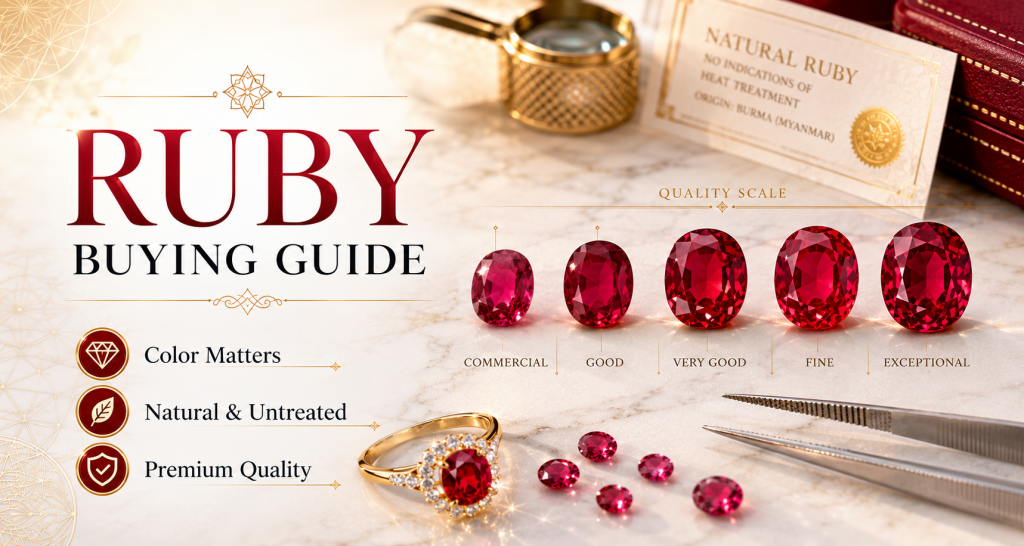
Color is the dominant factor in ruby valuation. The most prized shade is pigeon blood red — a vivid, pure crimson with a slight blue undertone that creates a glowing quality, most associated with fine Burmese material. Color that leans orange, brown, or purple reduces value significantly. The color should appear consistent and saturated under different lighting, not flat or washed out.
Clarity in ruby allows for natural inclusions — silk needles, small crystals, growth lines are all expected in genuine material. What’s concerning is the presence of round, perfectly spherical gas bubbles, which indicate glass rather than natural corundum, or a complete absence of any inclusions whatsoever, which suggests synthetic origin given how rare truly flawless natural rubies are.
Treatment status creates the most significant price tiers. Untreated natural ruby with fine color commands substantial premiums over heat-treated material, which in turn is considerably more valuable than fracture-filled composite stones. Each step down this hierarchy represents both reduced gemological value and, for buyers purchasing with astrological intent, reduced effectiveness as Surya’s planetary stone.
Origin affects both price and provenance value, with Burmese material at the top, Ceylon as an excellent and more accessible alternative, and Thai or African rubies offering legitimate quality at lower price points.
How to Verify What You’re Being Sold
The hardness test. Natural ruby sits at 9 on the Mohs scale and will scratch glass cleanly without damage to itself. This is a useful first filter that eliminates glass imitations immediately, though it won’t distinguish natural from synthetic ruby, which share the same hardness.
The magnification test. A jeweler’s loupe at 10x magnification reveals the most reliable visual evidence. Natural inclusions — silk, growth lines, small crystals — confirm genuine earth-formed material. Round gas bubbles indicate glass. A complete absence of any inclusions at all, paired with unusually uniform color, suggests lab-grown origin.
The UV fluorescence test. Natural ruby typically fluoresces a vivid red under ultraviolet light due to its chromium content. This helps distinguish ruby from red garnet, which shows little to no fluorescence, though some synthetic rubies also fluoresce strongly, so this test works best combined with others rather than relied upon alone.
Independent laboratory certification remains the only method that provides genuine certainty, particularly for distinguishing natural from synthetic ruby, which share identical chemistry and can be virtually indistinguishable without professional testing equipment.
What a Genuine Ruby Dealer’s Range Should Include
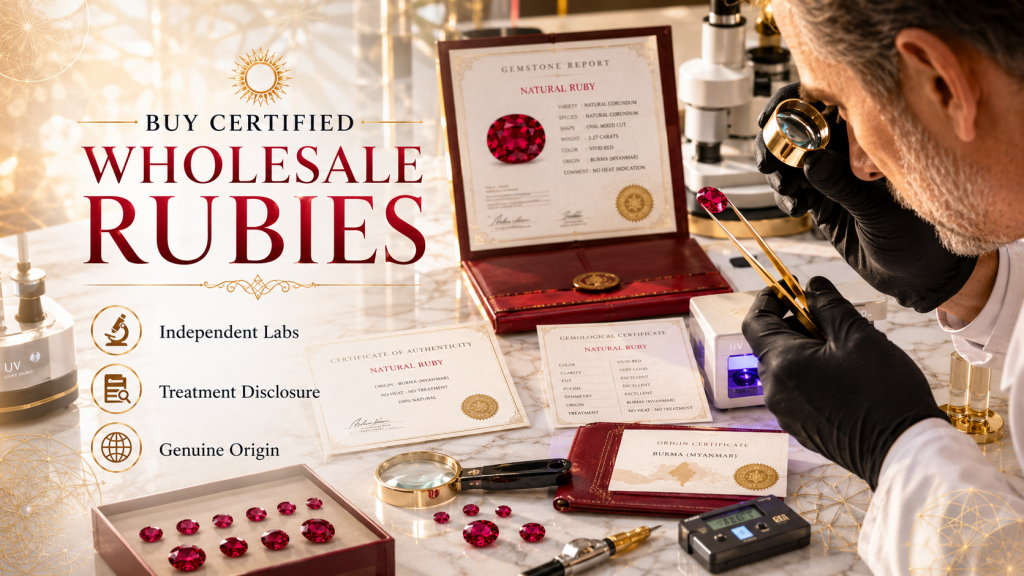
The best ruby gemstone dealers typically offer stones across a real quality spectrum rather than presenting everything as exceptional:
Mid-range natural rubies with decent color and minor inclusions, appropriately priced between commercial and premium tiers. Fine untreated specimens from African origins at prices reflecting their relative rarity. And, for buyers seeking the absolute finest material, certified untreated Burmese ruby with documented pigeon blood color, priced at the premium such rarity commands.
A dealer offering only one quality tier, or pricing everything similarly regardless of stated quality differences, isn’t differentiating their actual inventory honestly.
Red Flags When Evaluating Ruby Dealers
Prices that seem dramatically favorable for stones described as fine quality natural untreated material — particularly anything claimed as pigeon blood Burmese ruby at prices matching commercial Thai material. Vague treatment language that avoids specifying heat treatment or fracture filling directly. Origin claims for premium sources like Burma without any supporting geological documentation. Reluctance to provide natural daylight photography or video alongside studio images. No clear return policy, which matters particularly for buyers wanting to have a stone independently verified after purchase.
What to Confirm Before Buying
Ask directly whether the stone has been heat-treated, fracture-filled, or otherwise enhanced, and request this confirmed in writing through an independent certificate. Verify that the certifying laboratory is independently recognized rather than affiliated with the seller. Request natural daylight video to assess true color before committing to any significant purchase. For origin-specific claims commanding a premium, ask what documentation supports that claim beyond the seller’s description.
The Short Version
The best ruby gemstone dealers distinguish themselves through precise treatment disclosure, independent certification from recognized laboratories, honest origin documentation, and a genuine quality range priced to reflect real differences rather than uniform claims of excellence. Ruby’s vulnerability to glass imitation, synthetic substitution, and composite treatment makes this verification process more important than with almost any other colored gemstone — which is exactly why the dealer’s transparency matters as much as the stone’s appearance when making a significant purchase.
Tags:
Burmese ruby,
buy ruby stone,
certified ruby,
gemstone certification,
manik gemstone,
natural ruby,
Pigeon blood ruby,
ruby buying guide,
ruby gemstone dealers,
ruby quality factors