Which Gemstone Should You Buy According to Your Horoscope? | Kundli Guide
Vikas July 12, 2026 in
Astrology Which Gemstone Should You Buy According to Your Horoscope? | Kundli Guide
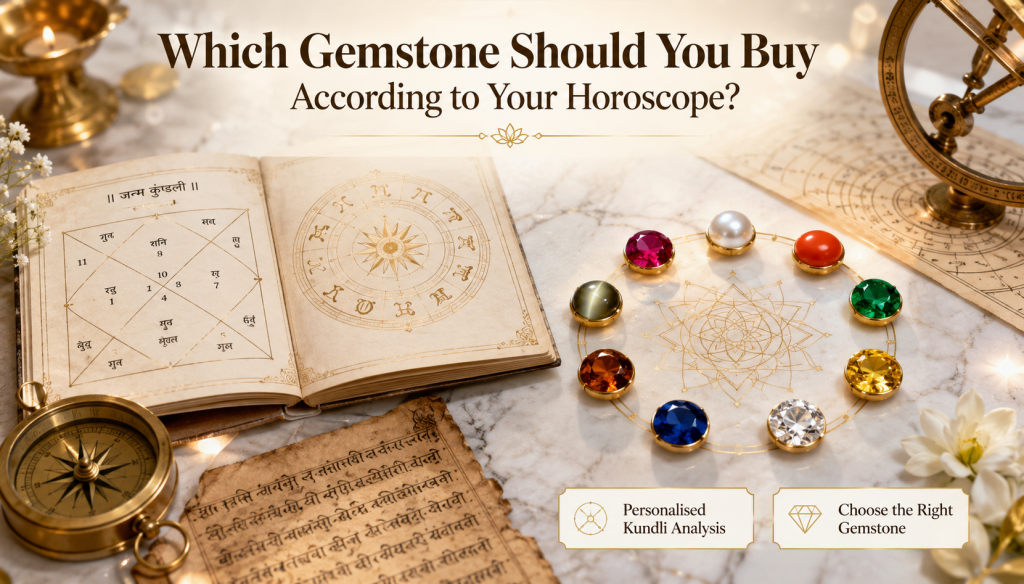
This question gets asked constantly, and it gets answered badly almost as often. Generic birthstone charts match a stone to a birth month. Sun sign compatibility lists assign crystals to zodiac signs. Both approaches feel helpful and are, in practice, insufficiently specific to be genuinely reliable for astrological gemstone use.
The honest answer to which gemstone you should buy according to your horoscope is: it depends on your Kundli — your full birth chart calculated from exact date, time, and place of birth — and what the planets are actually doing in that chart specifically. Everything else is approximation.
Why birthstone charts and sun signs aren’t enough
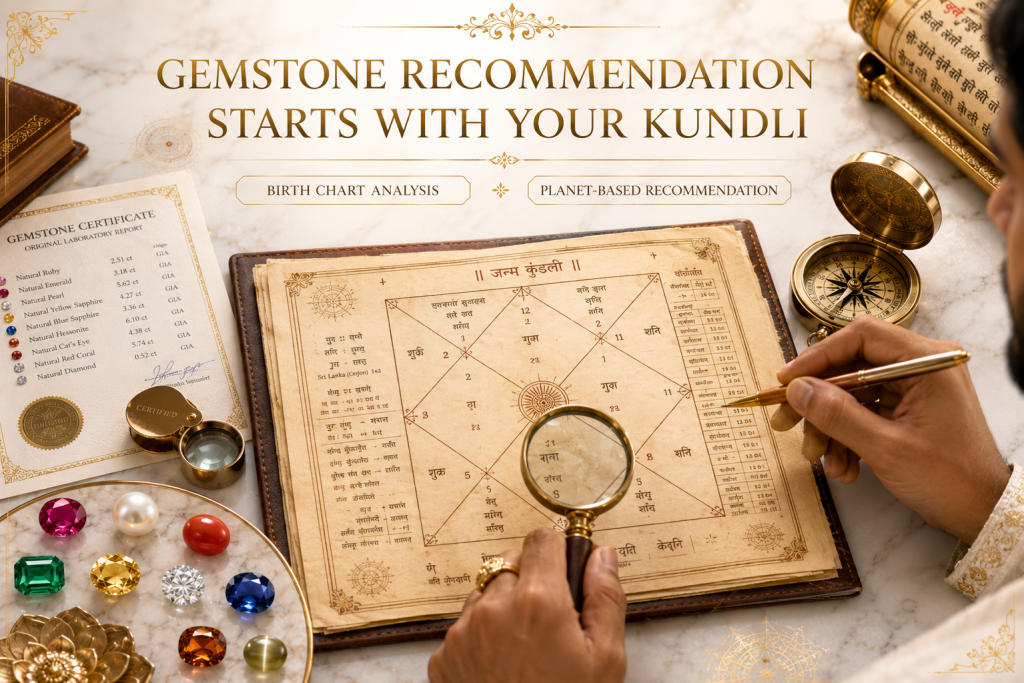
Birthstone traditions assign one stone to each birth month. That’s twelve stones for nearly eight billion people, which means everyone born in September gets told to wear blue sapphire regardless of whether Saturn — the planet blue sapphire represents — is beneficial or harmful in their individual chart.
Sun sign compatibility is marginally better but still insufficient. Your sun sign represents one position among nine planets spread across twelve houses in your Kundli. Two people with the same sun sign but different ascendants have fundamentally different charts, different planetary strengths and weaknesses, and may require completely opposite gemstone recommendations.
The reason Vedic astrology insists on full chart analysis before any gemstone recommendation isn’t overcaution. It’s the internal logic of the system. Gemstones strengthen the planet they correspond to. If that planet is already well-placed and beneficial for your ascendant, strengthening it produces good results. If that planet rules a difficult house or is malefic for your ascendant, strengthening it can intensify whatever difficulty it’s already creating. Wearing the wrong gemstone doesn’t merely fail to help — it can actively work against you.
What a proper gemstone analysis actually examines
A qualified Jyotish astrologer determines gemstone suitability by examining several interconnected factors simultaneously rather than in isolation.
Ascendant (Lagna) and its lord form the foundation. The ascendant governs physical health, personal identity, and overall life direction. The planet ruling the ascendant sign is almost always a candidate for strengthening — when it’s weak, the entire chart tends to underperform regardless of what else looks promising. Most serious gemstone recommendations begin here.
Planetary strength and placement across all nine planets. A planet well-placed in an angular house and in a friendly sign has different gemstone implications than the same planet debilitated in a difficult house. Strength isn’t just about whether a planet is friendly in principle — it’s about what it’s actually doing in this specific chart with this specific set of relationships.
Ongoing Mahadasha and Antardasha — the current planetary period running in the Vimshottari system. If someone is in Jupiter’s nineteen-year major period, strengthening Jupiter through yellow sapphire may produce particularly visible results during that window. If they’re in Saturn’s period, the blue sapphire question requires careful assessment of whether Saturn is genuinely benefic for their ascendant before recommending it. The timing dimension changes the practical impact of any gemstone worn now versus worn later.
Benefic and malefic planetary influences for the specific ascendant. This is where generic advice fails most completely. Each ascendant has planets that function naturally as benefics and others that function as malefics, and this varies entirely by ascendant. A planet that’s genuinely beneficial for a Sagittarius ascendant may be functionally problematic for a Virgo ascendant. Wearing a stone that strengthens a malefic for your specific chart can increase challenges rather than resolve them.
Current life challenges add the practical dimension — whether the concern is career, health, finances, relationships, or spiritual growth affects which weak or afflicted planet is most worth addressing first among potentially multiple options.
What the ascendant-specific picture generally looks like
Without a full individual chart reading, ascendant-based guidance provides a useful preliminary framework.
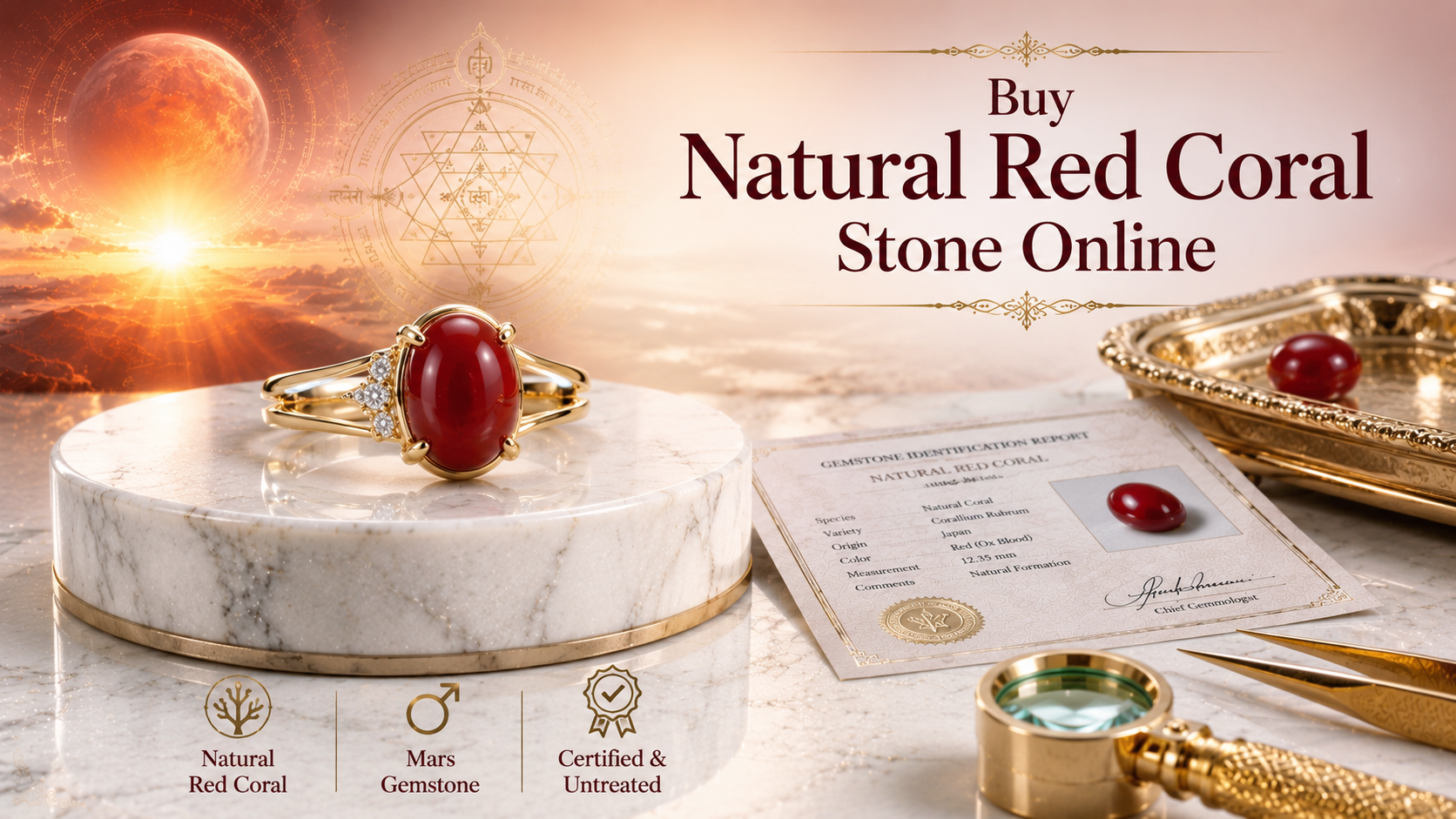
Aries ascendants generally benefit from red coral (Mars), yellow sapphire (Jupiter), and ruby (Sun) under the right conditions. Mars is the ascendant lord, making red coral particularly primary.
Taurus ascendants tend toward diamond or white sapphire (Venus), blue sapphire (Saturn), and emerald (Mercury) depending on chart specifics. Venus as ascendant lord is a natural starting point.
Gemini ascendants favour emerald (Mercury) most clearly, with other stones depending on individual planetary positions. Mercury’s strength directly determines intellectual and professional performance for this ascendant.
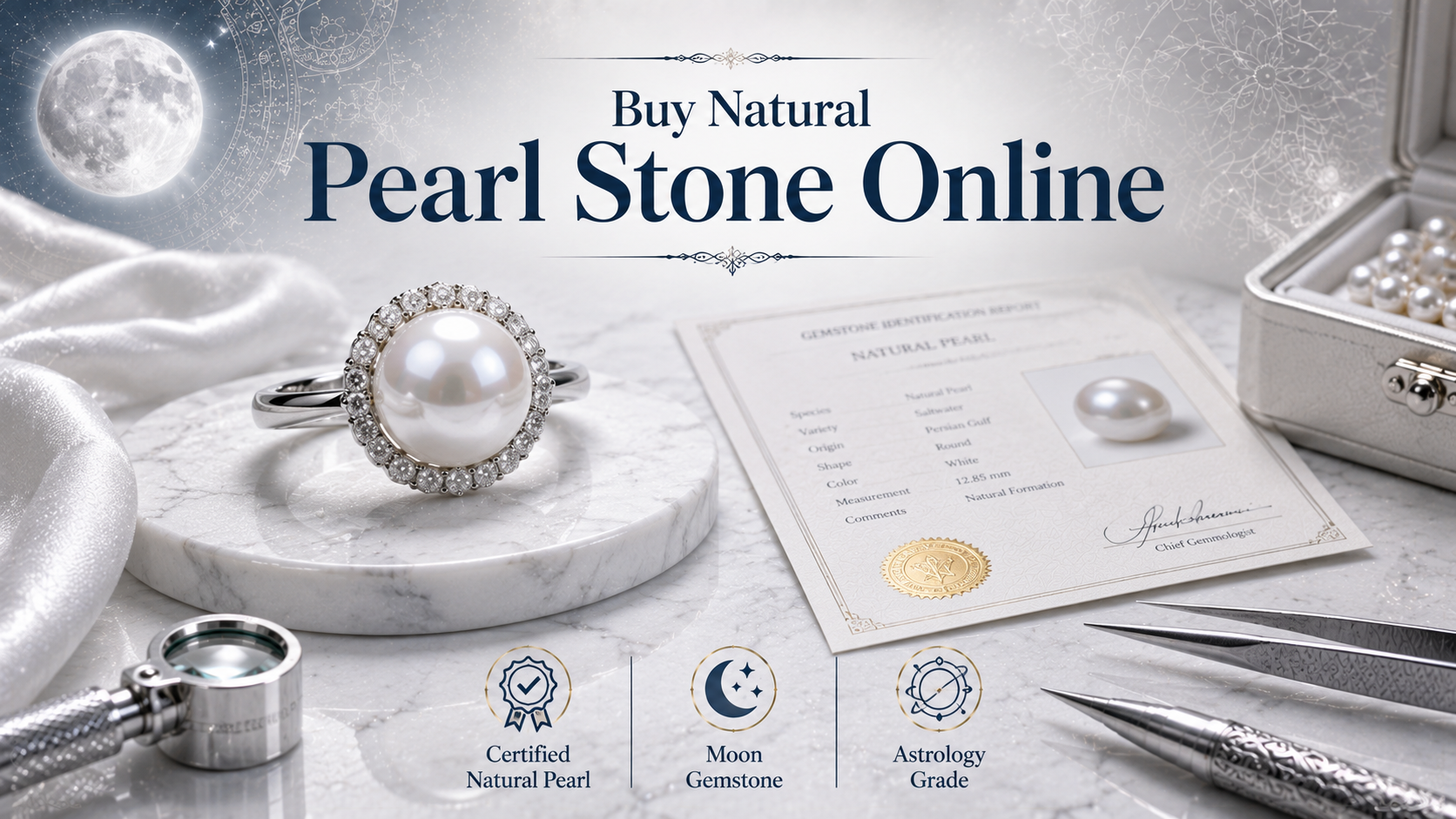
Cancer ascendants typically benefit from pearl (Moon) and red coral (Mars). The Moon as ascendant lord makes natural Moti stone a strong primary recommendation.
Leo ascendants often benefit from ruby (Sun) and red coral (Mars). Blue sapphire requires specific caution given the Sun-Saturn natural enmity.
Virgo ascendants favour emerald (Mercury) as the primary stone given Mercury’s rulership, with other recommendations chart-dependent.
Libra ascendants benefit from diamond or white sapphire (Venus) and blue sapphire (Saturn), with Saturn being exalted in Libra making Neelam particularly potent for this ascendant.
Scorpio ascendants typically favour red coral (Mars), yellow sapphire (Jupiter), and pearl (Moon) under appropriate conditions.
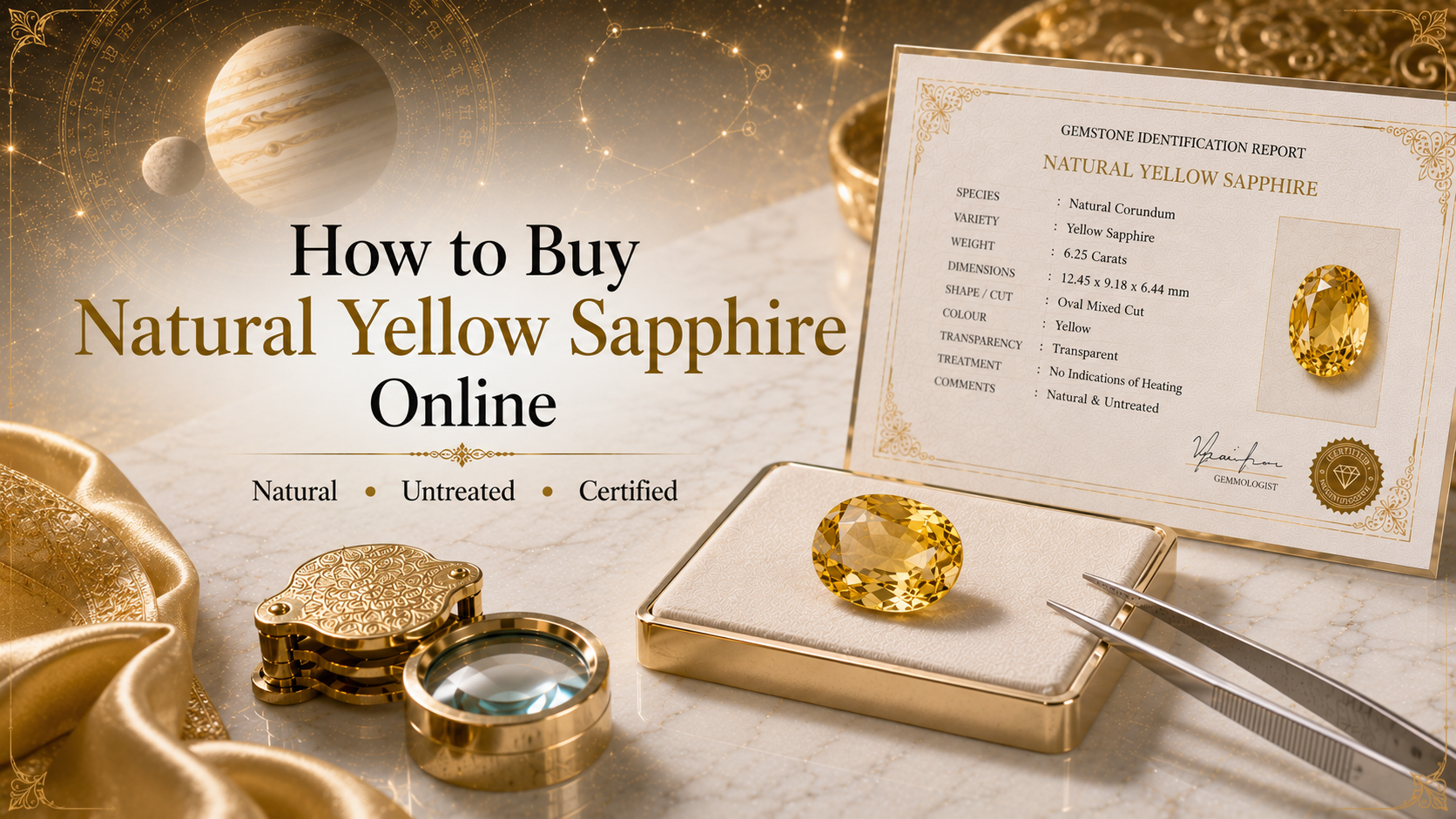
Sagittarius ascendants are among the clearest yellow sapphire candidates given Jupiter’s rulership over this sign.
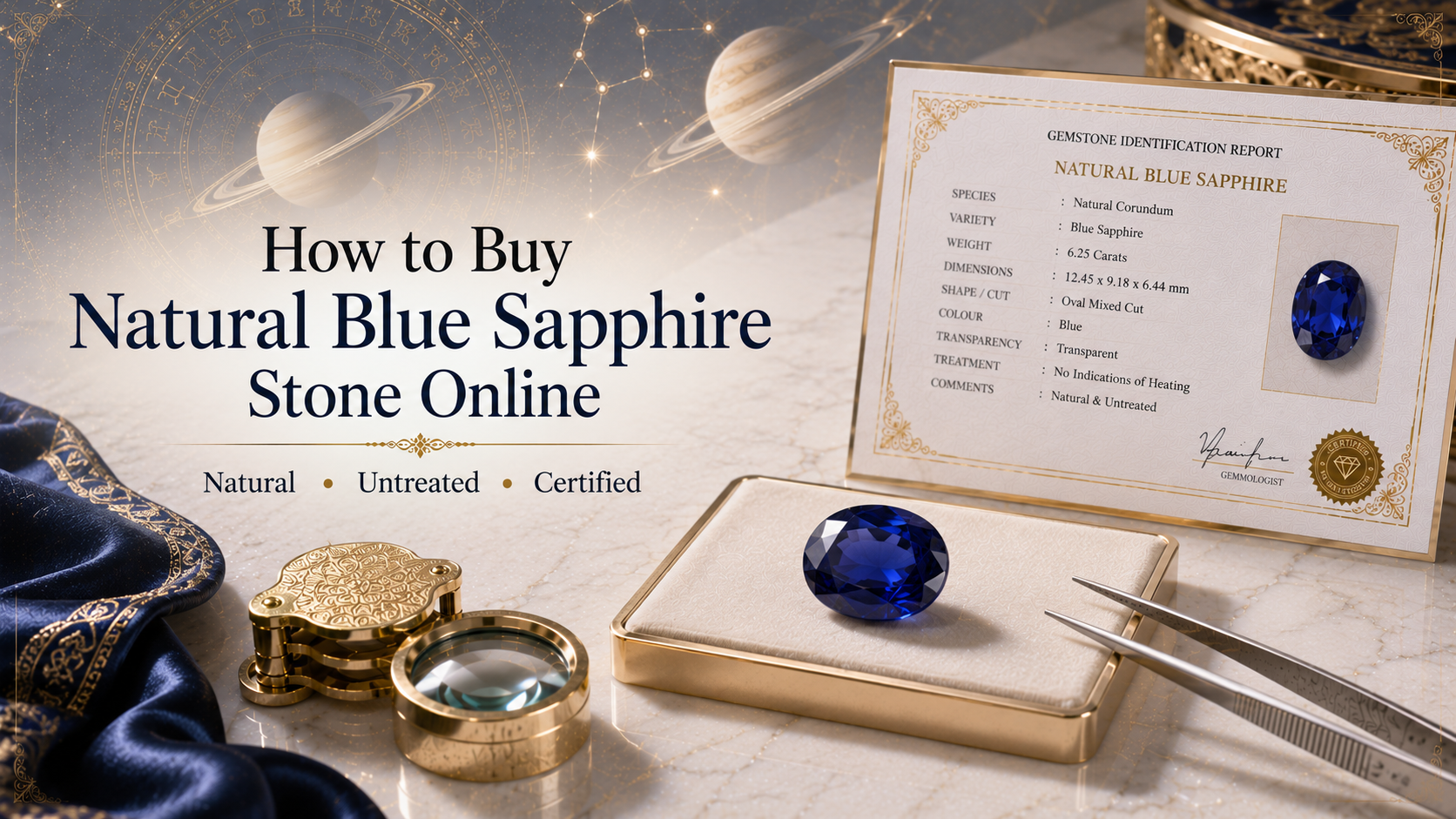
Capricorn and Aquarius ascendants are both primary blue sapphire candidates since Saturn rules both signs, making his stone naturally supportive.
Pisces ascendants benefit most clearly from yellow sapphire given Jupiter’s rulership.
These are starting frameworks. Individual planetary configurations can modify any of these significantly.
Why incompatible combinations create problems
Wearing incompatible gemstones together is a specific risk that deserves direct attention rather than a general warning.
The Sun and Saturn are natural enemies in Jyotish. Wearing ruby (Sun) and blue sapphire (Saturn) together creates conflicting planetary energies — this combination is among the most consistently cautioned against across all classical and contemporary sources.
Mercury and Mars have a complex relationship. Emerald and red coral together require specific chart-based assessment.
Jupiter and Saturn have their own tensions. Yellow sapphire and blue sapphire together may work for specific chart configurations but require explicit verification rather than assumption.
The rule of thumb: never combine gemstones based on general compatibility lists without chart-specific confirmation. The interaction between planetary stones depends on how those planets relate to each other in your specific chart, not on generic planetary friendship tables.
What to do before buying
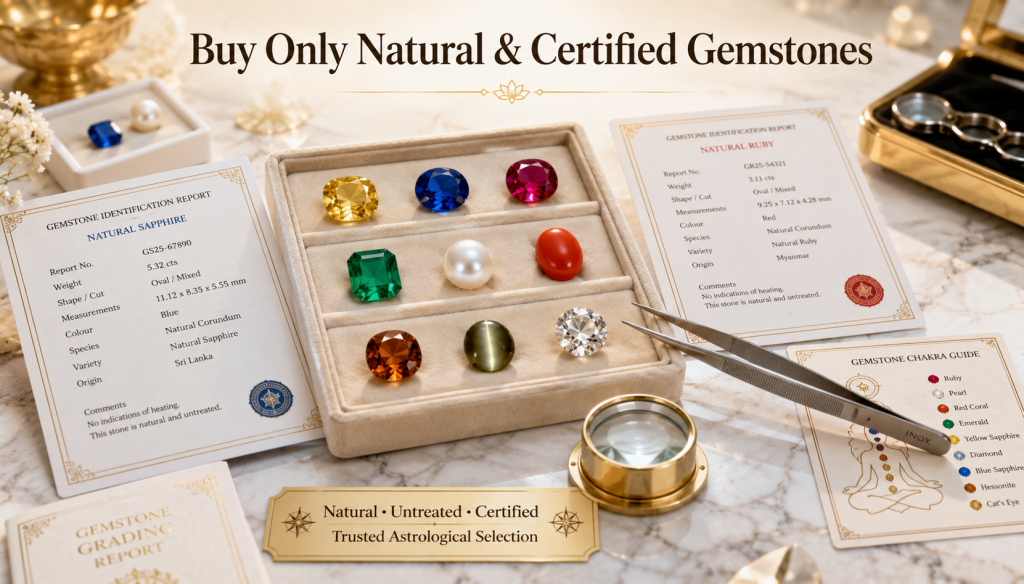
Get a full Kundli analysis from a qualified Jyotish astrologer who examines all the factors above together. Provide your exact date, time, and place of birth — approximations produce approximation-quality recommendations.
Ask specifically which planet’s gemstone is being recommended and why — which houses it rules, what strength it currently has, how the running dasha period affects the recommendation. A good astrologer explains the reasoning rather than just naming a stone.
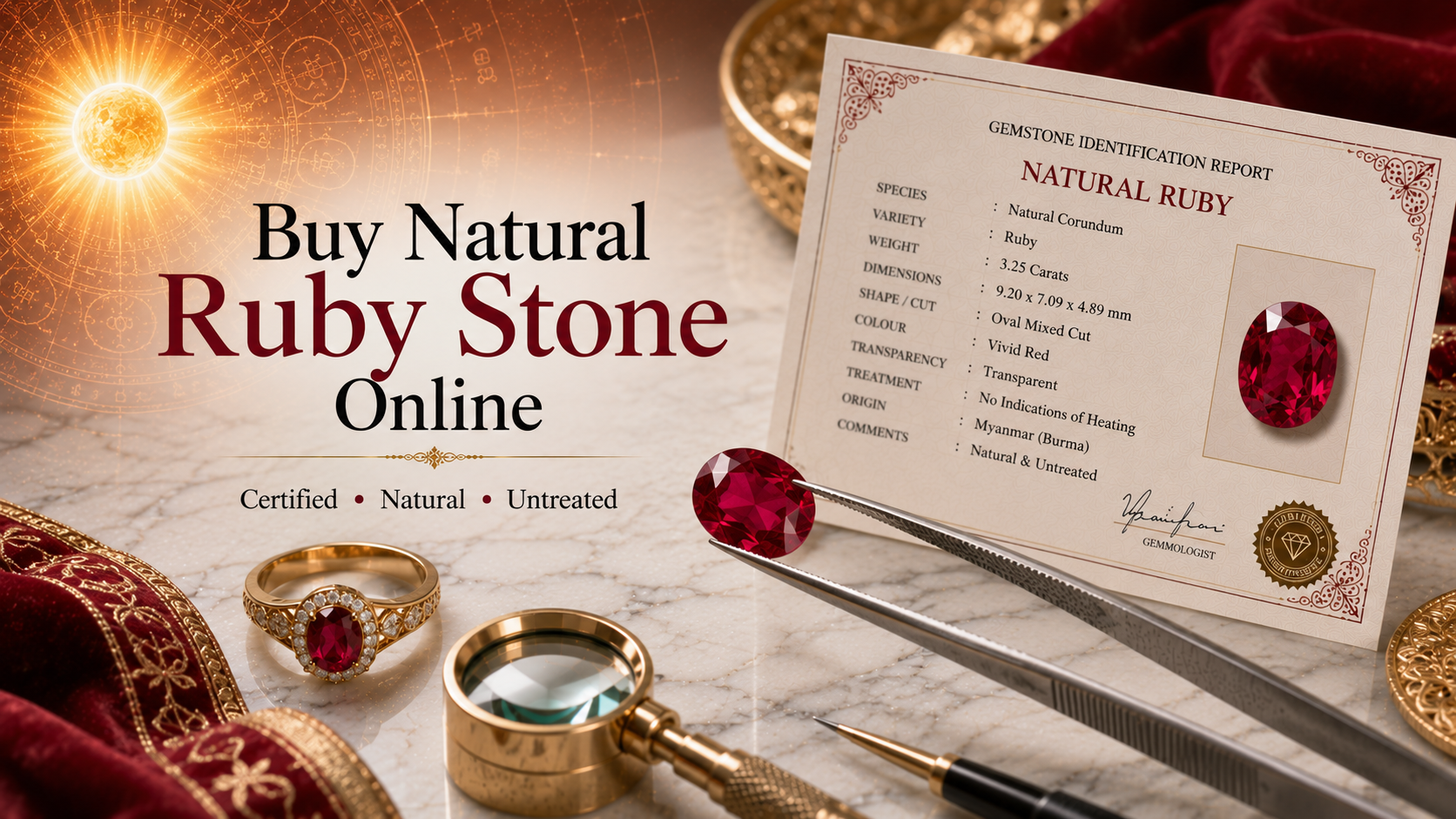
Once you have a clear recommendation, buy natural untreated material with independent laboratory certification. Confirm that the stone is natural and unheated as two separate certifications. Wear it correctly — right metal, right finger, right day, proper energisation.
And don’t skip the three-day trial for blue sapphire specifically. That precaution exists because Saturn’s stone moves fast enough that finding out it’s incompatible with your chart in three days is far preferable to discovering the same thing three months later.
Tags:
best gemstone for astrology,
birth chart gemstone,
gemstone according to horoscope,
gemstone according to kundli,
gemstone by birth chart,
gemstone by lagna,
gemstone compatibility,
gemstone consultation,
gemstone for ascendant,
gemstone for mahadasha,
gemstone for zodiac,
horoscope gemstone guide,
Jyotish gemstone recommendation,
kundli gemstone recommendation,
natural certified gemstones,
Navratna Gemstones,
planetary gemstones,
Vedic astrology gemstones,
which gemstone should I wear