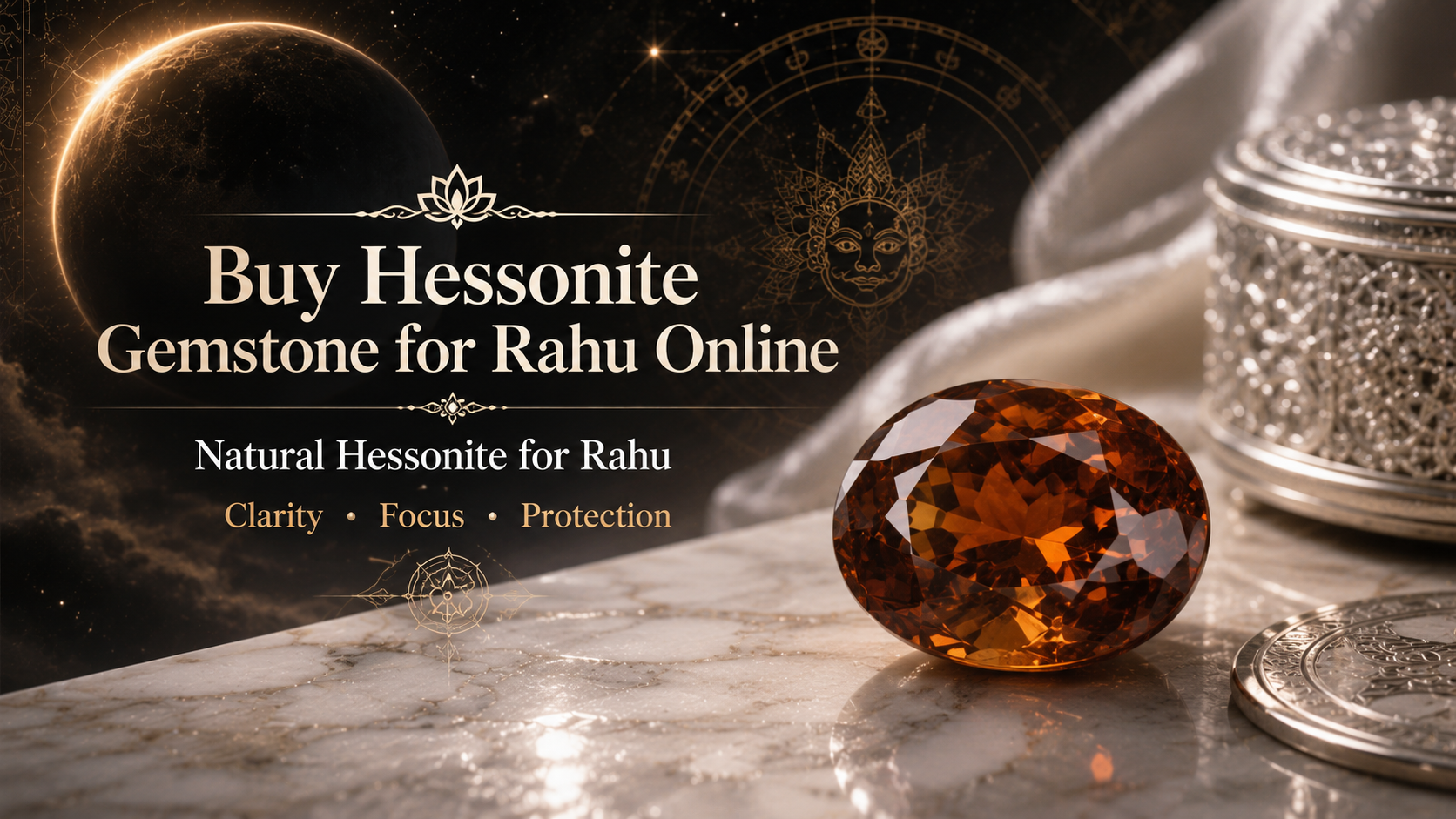

















Buy Hessonite Gemstone for Rahu Online and What to Check First
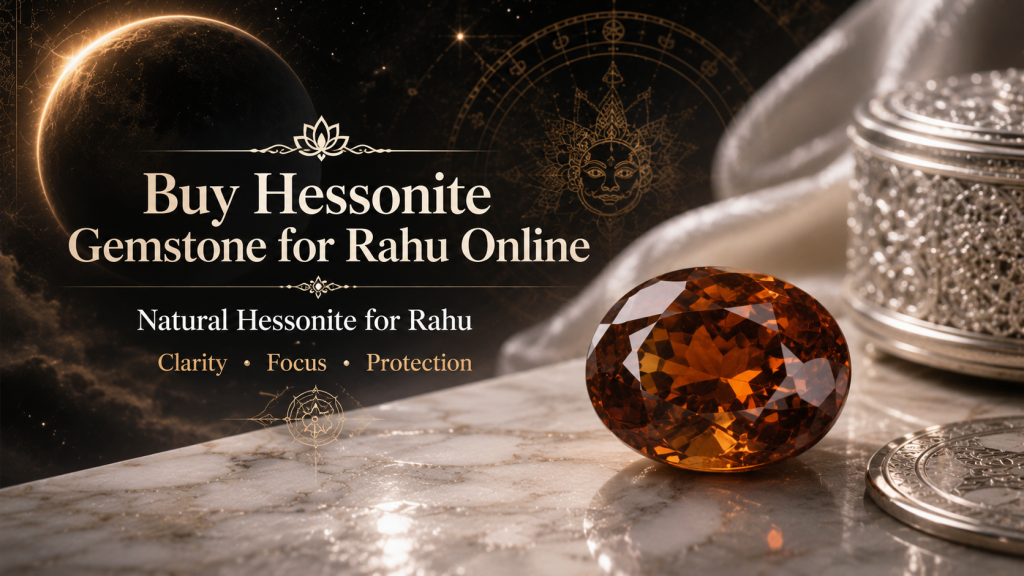
Rahu is the shadow planet nobody wants problems with, and for good reason. In Vedic astrology, this headless node governs ambition, sudden disruption, obsessive thinking, illusion, and the kind of restless dissatisfaction that no amount of material success seems to resolve. His Mahadasha runs for eighteen years. His transits are watched carefully by astrologers across India and Southeast Asia. And the gemstone assigned to manage his intense, transformative energy is hessonite — Gomed stone — a honey-to-cinnamon coloured variety of grossular garnet that’s been used for exactly this purpose for centuries.
Understanding what to actually check before you buy hessonite gemstone for Rahu online is the entire point of this guide.
What Gomed stone actually is
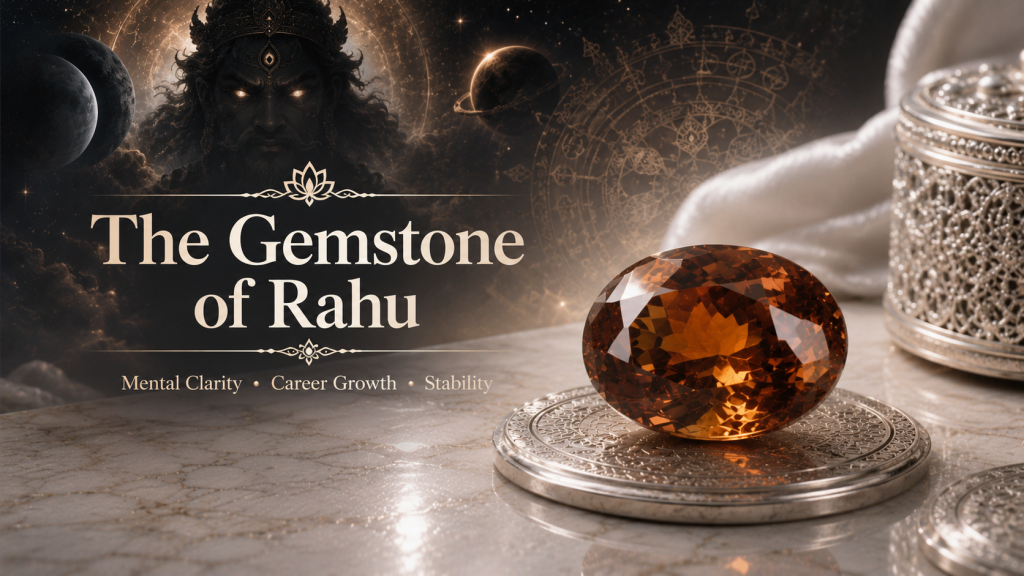
Hessonite is a variety of grossular garnet — calcium aluminum silicate — coloured by iron and manganese. The characteristic colour sits in a specific range: deep honey-brown to reddish-cinnamon, warm and distinctive once you know what you’re looking at. Hardness 6.5 to 7.5 on the Mohs scale, vitreous to resinous luster, transparent to translucent in quality specimens.
The name Hessonite comes from the Greek hesson, meaning inferior — a reference to the stone’s lower density compared to other garnets, not a quality judgment. Vedic tradition clearly disagrees with that assessment. Gomed Ratna has been prescribed by astrologers as the primary Rahu remedy for long enough that the stone’s reputation isn’t built on modern marketing.
One characteristic specific to hessonite worth knowing before buying: natural specimens typically show oil-drop or treacle-like internal features under magnification. These are caused by heat-induced distortions during crystal formation and are specific to this variety. Their presence confirms natural origin. A completely inclusion-free hessonite is actually worth questioning rather than celebrating.
Why people buy hessonite gemstone for Rahu specifically
Rahu in Jyotish governs obsession, illusion, sudden change, politics, technology, foreign matters, and that particular quality of a mind that races constantly without arriving anywhere useful. His Mahadasha is among the more challenging planetary periods precisely because his energy amplifies and distorts whatever planet he sits near in the natal chart.
People seek Gomed stone for several overlapping reasons. Some are navigating Rahu Mahadasha — the full eighteen-year period — and find the stone’s grounding influence makes the transit significantly more manageable. Others are dealing with specific Rahu-influenced difficulties: persistent mental restlessness, career setbacks that arrive without warning, financial instability, or the social withdrawal that Ketu-adjacent energy sometimes creates.
Mental clarity and improved focus are the benefits most consistently mentioned by wearers, which connects directly to Rahu’s most difficult quality — the way his energy scatters thought rather than sharpening it. Gomed stone is credited with channeling that scattered energy into something more productive, helping the wearer work with Rahu’s influence rather than being driven by it.
Career advancement in Rahu-governed fields also shows up consistently. Politics, technology, business, media, research, foreign trade — all areas where Rahu’s unconventional intelligence becomes an asset when properly channeled rather than a liability.
Who should actually consider wearing it
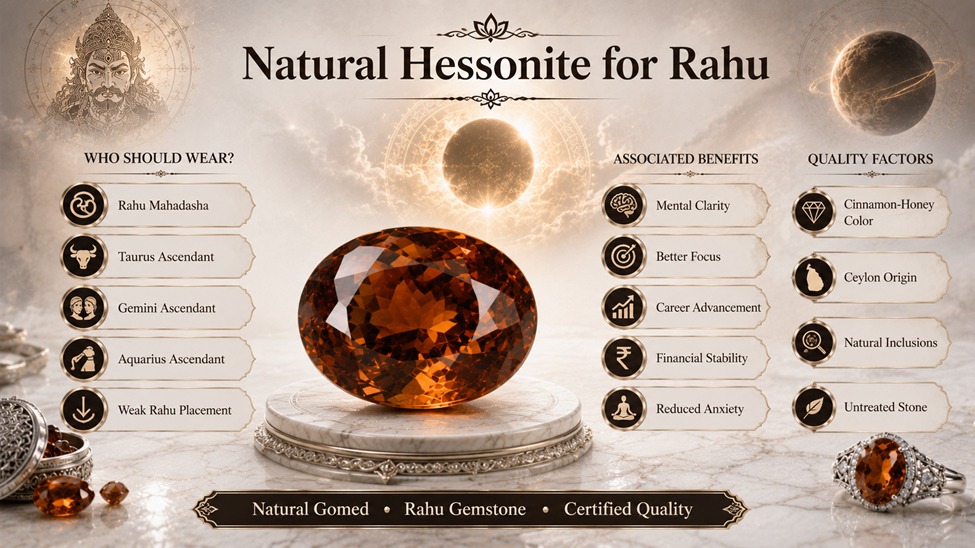
People in Rahu Mahadasha are the clearest candidates. The eighteen-year window is intense enough that the stone’s grounding influence is considered broadly useful, though the specific benefit depends significantly on Rahu’s natal placement.
Aquarius, Taurus, and Gemini ascendants are the most commonly recommended zodiac configurations for Gomed stone. Rahu is considered exalted in Taurus in some traditions, and the stone generally aligns well with these configurations.
Anyone with a poorly placed Rahu in the natal chart — experiencing characteristic difficulties like persistent anxiety, obsessive thinking, confusion in decision-making, or sudden career disruption — may find hessonite specifically recommended as a corrective measure.
One genuinely important caution: Rahu absorbs and amplifies the energy of whatever planet he sits near in the natal chart. This means Gomed’s effects are more chart-specific than most other planetary stones. Two people both in Rahu Mahadasha can have very different experiences of the same stone depending on which planet Rahu is conjunct in their individual chart. Consultation with a qualified Jyotish astrologer before adopting Gomed is considerably more important here than with most other gemstones.
What determines quality and price
Colour is the primary value driver. The most prized shade is a rich cinnamon-honey — warm golden-brown with subtle orange undertones, clear and alive-looking. Too dark and the stone loses its characteristic warmth. Too pale and it lacks the depth considered most potent astrologically. Avoid stones with heavy blackish or murky tones.
Origin creates the clearest price tier. Sri Lankan hessonite — Siloni or Ceyloni Gomed — is considered the benchmark in both Jyotish practice and the gemological market. Consistent colour, good clarity, and the strongest astrological reputation. African hessonite is a legitimate second choice at more accessible prices but generally considered secondary for serious astrological use. Price difference between fine Ceylon and good African material runs roughly four to five times per carat at equivalent quality.
Clarity in hessonite requires understanding the material’s specific characteristics. The oil-drop internal features natural to this variety are expected and confirm natural formation. What’s undesirable is heavy black spotting, obvious cloudiness, or inclusions that significantly disrupt transparency.
Treatment status. Natural untreated hessonite is preferred for astrological use. Treated stones may look better cosmetically but are considered less effective for Rahu’s energy within the tradition.
Price range in India runs from approximately ₹400 to ₹500 per carat for African material to ₹2,000 to ₹5,000 per carat and above for fine Ceylon specimens. The price difference reflects genuine quality and origin differences rather than arbitrary markup.
How to wear it correctly
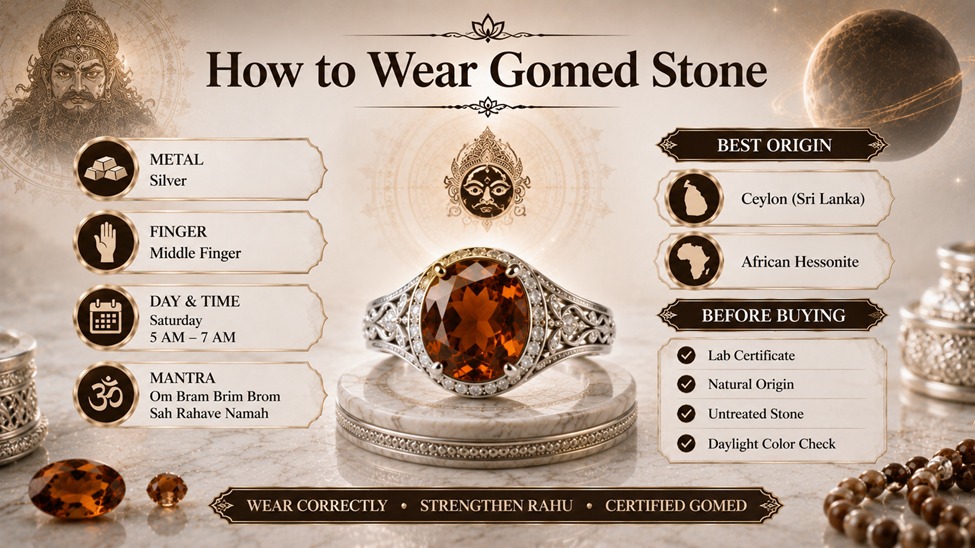
Silver is the metal. Middle finger of the working hand. Saturday morning, 5 to 7 AM, Shukla Paksha.
Before wearing for the first time, purify the ring in raw milk and Ganga Jal. Chant the Rahu beej mantra 108 times:
Om Bram Brim Brom Sah Rahave Namah
(|| ॐ भ्रां भ्रीं भ्रौं सः राहवे नमः ||)
Weight of one-tenth to one-twelfth of body weight in ratti. Someone weighing 60 kg should wear approximately 6 to 7 ratti. Confirm with an astrologer based on the specific chart.
What to verify before buying online
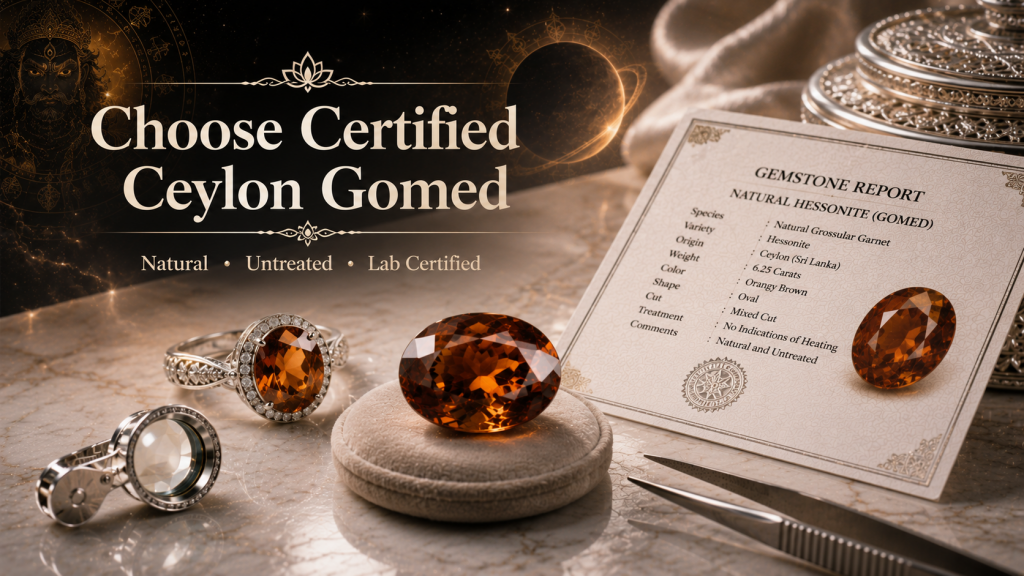
Independent laboratory certification from GIA, IGI, GRS, or equivalent confirming natural origin and treatment status is the baseline for any serious hessonite purchase. Certification should specifically address whether the stone has been treated beyond its natural state.
Origin claims for Ceylon material require documentation rather than just a seller’s assertion. The price premium for Ceyloni Gomed makes false origin claims financially worthwhile for unscrupulous sellers — laboratory confirmation is the only reliable safeguard.
Examine colour under natural daylight, not just shop or studio lighting. Hessonite looks dramatically different under warm incandescent light versus natural light, and colour assessment under flattering conditions can be genuinely misleading.
Price floors exist for fine Ceylon material. Stones presented as premium Ceyloni Gomed at prices matching African commercial material almost always indicate misrepresented origin, lower quality, or treatment that hasn’t been disclosed.