A Real Guide to Buying Semi Precious Stones Online
Vikas July 3, 2026 in
Astrology A Real Guide to Buying Semi Precious Stones Online
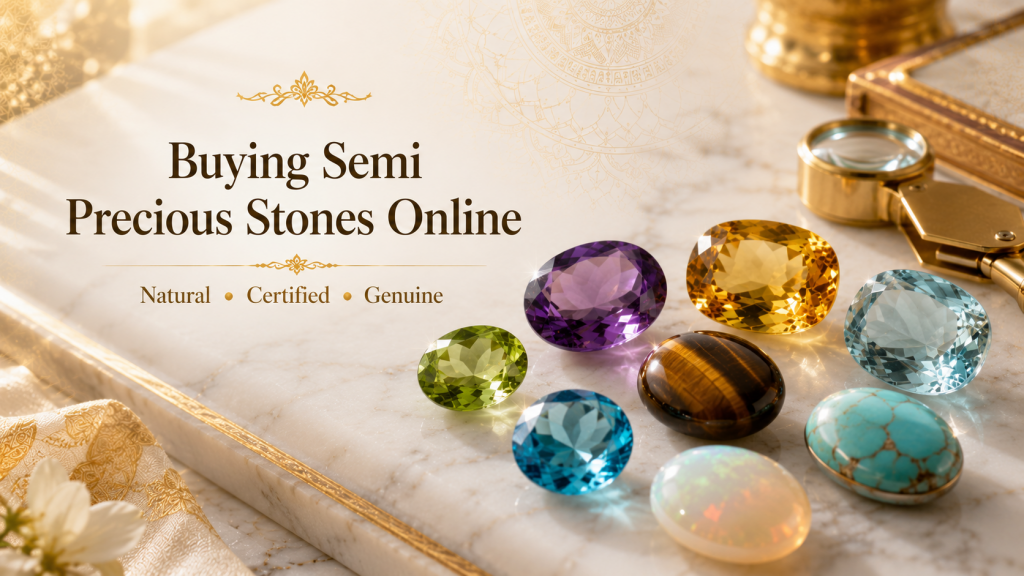
“Semi precious” does not mean lesser quality.
That assumption is wrong and worth correcting immediately, because it changes how people shop. The distinction between precious and semi precious has nothing to do with beauty or durability or how much a stone is worth. It comes down to one thing — availability. Diamonds and rubies are scarce. Aquamarine, amethyst and citrine occur in larger quantities. That is the entire basis of the classification. A fine aquamarine can be more beautiful than a mediocre ruby. A well-cut peridot can outshine a poor-quality emerald. The category label tells you about geological abundance, not about whether the stone deserves your attention.
Once you understand that, the semi precious category stops feeling like a compromise and starts looking like exactly what it is — a remarkably wide range of genuinely beautiful natural stones at price points that make them accessible to most people.
Why So Many People End Up Wearing These Stones
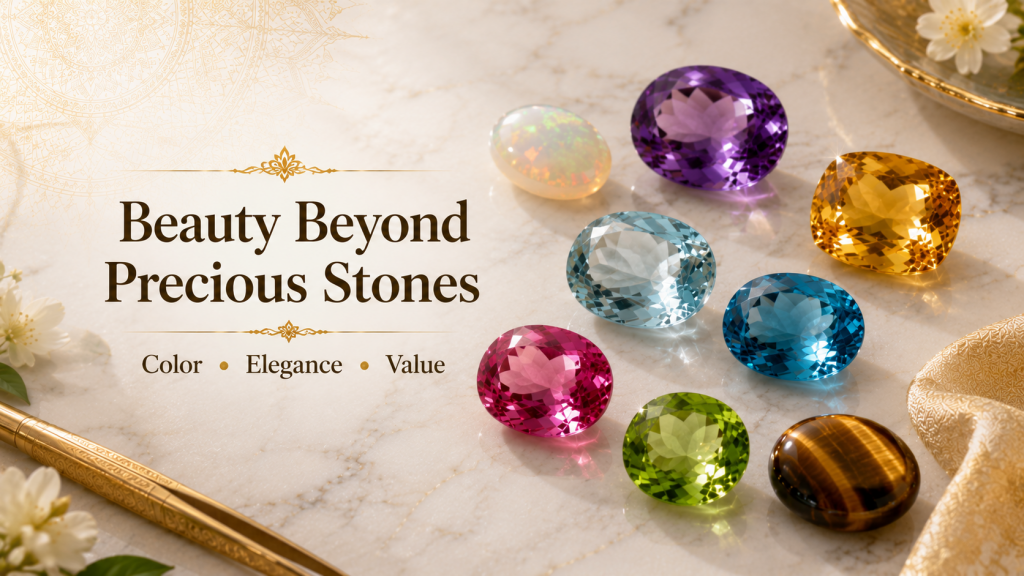
Colour is the obvious starting point. Light blue aquamarine. Deep purple amethyst. Soft warm green peridot. Vivid citrine yellow. The range across semi precious stones is broader than most buyers initially realise, and that breadth is genuinely useful — finding something that matches a particular person’s taste, or a particular piece of clothing, or a particular occasion, is considerably easier here than in a narrower category.
Versatility matters too. A lot of these stones move between everyday and formal wear without looking out of place. That is harder to achieve than it sounds and it is part of why people end up reaching for the same semi precious piece repeatedly rather than saving it for specific occasions.
Then there is durability. Many semi precious stones are well-suited to daily wear in a practical sense — they hold up under regular use without demanding the careful handling that some rarer alternatives require. Amethyst. Blue topaz. Citrine. These are not fragile stones. You can actually wear them.
The Stones Worth Knowing About
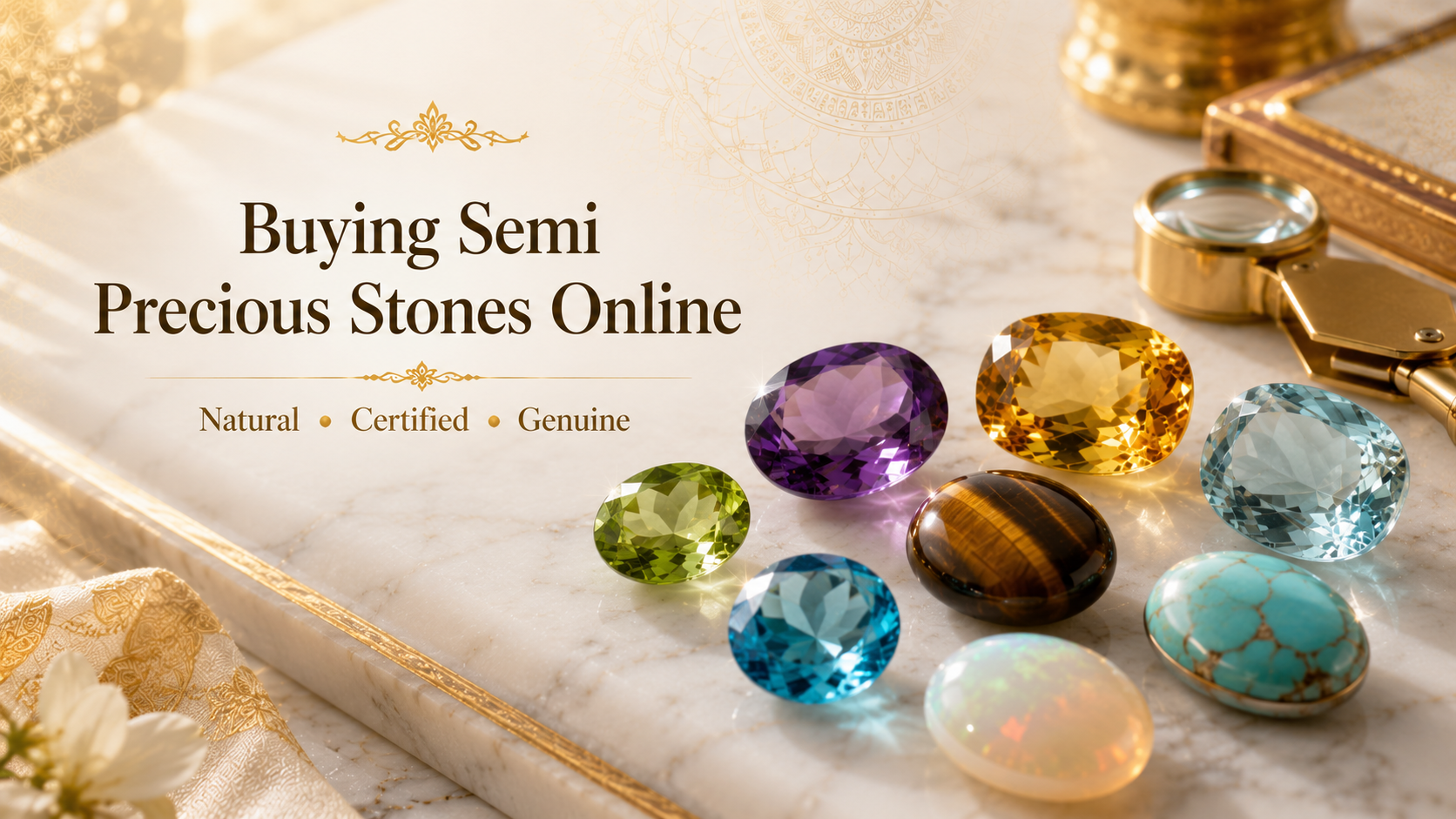
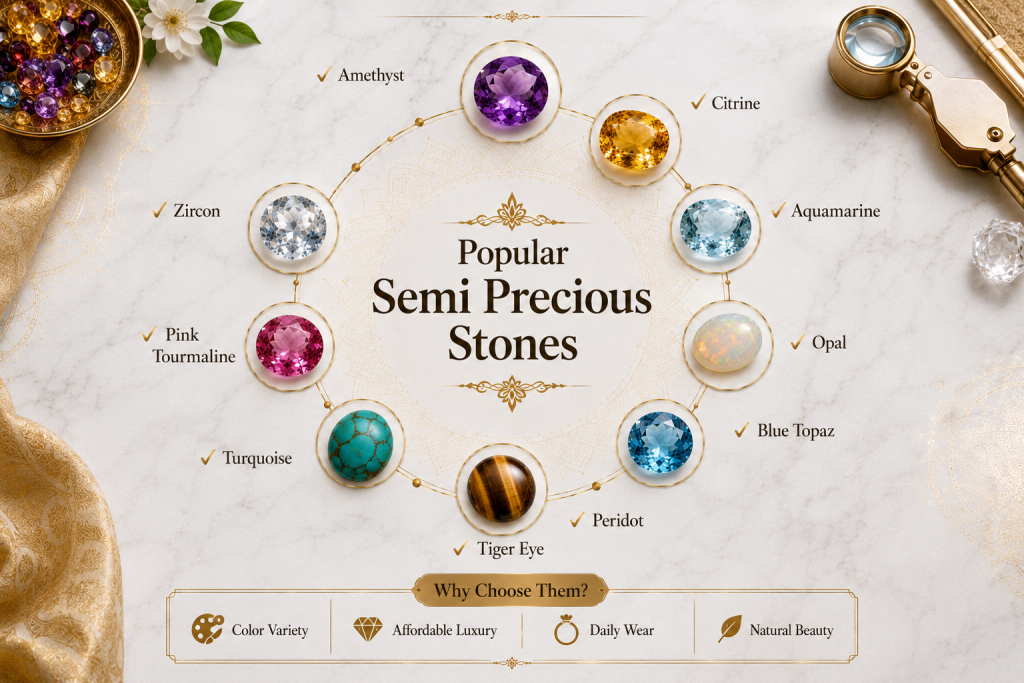
Aquamarine — light blue, calm, clean. One of those stones that works in almost any setting without competing with the design around it. Popular in rings and pendants for exactly that understated quality.
Blue topaz — brighter and more vivid than aquamarine, which makes it read differently even though the colour family is similar. Widely used in contemporary jewellery because the colour holds across different lighting conditions.
Pink tourmaline — soft, gentle pink that tends toward fashion-forward designs rather than traditional pieces. Chosen specifically for its colour more than anything else.
Opal — does something none of the others manage. The colour shifts depending on how light hits it. Every single opal looks different from the next, and that unpredictability is precisely why people get drawn to it. No other stone in this category behaves quite this way.
Peridot — a gentle, understated green that works best in simple designs where the stone stays the visual focus. Pair it with an elaborate setting and it gets lost. Keep it simple and it is actually quite striking.
Turquoise — blue-green with a long jewellery history behind it. The earthy, traditional character has aged well across generations of use in ways that more fashionable stones sometimes do not.
Amethyst — consistently popular across decades, which tells you something. Purple that works in rings, pendants and bracelets without feeling dated. One of those stones that does not really go out of style.
Tiger eye — different from the others in a specific way. Natural lines inside the stone actually move as you tilt it. That optical effect is hard to replicate and gives each piece a genuinely individual character.
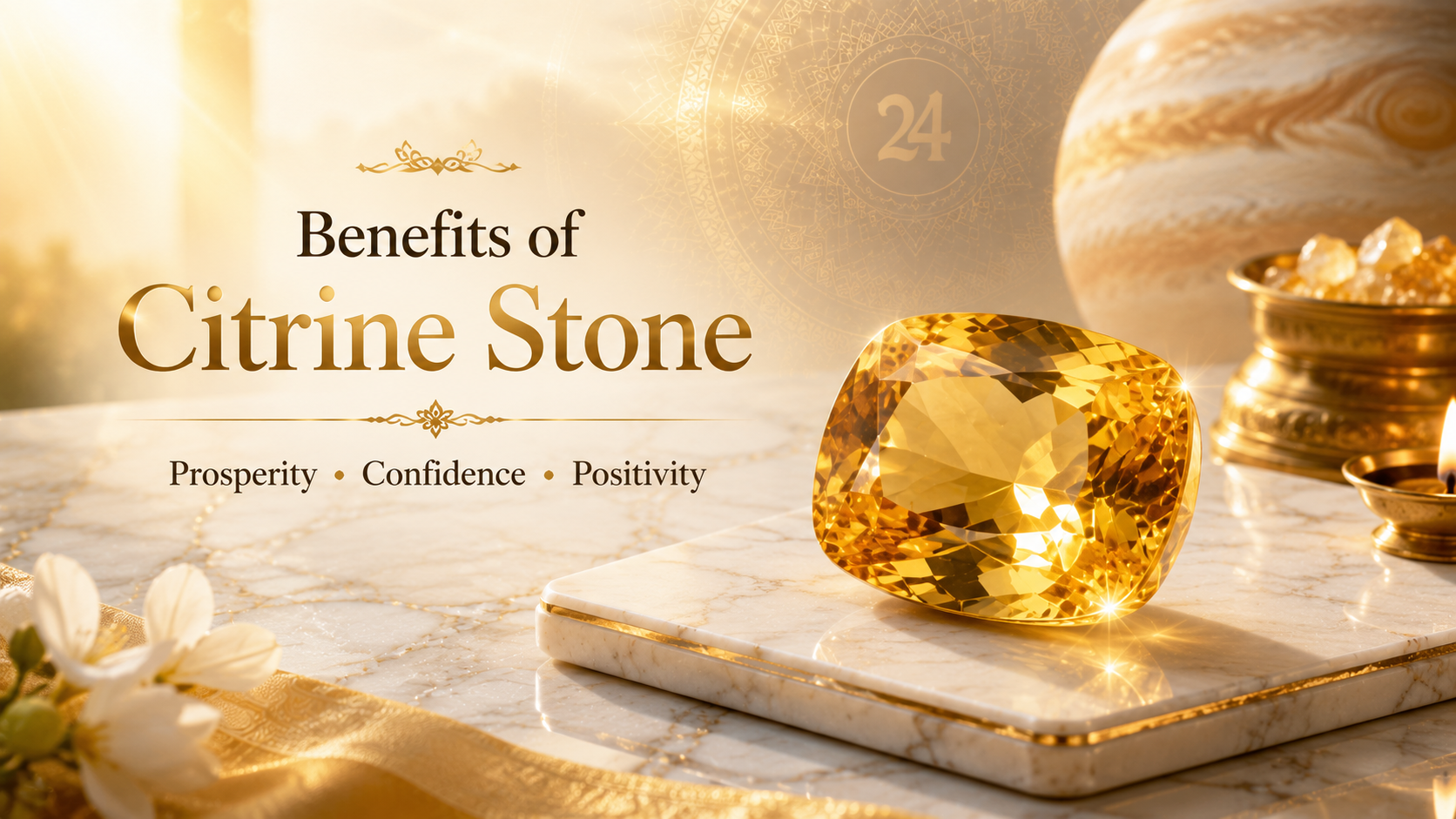
Citrine — warm yellow that reads confident and bright. Often used in statement pieces where the colour does most of the visual work without needing much help from the design.
Zircon — known primarily for its brilliance. Sometimes mistaken for diamond at a glance, though it has its own distinct character once you look properly.
How to Actually Choose
Start with colour. Not with what you think you should like or what someone else recommended — with what genuinely appeals to you when you look at it. That sounds simple and it is, which is part of what makes this category so approachable for first-time buyers.
From there, think honestly about how often you will actually wear the piece.
Daily wear changes what matters. For something going on your hand or around your neck every morning, look for even colour distribution, a smooth well-finished surface and a stone that has been set securely. Surface quality affects how a piece holds up under regular handling in ways that are not always obvious from photographs.
For occasional wear — something reserved for specific events or occasions — durability under constant handling matters less. You have more room to explore bolder colours and more elaborate cuts because the stone is not going to face the same daily friction.
Gifting is a separate use case entirely and one where semi precious stones work particularly well. The colour and style range is wide enough that finding something suited to a specific person’s taste is genuinely easier here than in a narrower category. The price points help too.
What to Check When Buying Online
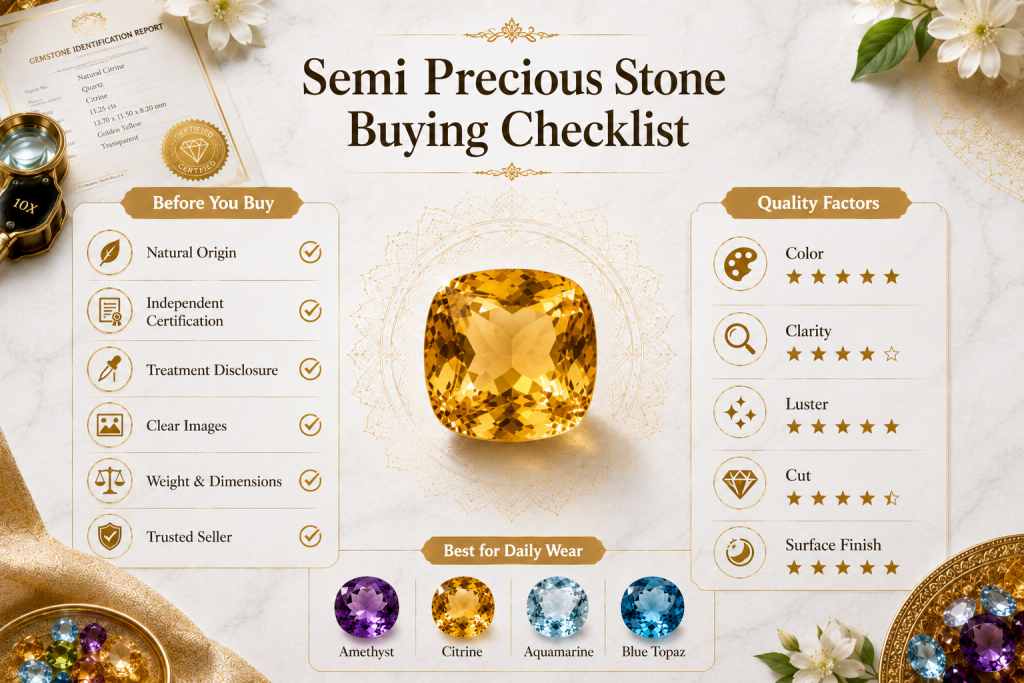
Online gemstone shopping makes comparison easier than in-store — you can look at multiple stones side by side rather than relying on whatever a single physical shop happens to have available that day. But it removes the ability to inspect the stone directly, which means the listing itself has to do more work.
Prioritise clear images. Multiple angles, ideally including close-up shots that show the surface and any inclusions. Descriptions that are specific rather than vague — actual dimensions, actual weight, actual treatment disclosure if applicable.
Treatment matters and is frequently under-disclosed in online listings. Many gemstones are routinely treated — heated, irradiated, coated — to improve colour or clarity. None of these treatments is inherently problematic when disclosed honestly. The issue is when they are omitted. For a stone you are buying for beauty alone, treatment status may not change your decision. For a stone with any astrological purpose behind the purchase, it matters considerably more.
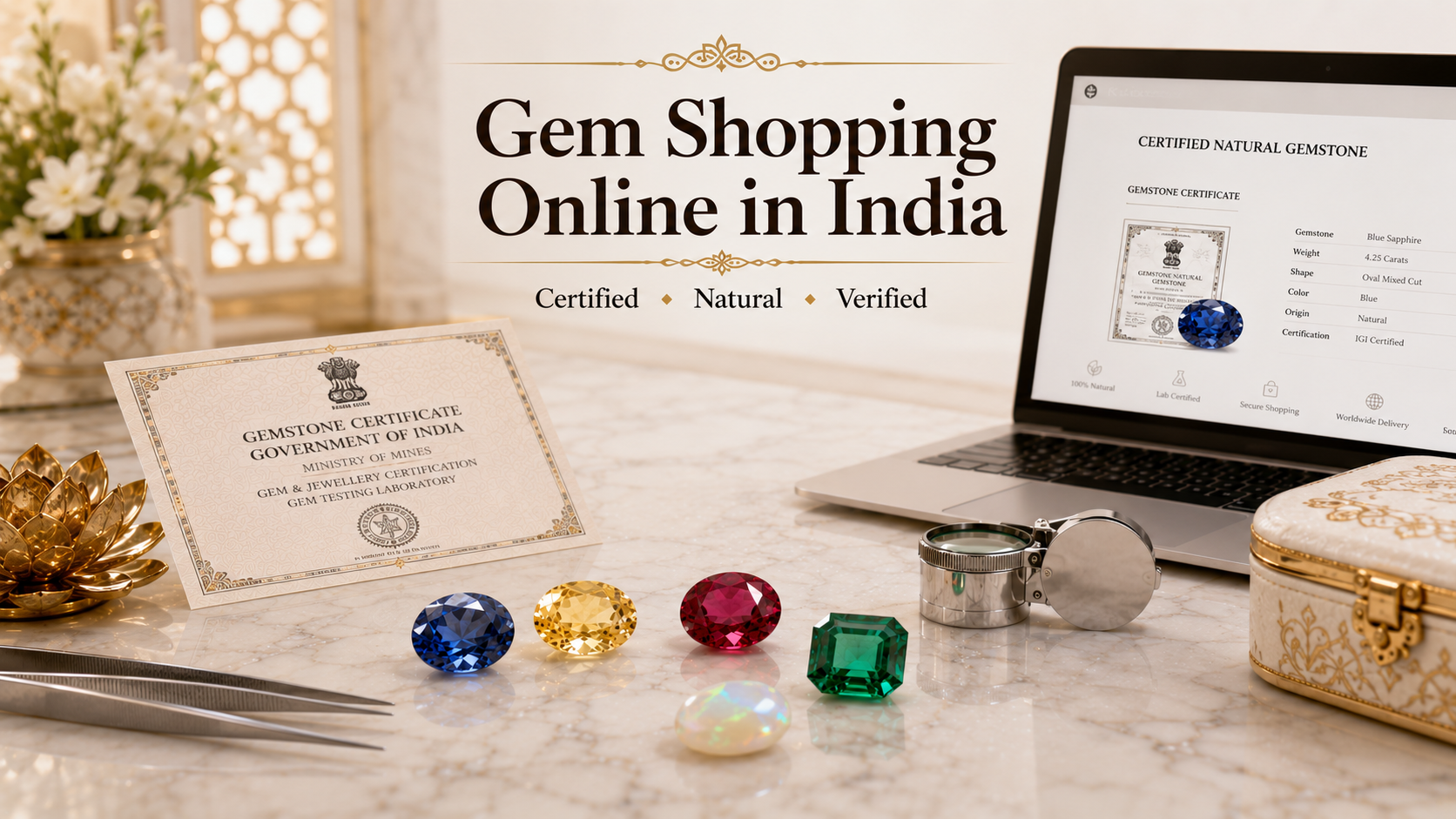
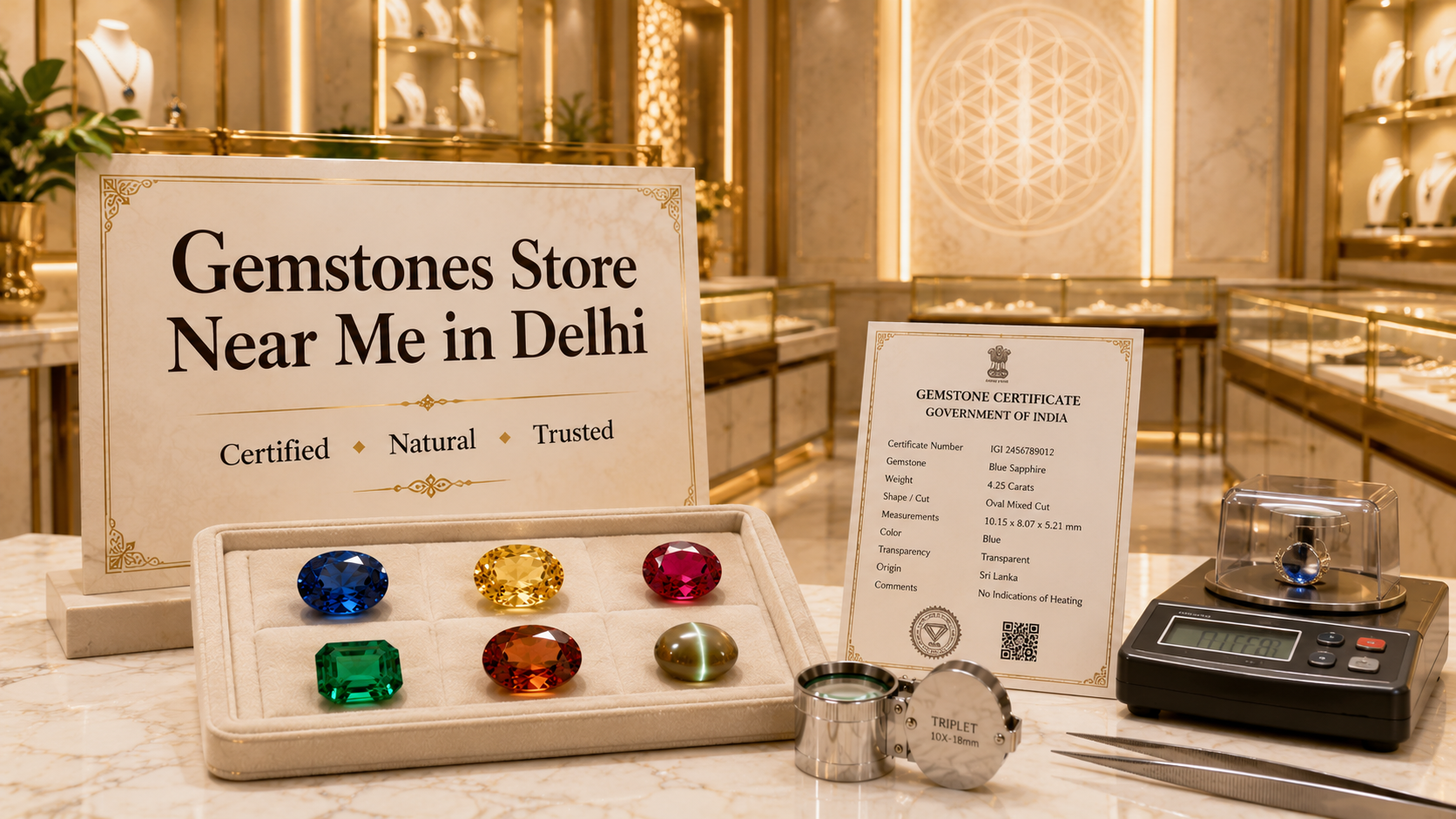
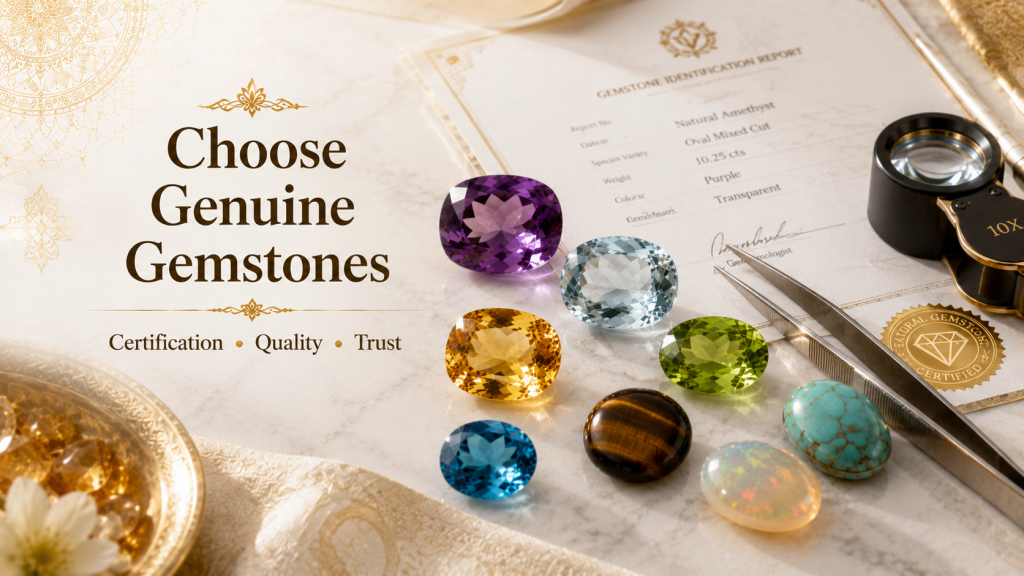
Natural origin certification from an independent laboratory is the most reliable verification available when buying without physical inspection. Not the seller’s own description. An independent certificate from a recognised gemological lab, specifying natural origin and treatment status. This is the document that actually protects you if what arrives does not match what was described.
Quality Differences Within the Category
Even within semi precious stones, quality varies significantly and the differences are visible.
Colour distribution should be even throughout the stone — patchy or concentrated colour usually indicates either poor quality rough or incomplete cutting. Luster — the way the surface reflects light — should look natural rather than artificially enhanced. Heavily coated stones have a different quality of shine that experienced buyers learn to recognise, but that photographs can make harder to distinguish.
Surface finish matters practically. A stone with a well-polished surface holds up better under regular wear and looks better in its setting. This is not about perfection — natural inclusions are expected and normal in genuine stones. It is about whether the cutting and polishing work was done carefully.
Care — Simpler Than Most People Expect
Soft cloth for cleaning. Keep away from strong chemicals. Store pieces separately so they cannot scratch each other. That is genuinely most of what semi precious gemstone care requires.
Some stones warrant specific attention — opals are more sensitive to heat and dryness than most, turquoise reacts to chemicals and skin oils over time, amethyst can fade with prolonged direct sunlight. These are worth knowing for the specific stones you own. As general rules for the category they are not complicated.
Common Questions
Are semi precious stones natural?
Yes — genuine semi precious gemstones are natural stones formed in the earth. The semi precious classification refers to availability, not to whether the stone is real.
Do they suit daily wear?
Many do. Amethyst, blue topaz, citrine and aquamarine are all reasonably durable for daily use. Opal and turquoise need more careful handling. It depends on the specific stone.
How do I know what I’m buying online is genuine?
Independent laboratory certification is the most reliable protection. Clear images, specific descriptions and explicit treatment disclosure are the minimum to expect from a trustworthy listing.
What affects the price?
Specific stone, size, quality of colour and clarity, treatment status and origin all contribute. Within the same stone type, these factors can produce very significant price differences even between two stones that look superficially similar in photographs.