Mistakes to Avoid When Buying Blue Sapphire (Neelam)
Vikas June 12, 2026 in
Astrology Mistakes to Avoid When Buying Blue Sapphire
Most blue sapphire buying mistakes happen before the purchase is finalized.
By the time someone realizes they’ve bought a heated stone sold as untreated, or a synthetic passed off as natural, or a stone that’s wrong for their chart, the money is gone and the options are limited. The mistakes are predictable, the market conditions that create them are consistent, and knowing what to watch for in advance is genuinely the difference between a good purchase and a regrettable one.
Here are the ones that matter most.
Buying Without Independent Certification
This is the most common and most consequential mistake. A seller’s word about a stone’s quality, origin, and treatment status is not documentation. It’s a claim.
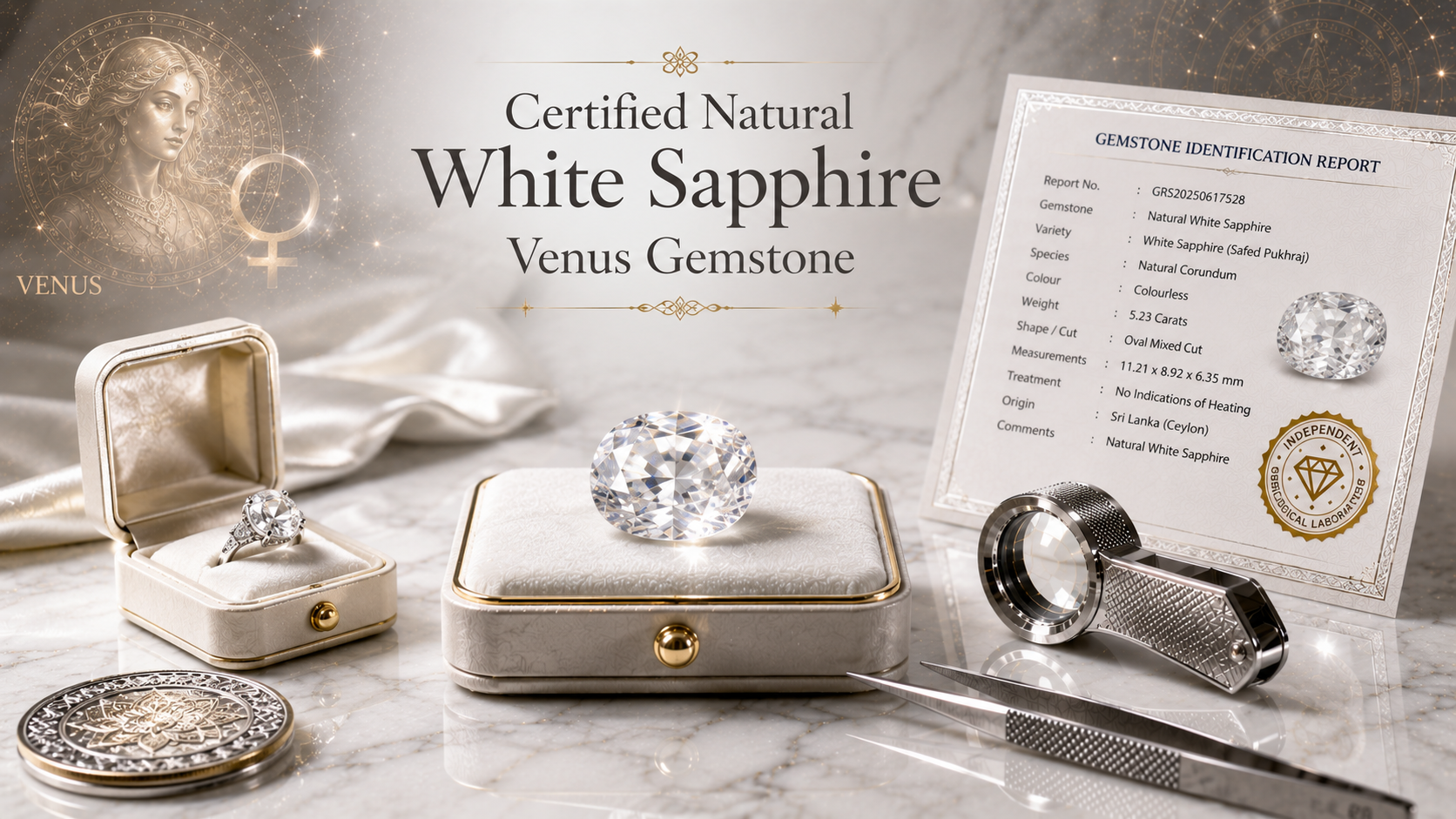
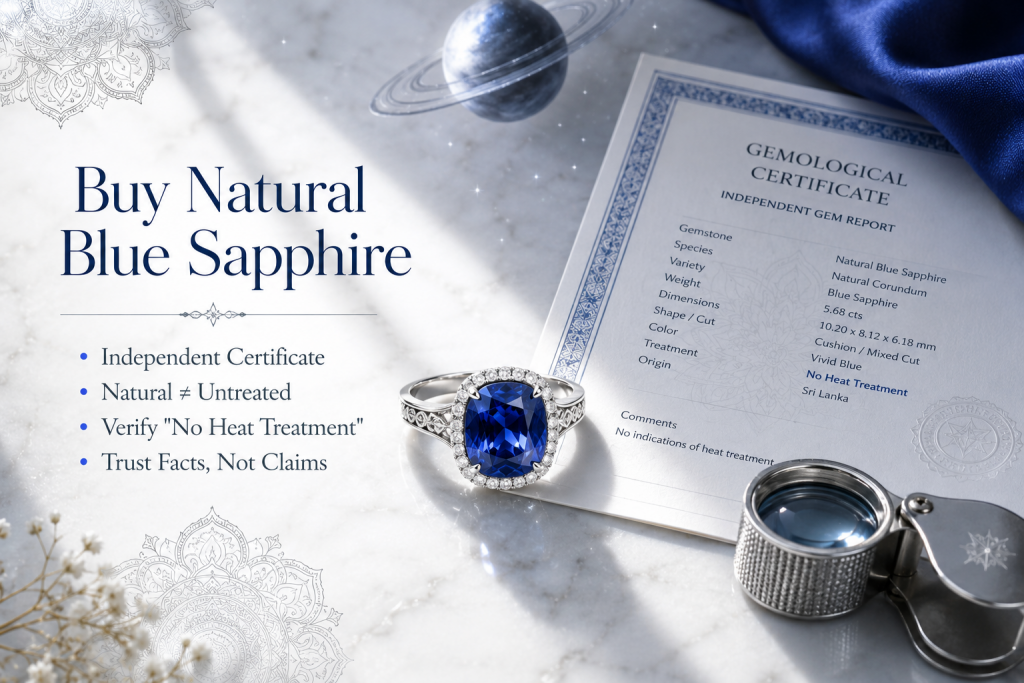
An independent laboratory certificate — from GIA, GRS, Gübelin, SSEF, or an equivalent recognized lab — is what transforms those claims into verified facts. The certificate specifies natural origin, treatment status, color grade, and weight. For blue sapphire purchased specifically for astrological use, the critical line is “no heat treatment.” That confirmation needs to be in the certificate, not in the product description.
Many buyers assume certification means the seller has a certificate on file somewhere. It doesn’t. The certificate should accompany the stone, be issued by a laboratory with no commercial relationship to the seller, and specifically address treatment status. Without all three of those conditions, certification is incomplete.
Confusing “Natural” with “Untreated”
These are two different determinations and sellers frequently conflate them — sometimes accidentally, sometimes not.
“Natural” means the stone formed in the earth rather than in a laboratory. “Untreated” means no heat treatment or other enhancement has been applied. A stone can be fully natural and heavily heat-treated at the same time. In the Jyotish tradition, both conditions matter for astrological use — and they need to be separately confirmed.
The practical implication: when buying blue sapphire for Saturn’s blessings, ask specifically about treatment status as a separate question from natural origin. A certificate that confirms “natural” without addressing treatment tells you half the story.
Underestimating How Common Heat Treatment Is
Most blue sapphires in commercial circulation have been heat-treated. Not some — most. The percentage in standard jewelry markets is estimated above 95% by most gemological sources.
Heat treatment improves color saturation, dissolves silk inclusions, and makes stones appear cleaner and more vivid. It’s stable, widely accepted in the jewelry trade, and doesn’t make a stone less beautiful. But for astrological use, the Vedic tradition is consistent: treatment alters the stone’s natural energetic signature and reduces its effectiveness as a vehicle for Saturn’s planetary energy.
Buyers who don’t know how prevalent treatment is sometimes pay natural-untreated prices for heated material without realizing it. The price difference between a fine natural untreated Ceylon sapphire and a heated stone of equivalent appearance is substantial — knowing the distinction protects against overpaying for something that doesn’t serve the intended purpose.
Trusting Color Assessment From Photography Alone
Blue sapphire color shifts dramatically under different lighting conditions. What looks like vivid royal blue under a studio light can appear noticeably greyer, darker, or more violet in natural daylight. Online photographs — particularly those taken under controlled lighting designed to show the stone at its best — are unreliable for accurate color assessment.
Before purchasing any significant blue sapphire online, request video of the stone in natural daylight. This single step catches more color misrepresentation than any other precaution. A stone that can only be photographed under specific conditions to look its best is telling you something important.
Prioritizing Size Over Quality
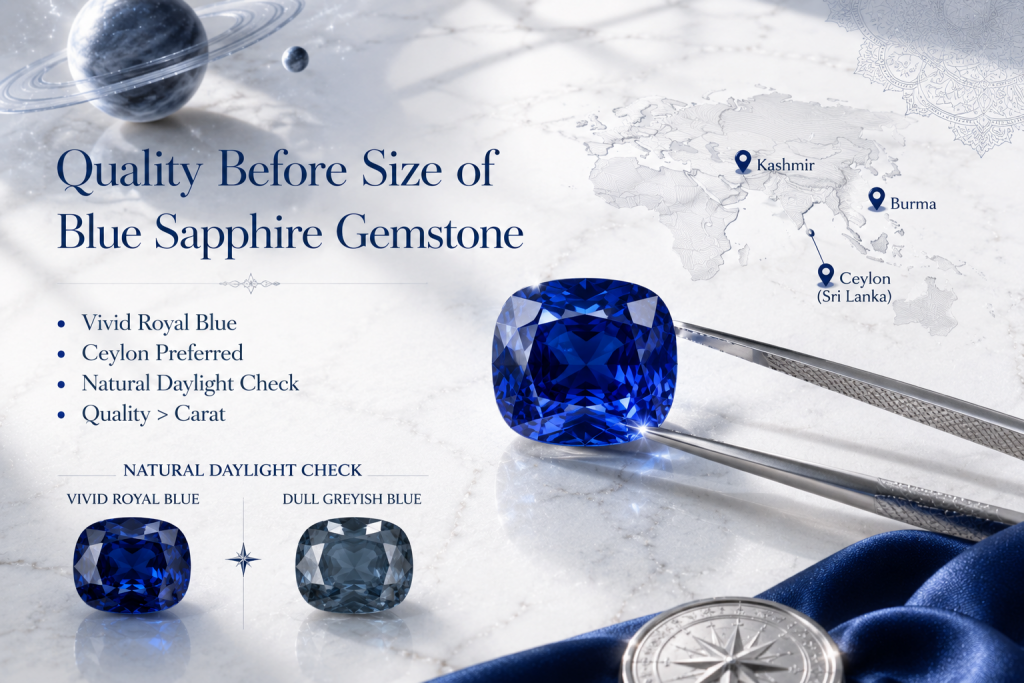
Bigger blue sapphire at a given price point means something is compromised elsewhere — color, clarity, origin, or treatment status. The compromise is usually treatment. Large heated commercial sapphires with decent color are abundantly available. Large natural untreated sapphires with vivid color are genuinely scarce and priced accordingly.
For astrological use specifically, a smaller high-quality natural untreated stone outperforms a larger treated stone of equivalent price every time the tradition addresses this question. Saturn’s stone works through quality, not quantity. The classical weight guideline — 1 ratti per 12 kg of body weight — provides the appropriate size target, and staying within that range while maximizing quality within your budget is the right priority order.
Ignoring Origin
Origin affects both price and astrological recommendation in ways that matter practically.
Kashmir sapphire is the historical benchmark — the velvety blue with fine silk inclusions that gemologists worldwide recognize as the finest blue sapphire in existence. The original Kashmiri mines are largely depleted, making genuine Kashmir-origin stones extraordinarily rare and expensive. Kashmir origin is also one of the most frequently misrepresented claims in the sapphire market. Without a laboratory report confirming Kashmir origin through geological testing, the claim means nothing.
Ceylon (Sri Lanka) sapphire is the most widely recommended origin for astrological use among Jyotish practitioners — excellent color, good clarity, and a higher availability of natural untreated material at accessible quality levels. Most serious recommendations for Neelam stone for astrological purposes point toward Ceylon as the practical first choice.
Thai and Madagascar sapphires offer good commercial quality at more accessible prices. They’re legitimate stones for jewelry purposes. For serious astrological use, Ceylon or Burmese material is generally preferred.
Wearing It Without Astrological Confirmation
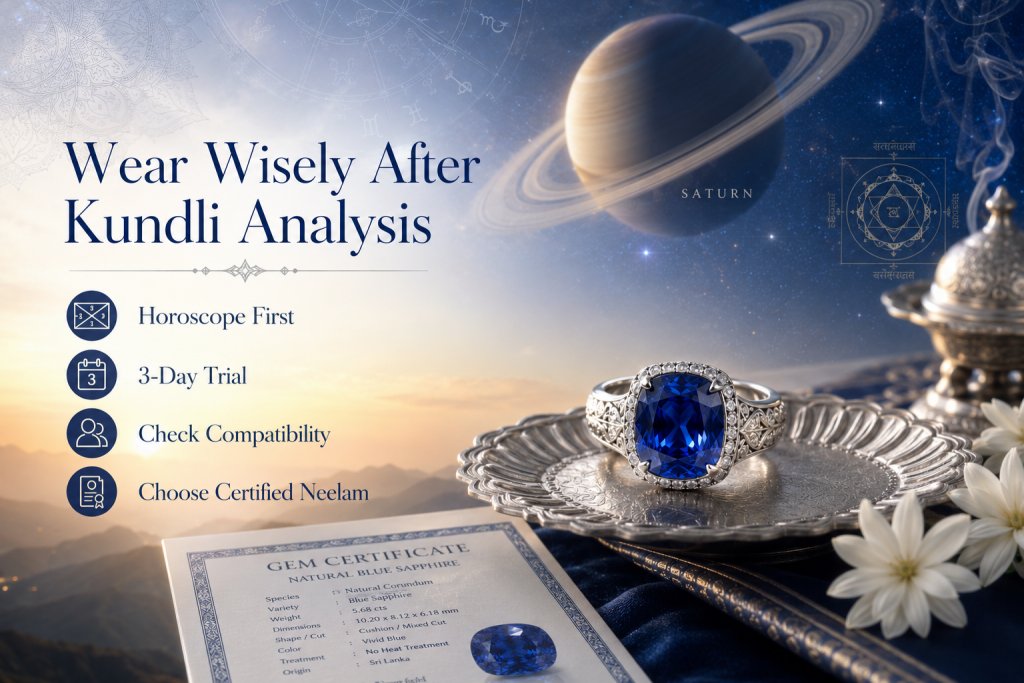
This isn’t a buying mistake exactly — it’s a wearing mistake that belongs in this list because it’s the one with the most serious potential consequences.
Blue sapphire is fast-acting. The tradition describes effects sometimes within 72 hours of first contact. That speed is Saturn’s energy working — which is either beneficial or problematic depending entirely on his placement in your natal chart. Wearing Neelam without confirming suitability through a proper Jyotish chart reading isn’t cautious gemstone buying — it’s bypassing the most important safety check in the entire process.
The four primary rashis most commonly recommended — Makar (Capricorn), Kumbh (Aquarius), Tula (Libra), and Vrishabh (Taurus) — provide a starting filter, not a final answer. Individual chart factors can override general rashi guidance in both directions. Someone with Capricorn ascendant and a badly afflicted Saturn is in a different position than someone with Capricorn ascendant and a strong, well-placed Saturn.
Always do the three-day trial — keep the stone close to you without wearing it formally for three days and observe what happens. Positive indicators: better sleep, mental clarity, improved energy. Negative indicators: disturbed sleep, unusual anxiety, sudden conflicts. The trial exists precisely because Neelam’s speed makes it testable before committing.
Combining It With Incompatible Stones
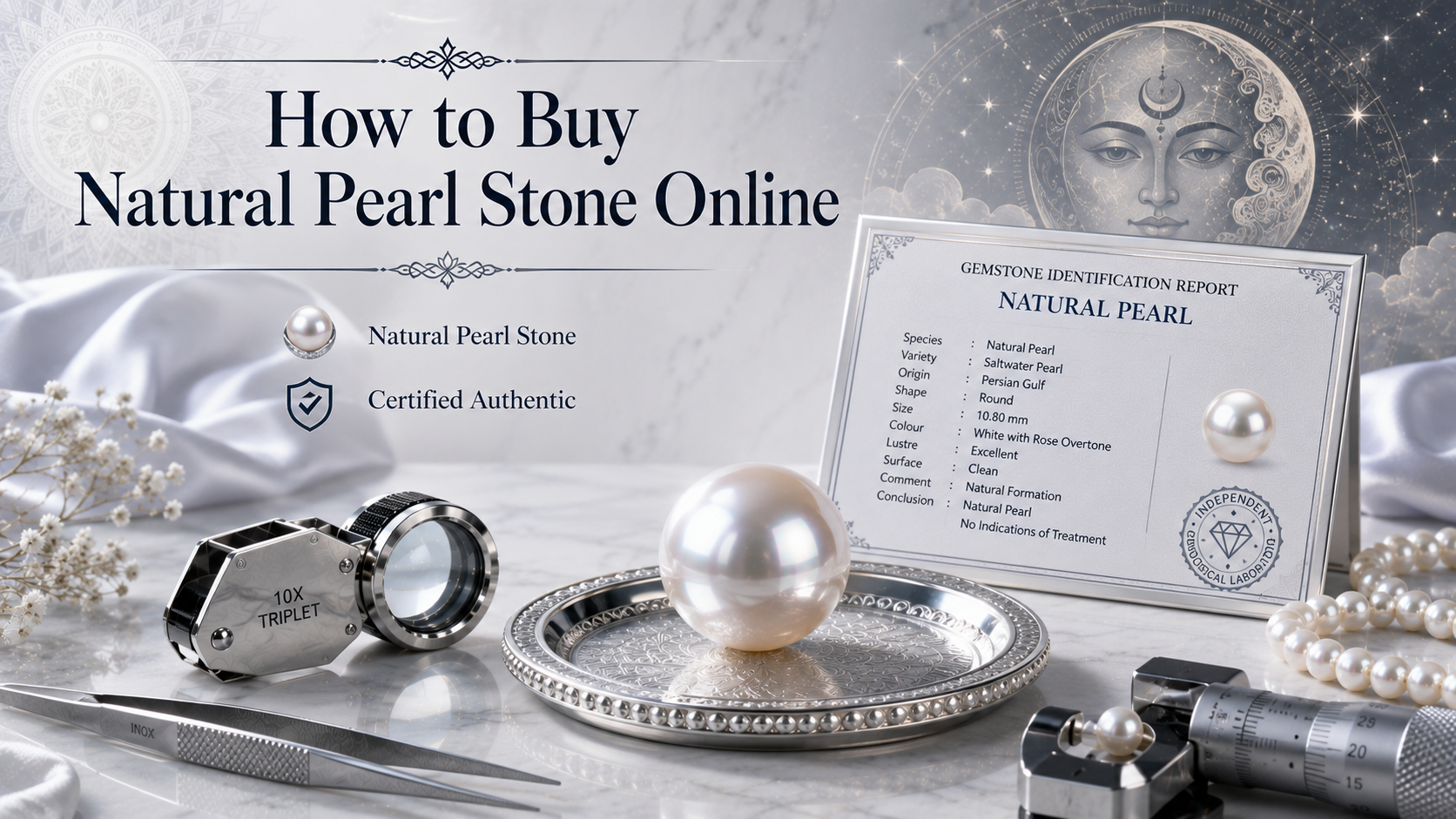
Saturn’s relationship with the Sun and Moon in Jyotish is one of the most fundamental planetary dynamics in the system. Wearing blue sapphire alongside ruby (Sun’s stone) or pearl (Moon’s stone) is specifically cautioned against across virtually every classical and contemporary Jyotish source.
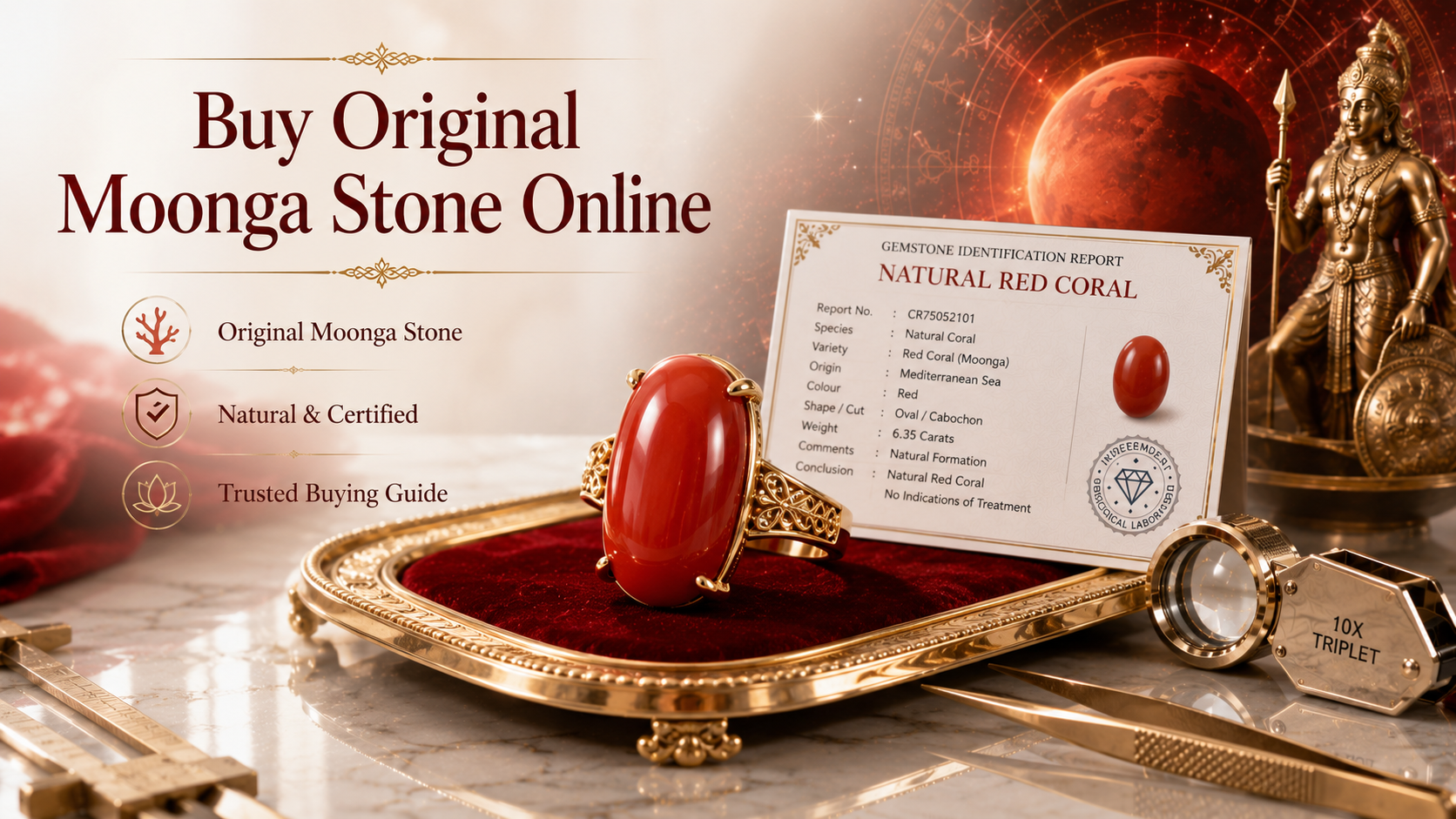
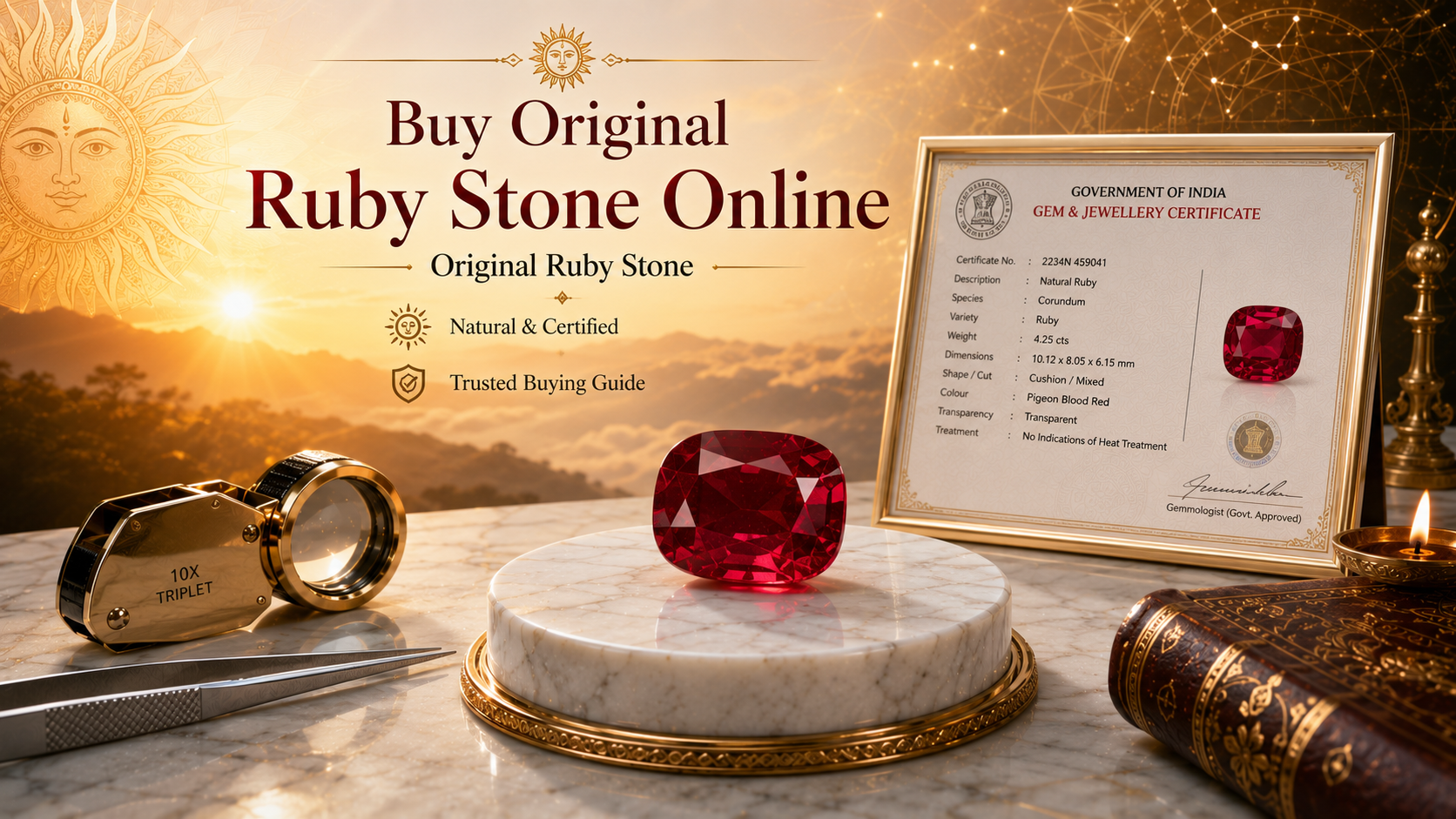
This mistake happens most often when someone is wearing multiple planetary stones recommended by different sources without cross-checking compatibility. Ruby and Neelam together is the clearest incompatibility — Sun and Saturn are natural enemies in the tradition. The combination is considered actively problematic rather than merely suboptimal.
Before adding blue sapphire to an existing gemstone combination, have the full combination assessed by your astrologer. What works individually doesn’t automatically work together.
The Short Version
Buying blue sapphire correctly means: independent certification confirming both natural origin and no heat treatment, realistic expectations about price for quality untreated material, color verified under natural daylight not just studio photography, origin documented not just claimed, astrological suitability confirmed through chart analysis before purchase, three-day trial before formal wearing, and stone combinations cross-checked for compatibility.
Every one of these mistakes is common. Every one of them is avoidable. The market conditions that create them — abundant treated material, widespread synthetic production, and significant price premiums for natural untreated quality — aren’t going to change. But knowing what to check, and checking it before the purchase, is entirely within the buyer’s control.
Tags:
Astrological Blue Sapphire,
Blue Sapphire Astrology,
Blue Sapphire Buying Guide,
blue sapphire certificate,
Blue Sapphire Price India,
Blue Sapphire Quality Guide,
buy blue sapphire online india,
certified neelam stone,
Ceylon Blue Sapphire,
genuine blue sapphire,
how to buy blue sapphire,
mistakes to avoid when buying blue sapphire,
natural blue sapphire,
natural untreated neelam,
neelam buying mistakes,
neelam stone tips,
Original Neelam Stone,
Shani Gemstone Guide,
Untreated Blue Sapphire