 +91-9310172512
 +44-7831491778
 +971-526686526
Curating certified treasures
India UK UAE
+91-9310172512+44-7831491778+971-526686526 India UK UAE+91-9310172512+44-7831491778+971-526686526 India UK UAE
Curating certified treasures
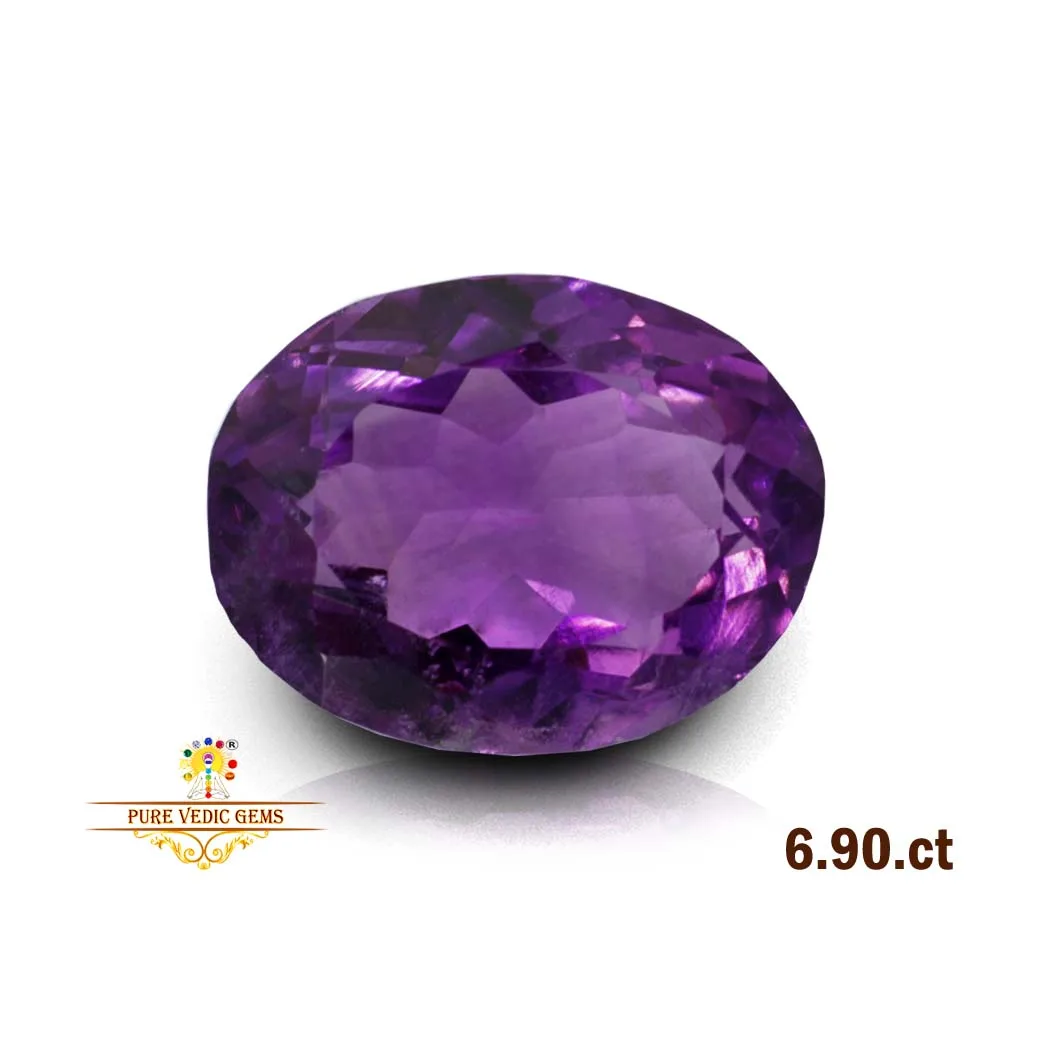
Natural Amethyst is a widely respected upratna for Shani, offering a budget-conscious alternative to Blue Sapphire with its signature viole…
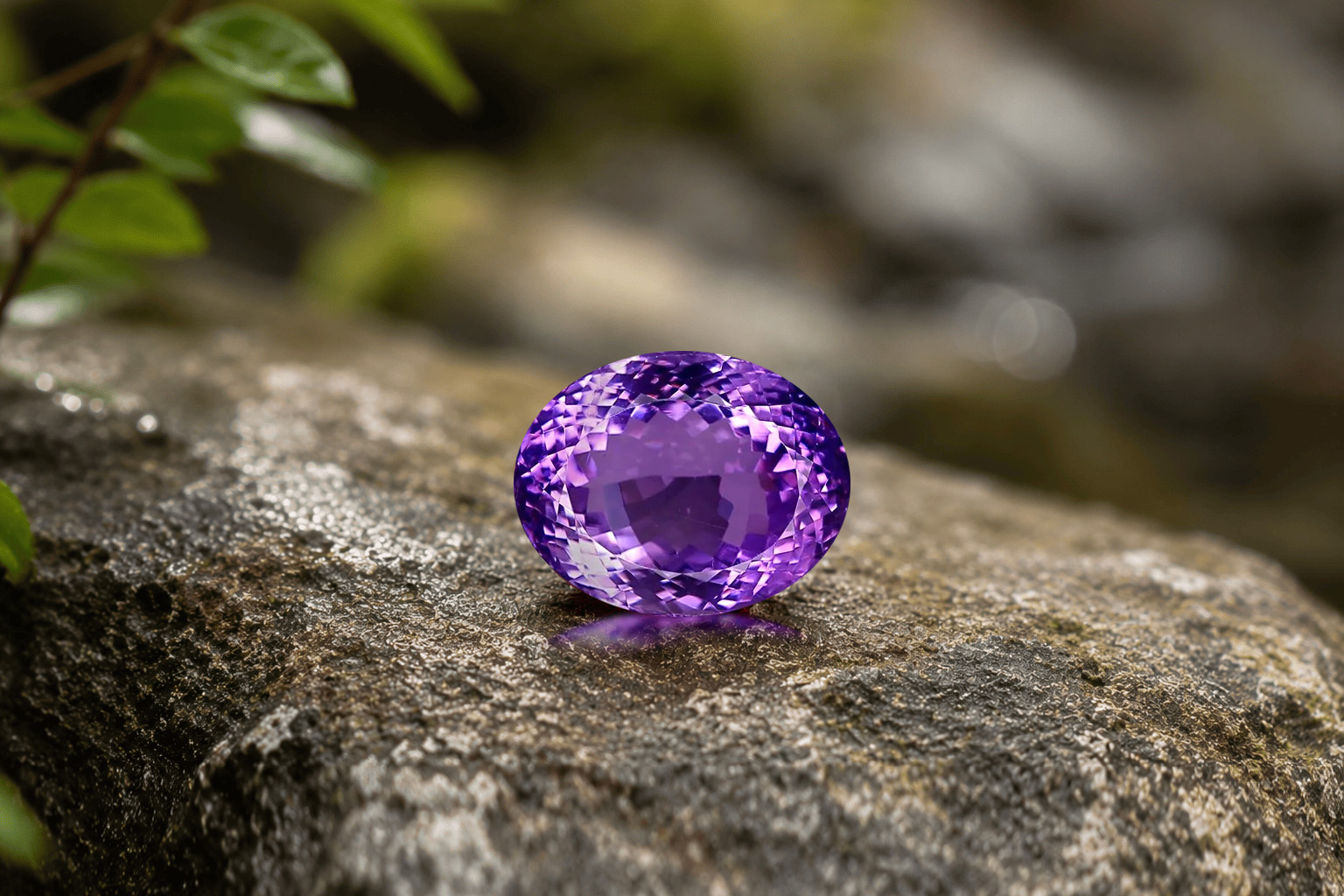
Amethyst is a purple variety of quartz (silicon dioxide, SiO₂) coloured by trace iron and natural irradiation. With a Mohs hardness of 7, it polishes beautifully and withstands everyday jewellery use better than many softer upratnas.
In Jyotish practice, Amethyst is commonly recommended as an upratna (substitute) for Blue Sapphire when Shani needs strengthening or pacification in the birth chart. Gemstone remedies are chart-specific. Always consult a qualified Jyotish astrologer before wearing any stone for planetary purposes.
At PureVedicGems, we list Amethyst with clear origin notes, treatment disclosure, and certification where applicable — so you know exactly what you are wearing.
| Mineral family | Quartz (SiO₂) |
| Typical colour | Violet to deep purple |
| Mohs hardness | 7 |
| Vedic association | Saturn (Shani) — upratna for Neelam |
Traditional guidance places Amethyst on the middle finger of the right hand (or working hand) in silver or Panchdhatu, worn on Saturday during Shani Hora after sunrise. Purify with raw milk or Ganga jal, then chant "Om Sham Shanicharaya Namah" 108 times.
Open-back ring settings allow skin contact, which many Jyotish practitioners prefer for upratnas. Minimum weight is chart-specific — commonly 5–7 ratti for adults, but only your astrologer can confirm the right carat.
PureVedicGems offers energization and pran pratishtha at checkout. Do not wear alongside a primary Neelam without explicit astrological approval.
Amethyst is traditionally explored when Saturn is yogakaraka, weak in dignity, or when a gentler Shani remedy is needed than high-impact Blue Sapphire. Beneficial dasha periods and lagna compatibility must be verified first.
It may suit professionals in research, law, administration, and disciplined crafts who seek focus and patience. It is generally avoided when Shani is severely malefic without proper upaya — chart analysis is essential.
Gemstone remedies are chart-specific. Always consult a qualified Jyotish astrologer before wearing any stone for planetary purposes. Our Jyotish team can review your kundli before purchase.
Vedic tradition links Amethyst with Shani qualities: patience, structure, ethical conduct, and resilience through hardship. Wearers often choose it for mental clarity and steadier decision-making.
As a quartz, Amethyst is relatively durable and affordable, making consistent wear practical. Many also value its calming influence for meditation and sleep hygiene when kept near the bedside (unmounted).
Beyond astrology, fine Amethyst from Brazil, Uruguay, and Zambia is collected for colour depth and clean crystal habit — a meaningful gift when certified and untreated.
Siberian-grade deep purple with red flashes commands premium prices. Brazilian material ranges from pale lilac to rich grape tones. Uruguayan geode crystals are prized for saturation and transparency.
Heat treatment is uncommon in Amethyst but always ask for disclosure. Synthetic amethyst exists — demand natural certification for Jyotish use.
Cabochon, faceted oval, and emerald-cut Amethyst are popular for rings; beads and tumbled stones serve mala and bracelet remedies.
Price rises with depth of colour, clarity, and size. Pale commercial-grade stones are inexpensive; eye-clean deep purple gems above 8 mm fetch higher per-carat rates.
Untreated natural Amethyst with strong violet saturation offers the best value for astrological buyers. Compare price per carat and insist on lab reports for stones above ₹5,000.
| Colour | Deep, even purple preferred; brownish or greyish tones reduce value |
| Clarity | Eye-clean to lightly included acceptable for upratna |
| Cut | Symmetric faceting maximizes colour face-up |
| Treatment | Natural only for Jyotish — disclose any enhancement |
Amethyst rings in silver are the classic Shani setting. Pendants and adjustable bracelets work well for those who prefer not to wear finger rings daily.
PureVedicGems's configurator supports open-back Vedic mounts in silver, white gold, and Panchdhatu with live pricing and size selection.
Clean with lukewarm water, mild soap, and a soft brush. Avoid prolonged direct sunlight, which can fade some Amethyst over years.
Store separately from harder gems like sapphire or diamond. Remove before gym, swimming, or harsh chemical exposure.
Reject glass imitations and dyed quartz sold without disclosure. Synthetic amethyst is lab-grown but not suitable as a Jyotish upratna unless your astrologer explicitly approves.
Beware of "Jamunia" labels on low-quality purple glass. Insist on gemological testing from a reputable lab for significant purchases.
Yes — in many Jyotish traditions Amethyst (Katela/Jamunia) is prescribed as an upratna for Shani when Neelam is not affordable or advisable. Effectiveness depends on your chart; consult an astrologer first.
Middle finger of the right hand in silver is the most common recommendation for Shani stones, worn on Saturday. Your astrologer may adjust finger, metal, or day based on your lagna.
Generally not without expert guidance — doubling Shani remedies can over-amplify Saturn energy. Seek Jyotish advice before combining primary and upratna stones.
PureVedicGems provides certification and treatment disclosure. Natural quartz shows consistent RI near 1.544–1.553 and characteristic inclusions under magnification.
Common suggestions range from 5–7 ratti for adults, but weight must match your body weight, dasha, and Shani placement. Personalized consultation is recommended.
Some stones may lighten with prolonged intense UV exposure. Normal indoor wear is safe; store away from direct windowsill sunlight.