 +91-9310172512
 +44-7831491778
 +971-526686526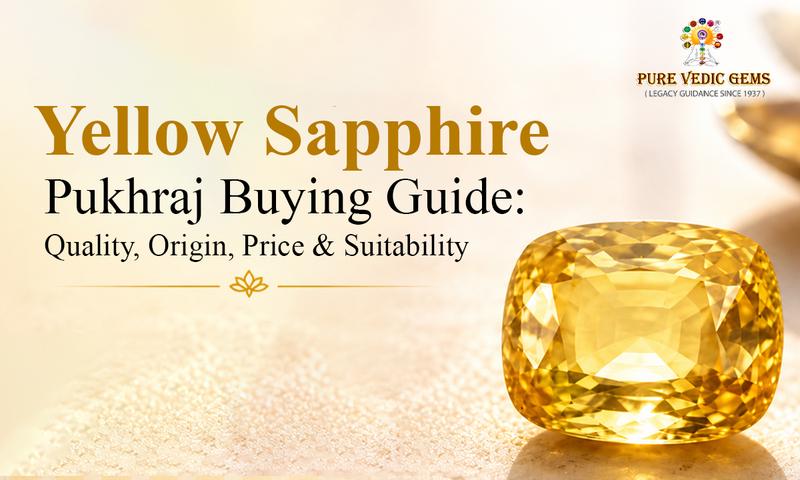
Yellow Sapphire Pukhraj Buying Guide: Quality, Origin, Price & Suitability
Finally, you have decided to invest in a yellow sapphire (Pukhraj) for the purpose of Vedic astrology. While searching online, you find several options, like Ceylon Pukhraj, natural yellow sapphires, heated and unheated sapphires, and more, all of which may cost anywhere from a few thousand to a few lakhs. Every seller seems to term their gemstone as “genuine” and “high quality”.
This is where the process of making a choice can become difficult. Which origin should you prefer? Does a bright yellow colour indicate higher quality? Should you buy an untreated stone or not? How many carats are required? How to check the naturalness of the gemstone?
This yellow sapphire pukhraj buying guide covers the key factors you should consider before purchasing, including quality, origin, treatment, price, certification and traditional Vedic suitability.
Understanding Yellow Sapphire (Pukhraj)
Yellow Sapphire is the yellow form of corundum and is also popularly called Pukhraj in India. Natural yellow sapphires differ in many ways, including colour, clarity, and size. When buying Pukhraj, you should examine the entire stone, not just the colour or price.
Key characteristics of Pukhraj
- Colour: Yellow Sapphire can occur in different shades of yellow, from lighter to more saturated tones.
- Clarity: Transparency and visible inclusions can influence the stone's appearance.
- Natural Status: Natural and synthetic sapphires are different and should not be confused.
- Treatment: A natural stone may still have undergone treatment.
- Cut: The cut can affect the way the gemstone reflects light.
- Carat Weight: Size matters for pricing, but a larger stone is not automatically better quality.
Pukhraj and vedic astrology
In Vedic astrology, Yellow Sapphire is traditionally associated with Jupiter (Guru) and is worn for astrological purposes based on an individual's horoscope. Pukhraj is traditionally believed to support Jupiter-related qualities, but its suitability and expected benefits are considered according to the wearer's Kundali.
Traditional benefits of wearing Pukhraj
- Knowledge and Wisdom: Seen as an important symbol of education and intelligence over the centuries.
- Education and Knowledge: Often considered beneficial for studies, higher education and the pursuit of knowledge.
- Wealth and Prosperity: Traditionally linked with prosperity and riches.
- Career Development and Work: Traditionally associated with professional growth, opportunities and stability.
- Marriage and Relationships: In astrology, Jupiter is deemed significant for matters of family and marriage.
- Confidence and Optimism: Pukhraj is believed to support positive thinking and being optimistic.
Choosing Pukhraj for astrological use
- Determine its Suitability: One must not assume that Pukhraj is right for him or her.
- Look into the Horoscope: The traditional way of selecting the gemstone will depend upon the position of planets and other factors.
- Check the Carats: The ideal carat weight will depend on your unique astrology advice.
- Quality: Once you get recommendations about the gemstone, look for natural aspects, treatment and quality aspects as well.
Yellow Sapphire Pukhraj buying guide: Key quality factors
The quality of Pukhraj relies on multiple characteristics acting simultaneously. Only by considering one aspect like colour or carat, you can get an incomplete impression.
1) Colour and Clarity
- Desirable Colour: Pukhraj must have a pleasant and reasonably uniform yellow colouration.
- Clarity: Good transparency and fewer visible inclusions can contribute to a more attractive appearance.
- Inclusions: All types of natural gemstones have some inclusions; it is not a sign of a fake stone.
- Visual Impression: The colour and the clarity must be evaluated together, not separately.
2) Cut, Size, and Visual Quality
- Cut: Having a good cut positively influences the brilliance of the gemstone.
- Carat Weight: Larger Pukhraj stones can command higher prices, especially when they also have desirable colour, clarity and overall quality.
- Shape: The shape and the cut of the gemstone must match the planned design of the jewellery.
- Proportions: The gemstone must have an appealing and well-proportioned look.
Understanding Pukhraj origin
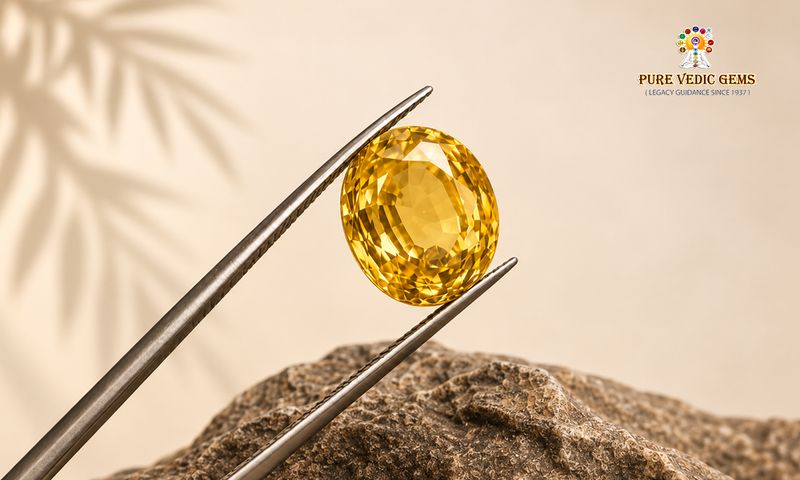
Origin is vital when the seller is relying on the location to justify the price. Nevertheless, it is necessary to assess the origin of the stone together with its quality.
Major sources of Yellow Sapphire
- Sri Lanka (Ceylon): Sri Lankan Yellow Sapphire is a well-known source and is widely recognised in the gemstone market.
- Madagascar: Yellow Sapphire is found in a range of colours and qualities from this source.
- Other Sources : There are many other regions in the world where yellow sapphire is harvested.
Why Pukhraj origin matters?
- Origin Doesn’t Mean Quality: A stone can’t be superior just for the fact that it is from certain parts of the world.
- Laboratory Confirmation: If location matters, try to obtain a gemological report clarifying the origin.
- Seller Assurances: Do not trust only the product descriptions such as “Ceylon Pukhraj”.
- Full Estimate: Consider the colour, clarity, cut, treatment and naturalness along with the origin
Natural, heated and untreated Pukhraj
A common mistake is to assume that a natural Yellow Sapphire is automatically untreated. Natural status and treatment status are separate characteristics.
What to check before buying
- Natural: Make sure the gemstone is of natural origin.
- Heated: Filter the stones for their disclosure of the heat treatment.
- Untreated: If you need a stone that is not heated, look for the respective laboratory confirmation.
- Certificate: Look for treatment information in the report rather than trusting the seller's wording.
When it comes to a valuable purchase, a lab report for the particular gemstone gives much better documentation than phrases like “100 % natural” or “100 % original”.
Understanding Pukhraj price
The price of Pukhraj gemstones can differ greatly even among stones with similar carat weights. Thus, it is always better to compare the price with the quality and the documentation of the stone.
Factors that affect Pukhraj price
- Colour: Great colour distribution can increase the cost of a Pukhraj.
- Clarity: The clarity of the stone and its visible inclusions can affect its visual appeal.
- Treatment: Treated and untreated stones can have different market prices.
- Origin: A verified origin can make the stone more expensive.
- Carat Weight: Bigger stones are likely to fetch higher prices, provided that quality is good.
- Certification: A report from a reputable gemological laboratory can provide useful documentation about the gemstone's identity, natural status and treatment.
Yellow Sapphire (Pukhraj) purchase checklist
- Check Natural Status: Confirm whether the gemstone is authentic or not.
- Check Treatment: Determine if the stone has gone through any kind of treatment.
- Check the Origin: If the origin of the stone is being advertised, inquire as to whether it is scientifically determined.
- Check the Report: Compare the gemstone's measurements with those mentioned in the report.
- Check Authentic Photos: Ensure photos are of the actual stone.
- Check the Report Validity: Verify if the testing laboratory provides report validity verification services.
- Check Seller: Read all information pertaining to the return policy and check the credibility of the seller before placing a big order.
Get expert Pukhraj guidance
Choosing Pukhraj becomes easier when you understand both gemstone quality and traditional astrological suitability. If you are unsure about the right gemstone, carat weight or quality, get guidance before making your purchase.
If you want to buy natural and certified Pukhraj, Pure Vedic Gems, with its legacy since 1937, can help you make a more informed choice based on gemstone quality, documentation and traditional suitability.
Related collection
Explore Featured Pieces
Compare certified pieces, treatment disclosures, and lab certificates.
Buying guidance
Frequently Asked Questions About Yellow Sapphire (Pukhraj)
What is Yellow Sapphire (Pukhraj)?
Yellow Sapphire, commonly called Pukhraj, is a yellow variety of corundum. It is used in jewellery and is traditionally associated with Jupiter in Vedic astrology.
Who should wear Pukhraj?
Pukhraj is traditionally recommended according to an individual's horoscope and planetary considerations. It is better to confirm suitability before purchasing an expensive gemstone.
Which planet is associated with Yellow Sapphire?
In Vedic astrology, Yellow Sapphire is traditionally associated with Jupiter (Guru).
What Are the Traditional Benefits of Pukhraj?
Pukhraj (Yellow Sapphire) is traditionally associated with Jupiter (Guru) in Vedic astrology. It is traditionally believed to support Jupiter-related qualities such as wisdom, knowledge, education, prosperity, career growth, confidence, optimism and spiritual development.
Which origin is preferred for Yellow Sapphire?
Sri Lankan or Ceylon Yellow Sapphire is well known in the gemstone market. However, origin alone does not determine quality. Colour, clarity, treatment, cut and natural status should also be considered.
How does colour affect Pukhraj quality?
Colour is an important factor when evaluating Pukhraj. An attractive and evenly distributed yellow colour can contribute to the gemstone's appearance and market value.
How many carats of Pukhraj should I wear?
There is no single carat weight suitable for everyone. For astrological use, the recommended weight is traditionally determined according to individual horoscope considerations and expert guidance.
How can I identify natural Yellow Sapphire?
A photograph or simple home test cannot conclusively establish whether a Yellow Sapphire is natural. For a valuable purchase, a laboratory report for the actual gemstone provides stronger documentation.
What is the difference between heated and unheated Pukhraj?
Heated Pukhraj has undergone heat treatment, while unheated Pukhraj has not undergone that treatment. The treatment status should ideally be confirmed through appropriate laboratory documentation.
How should I compare Pukhraj prices in India?
Compare Pukhraj based on colour, clarity, cut, carat weight, treatment, verified origin, natural status and certification rather than looking only at the price per carat.
Comments
Checking account…
Loading…