 +91-9310172512
 +44-7831491778
 +971-526686526
Gemstone Certification Explained: How to Check a Natural, Genuine & Untreated Stone
When purchasing a precious gemstone, terms like "natural", "real", "untreated" and "certified" may affect a buyer's choice. However, these words alone do not give full information of the gemstone.
A good gemstone certification process in India can help buyers better understand the stones they are planning to purchase. A laboratory report may include important details about gemstone identification, whether the stone is natural or synthetic, any detectable treatments, its weight and measurements, and, in some cases, information about its geographic origin.
The information on gemstone certification will also be described in this blog. We will explain the way it works, what the laboratory report can tell about the gemstone and how buyers can use those documents in order to make a nice and informed purchase.
What is gemstone certification?
Natural gemstone certification is the way in which a particular gemstone is analysed by gemology authorities, who prepare a report that includes some information about the stone that has been analysed.
A genuine gemstone report is a document that can provide some data about a particular gemstone analysed. This natural gemstone certification process can help buyers understand the documented characteristics of the specific stone. Depending on the stone, the report may contain data on the identification, synthetic or natural nature, treatment results, physical characteristics and measurements.
One of the most significant things that must be remembered about certification is that it cannot be treated as a simple “genuine” tag. The true value of certification is comprised of learning and understanding the report data.
How gemstone laboratories analyze gemstones?
Government gemological laboratories use expert methods and technologies for the analysis of gemstones. These examinations help identify important characteristics of a stone, including its material, internal features, physical properties and possible treatment indicators.
Depending on the type of gem, the analysis could cover:
- Internal features: Inclusions and other internal features of gemstones
- External features: Surface features and general condition of the gem
- Optical properties: How the gem interacts with light
- Physical properties: These include features used for the determination of gemstone type
- Signs of treatment: These are features which show what treatments were applied to the gem.
There are some characteristics that cannot be defined accurately from a photograph or in-home tests, and it is because of this that getting a professional gemstone lab report is very important when buying an expensive gemstone.
Understanding natural, synthetic and lmitation gemstones
When purchasing a gemstone, it is common for buyers to be confused by terminology such as natural, synthetic, and imitation. The distinction between these categories is important because they indicate different materials and jewelry sources.
- Natural Stones: Natural gemstones are made by nature through geological processes.
- Synthetic Stones: Synthetic gemstones are produced in labs and may possess the same physical and chemical features as natural stones.
- Imitation Stones: An imitation gemstone is configured to appear similar to other gemstones; however, it may be created from a totally different material.
Due to proper examination in the lab, it could be clarified which type of stone the gemstone really is. This is one of the reasons why it is important to obtain a gemstone authenticity certificate regarding a gemstone.
Why treatment information matters in a gemstone report?
A gemstone could be a natural one despite being treated post-mining, in which case treatment is used to enhance or change certain features such as colour, clarity or overall look of the gemstone.
Depending on the stone, treatments may be carried out in the following ways:
- Heat treatment
- Filling
- Diffusion
- Dyeing
- Coating
- Clarity improvement
This is why buyers should know the difference between 'natural' and 'untreated' gemstones.
If treatment status is crucial for your purchase, the laboratory documents should be thoroughly examined for gemstone treatment disclosure. Proper untreated gemstone verification requires checking the laboratory documentation rather than relying only on a seller's description.
Key information to consider on a gemstone certificate
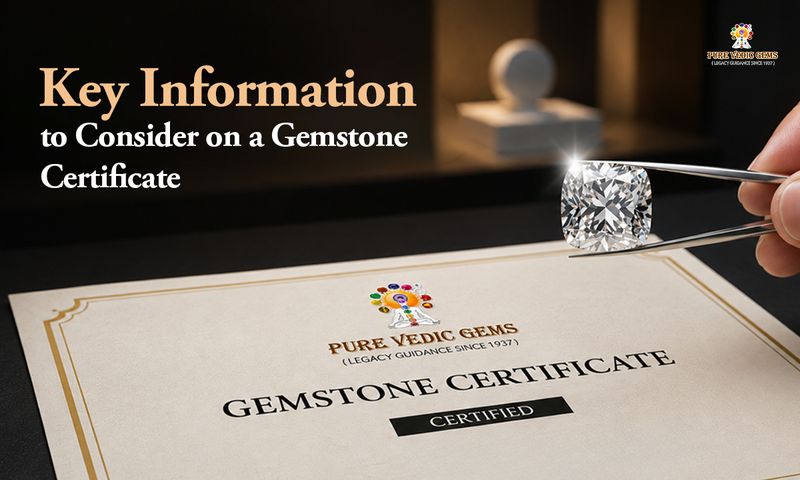
A gemstone certificate has numerous important pieces of information. However, the actual format or detail on the certificate may differ from lab to lab.
When reading a gemstone report, look for the following:
- Gem identification: The type of gemstone
- Natural or synthetic: Whether the gemstone is natural or man-made
- Treatment of the gemstone: In case there have been any treatment in the gemstone
- Weight of the gemstone: The weight of the gemstone
- Dimensions of the gemstone: The size of the gemstone
- Colour of the gemstone: See whether the gemstone was explained
- Place of origin: Geographic origin of the gem
- Report number: The number of the laboratory report
All these things will help the buyers understand the characteristics of the particular gem.
Why Certification Matters When Buying Gemstones Online
Online gemstone buying is limiting to the buyer’s opportunity to see the gemstone physically before making any purchase.
Pictures can only demonstrate the colour and overall appearance of the gemstone. However, photographs cannot provide a complete description of a gemstone. This is where the certified natural gemstones provide more clarity.
What to ask for before buying a gemstone?
- Laboratory certificates.
- Pictures of the original gemstone.
- Videos of the gemstone taken from various angles.
- Information about treatment of the gemstone.
- Confirmation of the information from the certificate and the gemstone being sold.
It is important to keep in mind that the documentation must be associated with the gemstone being sold and not be used for restricted purposes.
Common mistakes buyers make while checking gemstone certificates
A lot of buyers wrongfully think that the word “certified” means all the important details have already been verified. However, a gemstone certificate should be read carefully to understand exactly what information the laboratory has documented about the specific stone.
The most common mistakes are the following:
- Not studying the reports: Only searching for the word "certificate".
- Not accounting for treatment details: Making the mistake of believing that natural means untreated.
- Not comparing the stone: Not comparing the weight and dimensions of the stone.
- Relying only on the product description: Not verifying the actual documents from the lab.
- Merging quality with origin: Mistakenly thinking that if a stone comes from a well-known place, it means that it’s a better stone.
- Overlooking the lab: Not checking which laboratory has conducted the examination.
Certification and quality are not the same thing
One important point buyers should consider is that there is a difference between certification and the quality of the gemstone.
The report of the government laboratory records certain features, which have been observed during the examination, and it does not mean that a certified gemstone is of good quality.
The quality of the gemstone should be evaluated according to the following characteristics:
- Color
- Clarity
- Transparency
- Cut
- Carat weight
- Treatment
- Origin
- Rarity
- General appearance
Thus, certification should be a part of the process when purchasing the gemstones, alongside checking their quality.
Using certification for astrological gemstone selection
When buying gemstones based on Vedic astrology, buyers need to make two different choices.
Firstly, identify if the gemstone can be traditionally suitable as per the horoscope.
Once suitability is established, evaluate the nature of the gemstone, including its natural status, treatment, quality and documentation.
Purchasing a gemstone because it looks good or has a label of “100% natural” is not competent since it is an astrological purchase.
With the proper guidance and documentation, the customers will be able to comprehend both the correctness of the gemstone and the property of the chosen stone.
Get Expert Guidance before Buying a Certified Gemstone
If you'd like to buy a gemstone that is natural and certified, knowing the laboratory documents beforehand will allow you to evaluate your options properly.
Pure Vedic Gems has been in business since 1937, and during this time, many customers have been able to find and purchase gemstones along with expert advice related to gem selection, certification, and Vedic astrology. Before you buy your next important gemstone, make sure you understand what you are buying.
Related collection
Explore Featured Pieces
Compare certified pieces, treatment disclosures, and lab certificates.
Buying guidance
Frequently Asked Questions about Gemstone Certification
What does gemstone certification mean?
Gemstone certification refers to the process of assessing and testing a gemstone in a laboratory in order to create a gem certificate.
What is the significance of gemstone certification?
Gemstone certification is an essential process in order to examine different aspects of a gemstone, including its identification, whether it is natural or synthetic, how it was treated, weight, and size.
What information can be found in a gemstone report?
A gemstone report may contain details about whether the identification is natural or synthetic; weight; treatment information; carat weight; colour; and origin of the stone, if defined.
Does gemstone certification indicate that the gemstone is natural?
You have to check the wording in the report because if the gemstone is identified and described as natural, it will certainly be stated in the document.
Is it possible for a certificate to indicate gemstone treatment?
Depending on the type of gemstone, the laboratory report may state if any treatment was detected.
How do I check a lab certificate?
To verify a laboratory report, the laboratory name and report number can be checked. If the laboratory has an official verification system online, that should be used.
What differentiates origin from authenticity?
Authenticity is related to the nature of the gemstone (natural, synthetic, or imitation), while origin relates to its geographical location with respect to the gemstone.
Is an appraisal certificate equivalent to a lab report?
No, a gemological lab report is concerned only with the gem's labelling and features, while the appraisal is concerned with the value of the gem.
Should all astrological gemstones be certified?
Certification is good proof of the astrological gemstone, but buyers must independently verify whether the gemstone meets their horoscope requirements.
What things need verification when it comes to certified gemstones?
Verify the laboratory report, the natural or synthetic status, treatment information, weight and measurements, report number, actual photos of the stone and verification of the seller.