 +91-9310172512
 +44-7831491778
 +971-526686526
Natural vs Treated Gemstones: What Is the Difference and Which Should You Buy?
Let’s presume that while browsing a site, you come across a review of two gemstones. One gemstone has the label “Natural, Untreated and certified", and the other has the label “Natural Certified". Both gemstones look appealing, but it is necessary to learn about the difference between the two. You must know the right gemstone that you should select for your purpose, be it aesthetic purposes, such as for fashion jewellery, or astrological purposes, such as for Vedic astrology.
The difference between natural and treated gemstone is important because both terms refer to different types of gems. An untreated stone can be classified as a natural stone. However, "untreated" does not necessarily imply that the gem is of good quality.
At Pure Vedic Gems, we think it’s not enough for buyers to only rely on terms like "original", "pure", "natural" and "untreated", and they should know what gemstone documentation means. By learning the status of the gemstone in terms of its nature, treatment, quality and laboratory report, buyers can make more informed decisions.
This guide will talk about what natural and treated gemstones are and what to consider before selecting them.
What Is a Natural Gemstone?
A natural gemstone is created in nature after a series of geological processes.
However, it is worth noting that use of the word 'natural' does not mean that the gemstone will not be treated in some way. Even when the stone is mined, it can be treated in different ways.
For example, a gemstone can be placed under heat treatment despite the fact that it is regarded as natural.
Things to Consider While Purchasing a Natural Gemstone
Before buying, check:
- Natural or Synthetic: Whether the gemstone is natural or synthetic.
- Treatment Status: Whether the gemstone has been treated.
- Treatment Type: What treatment, if any, has been performed?
This information may be provided in a laboratory report.
What Is a Treated Gemstone?
A treated stone is a real stone that has undergone some process either to change or improve one of its properties. The true meaning of 'treated' has to do with the distinction between a fake stone and a real stone that has undergone some treatment.
It is vital to remember that 'treated' does not mean 'artificial' or 'not real'. A gemstone may be of natural origin but treated after extraction. This is an important point to understand when considering the difference between natural and treated gemstones, especially when comparing two stones that may look similar.
Common Types of Gemstone Treatment
The treatment will be different for each gemstone, although the following are the most common types of treatment:
- Heat treatment
- Fillings
- Diffusion
- Dyeing
- Coating
- Clarity treatment
A treated gemstone can still be a real natural gemstone. The important point is to understand its treatment status rather than assuming that “treated” means fake.
Why Are Gemstones Treated?
Gemstone treatments are often employed to improve their specific features like colour, clarity, and beauty. Some techniques are suitable for improving colours or covering defects. However, it is crucial to identify the method used for the treatment to know the outcome of the process:
- Look
- Value
- Care
Given this, it is crucial to learn whether a stone has been treated and how it was processed before investing in it.
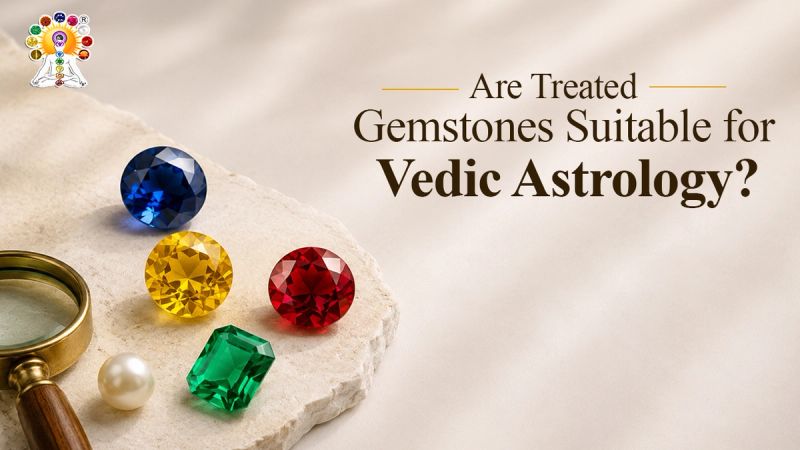
Are Treated Gemstones Suitable for Vedic Astrology?
The strategy is determined by the reason for which you want to acquire the stone.
Most times natural untreated stones are used in astrological practices according to Vedic traditions.
If you are going to buy a gemstone as a planet stone, you need to first know which stone is suited for your horoscope and only after that search for a natural stone that has confirmation of its nature.
One should not choose a gemstone for its visual beauty and compelling look.
Choosing a Gemstone for Vedic Astrology
The planetary gemstones must not only be selected due to their outer attractiveness.
Various gemstones are connected with several planets, like:
- Ruby Gemstone - Sun
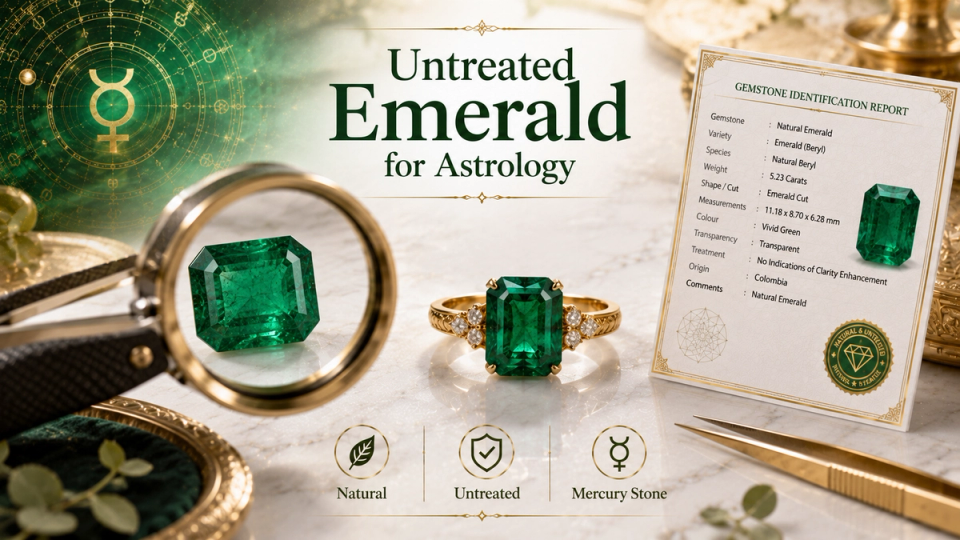
- Emerald Gemstone - Mercury
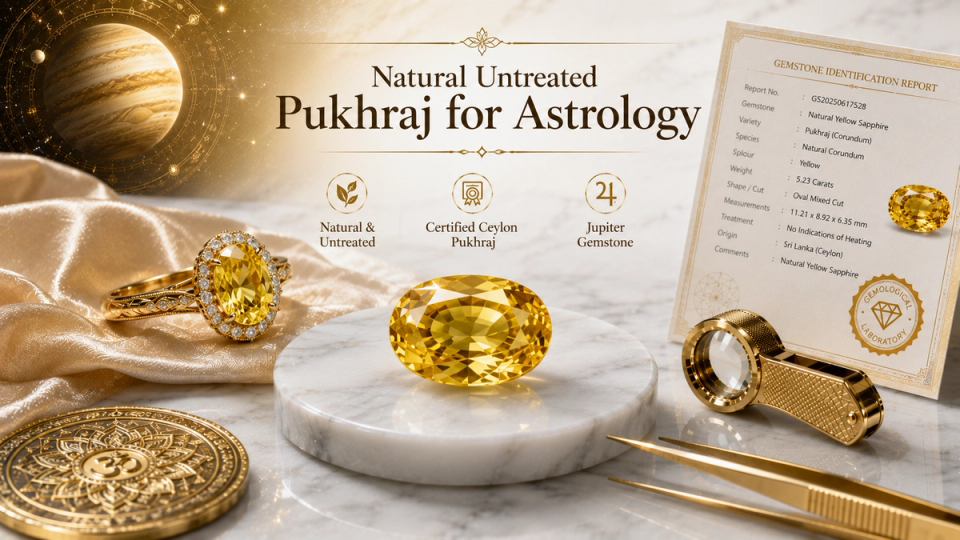
- Yellow Sapphire Gemstone - Jupiter
- Blue Sapphire Gemstone - Saturn
- White Sapphire Gemstone - Venus
- Red Coral Gemstone - Mars
- Cat's Eye Gemstone - Ketu
- Pearl Gemstone - Moon
- Hessonite Gemstone - Rahu
Those who are uncertain as to what gemstone is appropriate based on their horoscope can seek out the advice of a professional before making a decision.
Seek Professional Guidance in Vedic Gemstones
When selecting a gemstone associated with Vedic astrology, one has to do more than simply choose the stone in question based on its looks or its popularity in the market. The factor of its effectiveness as it relates to one’s horoscope and the purpose you intend to wear it must also be taken into consideration.
Those who do not know for sure what gemstone to choose for their horoscopes should consult a Vedic gemstone expert before making a purchase.
How Do You Learn About Stone Treatment?
There is no way to tell what treatment process the stone has undergone without being told.
Some treatments can leave your gem with visible traces that can be discovered during professional inspections, while other treatments require special gemological equipment.
For this reason, online photographs and simple home tests do not allow you to deduce the truth about the gemstone.
- Can You Check Treatment at Home? - Online photographs and simple home tests cannot reliably establish the complete treatment history of a gemstone. If treatment is important to your purchase, ask for the laboratory report of the specific gemstone you intend to buy.
- Does Treatment Affect Gemstone Value? - Certainly, gemstone treatment can have an impact on its worth, though there is no universally applicable principle for all gemstones. The influence of treatment is defined by the type of stone, the type of treatment performed on it, the quality and other features of the stone.
When comparing gemstones, treatment should therefore be considered along with the other factors that contribute to the overall value of the stone.
Factors That Influence Gemstone Value
- Color
- Clarity
- Cut
- Carat weight
- Treatment
- Place of origin
- Rarity
- Overall quality
In fact, even two gems with the same carat weight may have quite different prices.
For example, a good untreated gem may have a higher price than a treated one because untreated gems are not so easy to find.
Are Untreated Gemstones Always Better?
Not always for all purposes. In the case of jewels, a finely cut treated stone might give a good appearance and be available at a different price.
However, if you wish to get a gemstone for Vedic astrology and get good results through the application of these gemstones, everything in astrological practices favours the use of natural, untreated stones.
- Untreated Does Not Automatically Mean High Quality. It is also important to remember that being untreated alone does not determine gemstone quality. A gemstone's colour, clarity, cut, size, treatment status and overall quality should all be considered before making a decision.
- What Should a Lab Report Be? - A lab report is very useful in determining vital facts about a gem and knowing what you are actually buying. Don't just take the seller's word that the gem you are buying is “certified” but rather check the lab report closely. Though the specific information may differ from one stone and laboratory to another, a laboratory report will show the information regarding stone identification, being natural or not, any treatments applied to it, and so on.
Information You Should Look For
- Gemstone identification
- Natural or synthetic status
- Treatment status
- Carat weight
- Measurements
- Color
- Origin if known
If treatment matters to you, read the report instead of relying solely on the product description.
Can Treated Gemstones Look More Attractive Than Natural Stones?
Yes, treatment of a gemstone can enhance its colour and clarity, thereby making it look better than before. However, one cannot determine the fact that the gem has been treated simply by observing its optical characteristics.
A super-clean gemstone isn’t necessarily synthetic, just as visible inclusions don’t mean a gemstone is fake. Natural gemstones can also have inclusions.
Professional testing and documentation can be more dependable than the gemstone's visual outlook for valuable gemstones.
What Should You Choose for Astrological Use?
When acquiring a gemstone for use in Vedic astrology, one must ensure that the decision is taken based on which gemstone is appropriate for one's horoscope and astrological purpose rather than based on the appearance of the gemstone.
Instead of thinking: “Which gemstone looks better?”
Please ask: “Which gemstone is appropriate for my horoscope?”
Once you know which gemstone, check the following:
Before Buying, Check:
- Natural condition
- Treatment condition
- Laboratory certification
- Quality
- Weight and measurements
- Overall goodness
If traditional guidance states that the gemstone you have purchased is untreated, make sure that you check all documents from the laboratory instead of just believing that you have purchased a '100% original' stone.
How to Check Natural vs Treated Gemstones before Buying
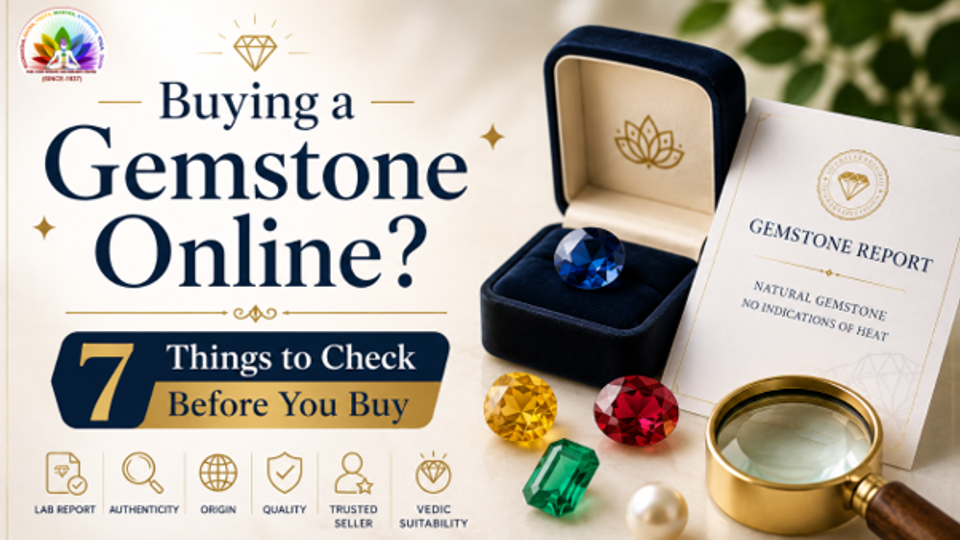
There are some simple checks you will need to do before deciding on whether you want natural stones or treated gemstones. This way, you can get better insight about the specific stone so that you can shop confidently. Understanding the difference between natural and treated gemstones before you buy gemstone online can also help you evaluate the stone's documentation, treatment status and overall suitability.
Simple Gemstone Buying Checklist
- Check whether the gemstone is natural or synthetic.
- Check whether it has been treated.
- Ask for the laboratory report of the gemstone.
- Review the treatment information mentioned in the report.
- Check the gemstone's weight and measurements.
- Review the available quality details.
- For astrological use, confirm which gemstone is appropriate for your horoscope.
- Do not judge treatment or authenticity only from photographs.
The Simple Buying Rule
If a stone is ‘natural’, that does not guarantee that it is ‘untreated’; likewise, if a stone is ‘untreated’, it doesn’t follow that it is ‘good quality’.
Always consider all the relevant aspects before you decide.
To buy a natural (and certified) stone for Vedic astrology, you should go beyond the stone’s appearance and evaluate its natural state, the treatment it underwent, the laboratory documentation related to it, and whether it is suitable for astrology.
At Pure Vedic Gems, you can discover gemstones of a high quality and get guidance on Vedic gems with a long tradition (since 1937).
Related collection
Explore Navaratna Collection
Compare certified pieces, treatment disclosures, and lab certificates.
Buying guidance
Frequently Asked Questions
What factors can cause variations in gemstones of the same kind?
There are many factors which affect gemstones. For example, colors, clarity, transparency, cut, inclusion, treatment, etc. All these factors make gemstones of the same sizes and types different.
Is the presence of inclusions in a gemstone a sign of low quality?
Not necessarily. By definition, natural gemstones can contain inclusions. However, the actual presence of internal characteristics may apparently be less important than their type, size, location, and effect on the appearance.
Why are some untreated gemstones more expensive than treated ones?
The rarity of this kind of untreated material is the main reason why it can be more expensive than treated material, because gemstones with extraordinary colour, clarity, and size are difficult to find on the market.
Can treated gemstones lose their appearance?
It all depends on the type of treatment. Some treatments are stable and safe for the gemstone's durability, while other treatments may need special care to be preserved.
Is it possible for two gemstones of the same type to be different in terms of colour?
Yes. Gemstones belonging to the same type may have differences when it comes to colour, tone and saturation due to their natural habitats and unique features of each stone.
What is the reason for the existence of two gemstones of the same weight differing in price?
Two gemstones may have the same carat weight but can still vary in price based on the features. For instance, appearance, transparency and rarity are the factors that can determine this difference.
Should one select a gemstone only for its good looks?
Not really. Looks are only one aspect of evaluating any gemstone. Before selection, it is advisable to consider the gemstone's purpose and any relevant facts about this particular stone.