 +91-9310172512
 +44-7831491778
 +971-526686526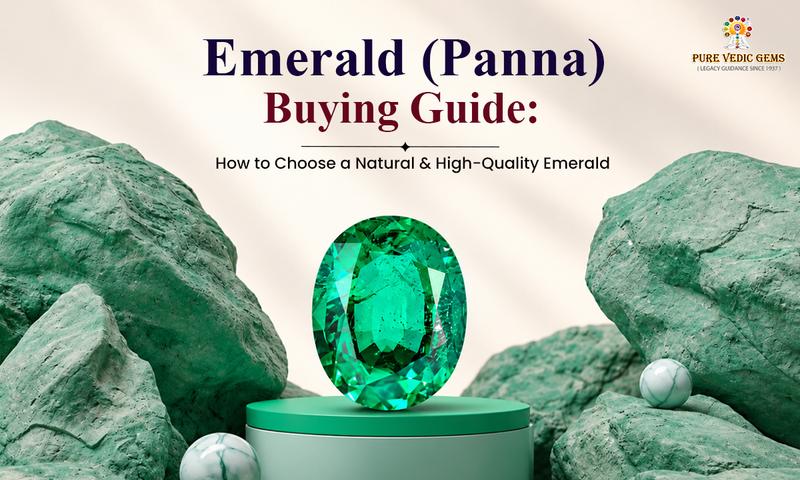
Emerald (Panna) Buying Guide: How to Choose a Natural & High-Quality Emerald
Let's say you are searching for an emerald for Vedic astrology and comparing sellers online. You might find emerald stones of different origins, shades of green, sizes and prices. Some emerald seller’s market their stones as untreated and natural, while others claim that their stones come with a certificate from a certified lab. But how do you understand which emerald is a real and good-quality stone?
Buying an emerald is not merely about purchasing the brightest shade of green. Natural quality, colour, transparency of the stone, etc. are some of the important issues that you need to consider before making a purchase decision.
In this natural emerald buying guide, we list some of the key considerations involved in the purchase of an emerald, especially in the case of online purchases.
Understanding Emerald (Panna) in vedic astrology
The emerald, which is commonly referred to as Panna, is significant in Vedic astrology and is associatively linked to the planet Mercury, also known in Vedic astrology as Budh, as emerald is selected to bring astrological benefits based on the position and nature of Mercury as per the Horoscope (Kundli) of a person.
Traditional significance of Emerald
- Intelligence and Wisdom: It is said to be connected with education and learning.
- Communication: Its connection to communication and articulation is well-known.
- Work and Business: Its association with professional ventures and career development is also quite significant.
- Education: Links its significance to education and intellect-related activities.
Selecting an outstanding Emerald
When selecting an emerald, it is important to be aware that the quality of emeralds is not the same. Therefore, the size should not be the only parameter used in the process of selecting emeralds. As well as size, other attributes of emeralds should also be taken into account, including colour, clarity, transparency, cut, treatments and their nature.
- Colour: Choose an emerald that possesses a unique and vivid colour.
- Clarity: One typical feature of emeralds is the presence of various inclusions; thus, clarity has to be estimated relative to the total appearance of the emerald.
- Transparency: Emeralds with higher transparency are more attractive in comparison to those whose transparency level is low.
- Cut: A proper cut facilitates the overall look of the emerald.
Natural vs. Synthetic Emerald
Emeralds that look similar in photographs may have very different origins and characteristics. This is why visual appearance alone cannot reliably establish whether an emerald is natural.
What is the difference?
- Natural Emerald: occurs naturally and is taken from the depths of the earth.
- Synthetic Emerald: manufactured in a laboratory and may have the same physical and chemical properties as natural Emerald.
- Imitation: not the actual Emerald, but a product of a different substance that is intended to look like Emerald.
A recognised gemological laboratory report can provide useful documentation about the identification and nature of the gemstone.
How treatment impacts Emeralds?
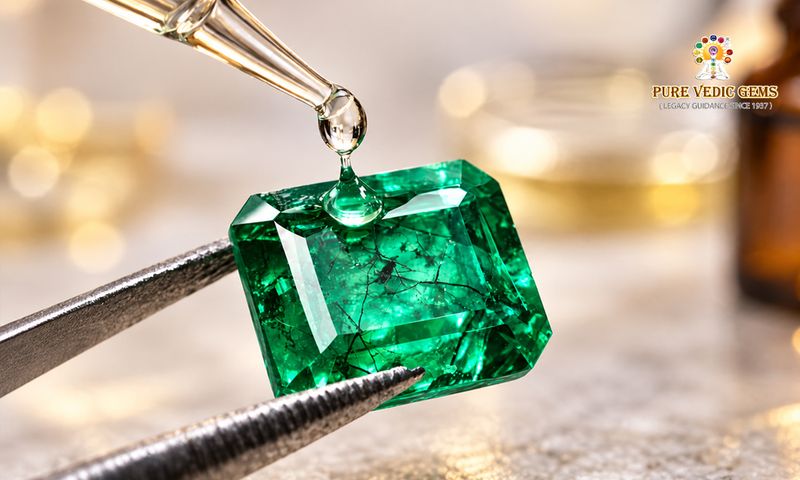
Emeralds are frequently treated so that surface-related cracks can be reduced. The word “natural” in relation to gemstones does not mean they have not been subjected to treatments.
Common treatment methods used for Emeralds
- Oil Treatment: One of the most common methods of treating emeralds is oil filling. In this technique, the substance is injected into the cracks to hide them and to enhance the clarity of the stone.
- Coloured Oil: This method is often employed to enhance the colour of emeralds. The treatment information must be revealed.
- Resin/Polymer Filling: Cracks are often filled with resin or polymer materials to improve the appearance of the stone.
- Glass Filling: Glass-like materials may be employed to fill fractures and cavities and affect the durability and care needed for the emerald stones.
- Surface Coating: The last method enables the enhancement of the visual look of the gem.
Which aspects need to be looked at when buying?
- Authenticity: Ensure that you are buying a genuine emerald stone.
- Type of Treatment: Enquire if the stone has been treated with oil, resin, plastic or any other method.
- Extent of Treatment: Make sure the laboratory has mentioned the extent of treatment.
- Condition: Check if the treatment demands any special maintenance.
- Lab Report: Verify the report from a recognised government gemstone testing lab, including online verification.
Emerald origin and its significance
Emeralds are found in a number of countries, with each origin having unique features. While some origins are widely recognised in the global market, it is important to remember that it is not the only sign of emeralds’ quality and value.
Well-Known Emerald origins
- Colombia: A country that is known for the deep, bright green colour of its emeralds, with famous mining regions like Muzo and Chivor.
- Zambia: A country that has emeralds that have a bright green to light bluish-green colour and a lot of different deposits.
- Brazil: A country that produces emerald stones that have many different colours and levels of clarity.
What should you consider along with origin?
- Colour and Transparency: These could be very important for the visual attraction of an emerald.
- Clarity: Natural emeralds usually contain inclusions, which means that clarity has to be checked thoroughly.
- Treatment: The fact of treatment impacts value and maintenance of the stone.
- Certification: If origin matters to you, make sure to get a report from a laboratory determining geographic origin whenever possible.
Do not just believe the seller who says that the stone comes from a certain source.
Which finger and metal are traditionally used for Emerald?
Emeralds are typically recommended to be worn on the small finger according to Vedic astrology. Your particular tradition will help you choose between gold and silver as your metal of choice.
If you are picking an emerald stone for a certain event in your astrology practice, consider your personal Kundali rather than simply following the methods recommended on websites.
Natural Emerald buying buide: What to check before buying online
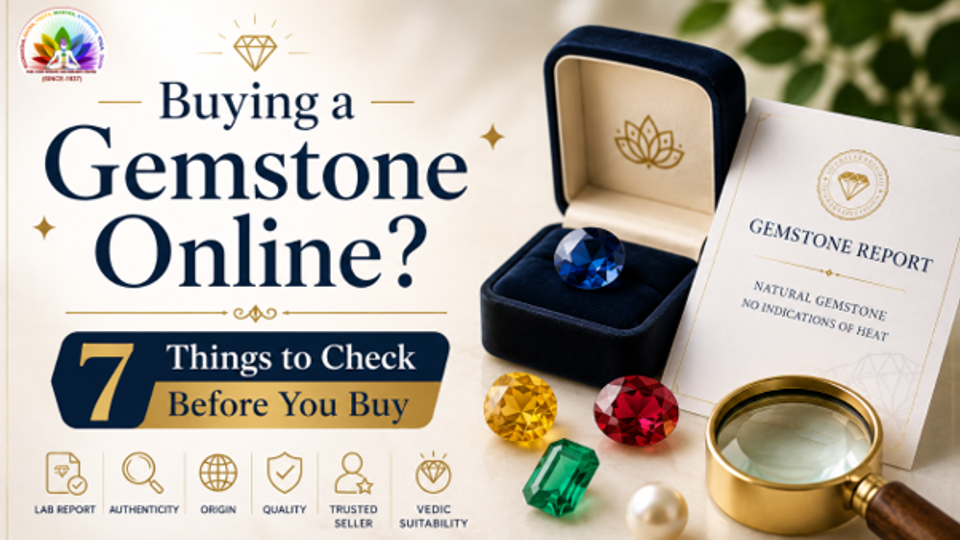
Buying an emerald online requires more than comparing photographs and prices. Before placing an order, take a few minutes to verify the actual stone and the information provided by the seller.
- Check for Natural Stone: If purchasing an emerald, ensure the stone is natural.
- Identify if any treatment is done: Know if any treatments have been mentioned.
- Reference Certifications: Check the certificate issued by the laboratory and confirm it against the certificate number whenever possible.
- Cross-Check Weight: Ensure that the weight of the gemstone matches what is mentioned by the jeweller.
- Verify the Actual Stone: Ask the jeweller for pictures or videos of the emerald before purchasing.
- Research Seller: Investigate the seller's business before purchasing the gem, including return policy and customer service.
Get Expert Emerald Guidance
When you choose Panna as part of your Vedic astrology practice, it’s important to remember that selecting the green gemstone is just part of the process. You also have to consider its astrological impact, natural state, quality, treatment and certification before making your choice.
If you are not sure about which Emerald is right for your Kundli, seeking professional help can be the better alternative.
Browse through Pure Vedic Gems’ wide range of gemstones or use our services for Vedic gemstone consultations. You will also find information about gemstone certification by laboratories.
Pure Vedic Gems, which has a legacy extending from 1937 and specialises in natural and certified gemstones, can help you in making an informed decision when it comes to purchasing these stones.
Related collection
Explore Featured Pieces
Compare certified pieces, treatment disclosures, and lab certificates.
Buying guidance
Frequently Asked Questions About Buying Emerald (Panna)
Who should wear Emerald?
In Vedic astrology, Emerald is traditionally recommended based on an individual's Kundli and the position and role of Mercury. It is better to confirm suitability before wearing Panna.
Which planet is associated with Emerald?
Emerald is traditionally associated with Mercury (Budh) in Vedic astrology.
What are the traditional benefits of Emerald (panna)?
Panna is traditionally associated with intellect, communication, learning, business, career development and analytical abilities. These are traditional astrological beliefs and not scientifically established effects.
How does Emerald colour affect value?
Colour can significantly influence an Emerald's appearance and value. An attractive green colour with good visual quality is generally desirable, but colour should be considered alongside clarity, transparency, treatment and cut.
What is the difference between natural and synthetic Emerald?
A natural Emerald forms naturally in the earth, while a synthetic Emerald is created in a laboratory. Both can have similar characteristics, which is why laboratory identification can be useful.
How can I identify a genuine Emerald?
A photograph or simple home test cannot reliably establish whether an Emerald is natural. For valuable Panna, a reputable gemological laboratory report can provide useful information about its identity and natural status.
What should I check before buying Panna online?
Check the Emerald's natural status, colour, clarity, treatment, certification, weight, actual-stone photographs and seller's return policy before placing an order.

Comments
Checking account…
Loading…