 +91-9310172512
 +44-7831491778
 +971-526686526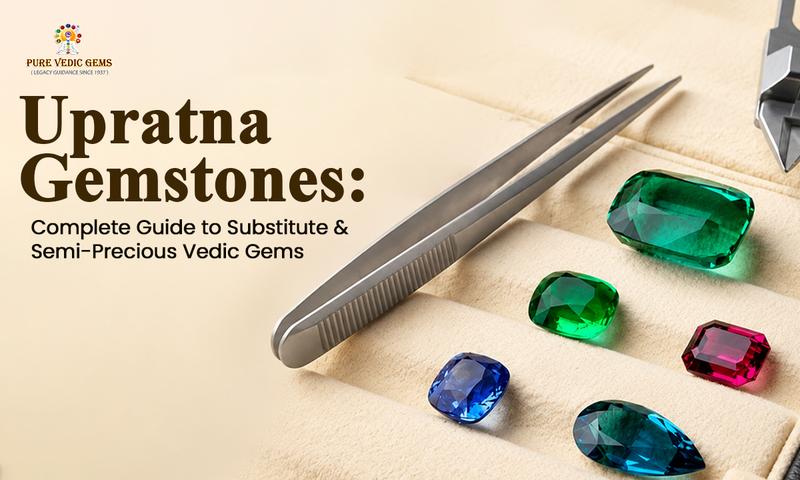
Upratna Gemstones: Complete Guide to Substitute & Semi-Precious Vedic Gems
Upratna gemstones are regarded as alternative or secondary gemstones in Vedic astrology. They are traditionally connected with the planetary gemstones used in the Navaratna system and may be considered when deciding which gemstone to choose.
Understanding Upratnas is important because choosing an alternative gemstone simply because it is easily available or less expensive may not always be the right approach. The gemstone should be selected according to its traditional planetary association, intended purpose and the astrological context in which it is being used.
This blog explains the role of Upratna gemstones, how they relate to Navaratnas, and the key factors to consider before purchasing one.
Understanding Upratna Gemstones
Upratnas are generally understood as secondary gemstones related to the principal planetary gemstones. However, gemstone classifications can vary between different traditions and sources, so there is no single universal list of Upratnas.
Upratna and Navaratna: The basic difference
The term Navaratna refers to nine important gemstones traditionally associated with nine planetary influences. In some Vedic traditions, Upratnas are considered substitute gemstones for these principal stones.
Navaratna Gemstones
- Ruby (Manik): Traditionally associated with the Sun.
- Pearl (Moti): Traditionally associated with the Moon.
- Red Coral (Moonga): Traditionally associated with Mars.
- Emerald (Panna): Traditionally associated with Mercury.
- Yellow Sapphire (Pukhraj): Traditionally associated with Jupiter.
- White sapphire (Safed Pukhraj): Traditionally associated with Venus.
- Blue Sapphire (Neelam): Traditionally associated with Saturn.
- Hessonite (Gomed): Traditionally associated with Rahu.
- Cat's Eye (Lehsunia): Traditionally associated with Ketu.
Upratnas may be considered when a principal gemstone is not selected because of factors such as budget, availability or individual astrological guidance.
Why are upratnas used in vedic astrology?
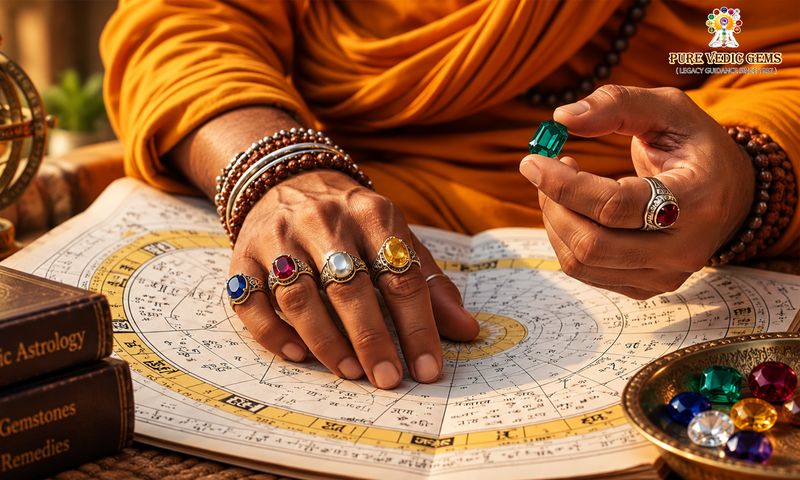
The traditional concept of an Upratna provides an alternative approach to planetary gemstone recommendations. However, a substitute should not automatically be considered identical to the principal gemstone.
Factors that affect the selection of Upratna
- Astrological Requirement: Consider which planet and primary gemstone are relevant to the requirement.
- Kundli: For astrological use, the choice may depend on the individual's horoscope.
- Gemstone Quality: Check whether the gemstone is natural and appropriate for the intended purpose.
- Budget: An Upratna may offer a more affordable alternative in some cases.
- Availability: The required primary gemstone may not always be readily available in the desired quality.
Are Upratnas more affordable?
Upratnas are often considered more affordable than high-quality primary gemstones, but this cannot be generalised to every stone. The price of an Upratna can vary significantly depending on its characteristics and quality.
What influences the price?
- Natural or Synthetic Status: Natural and laboratory-created gemstones have different value characteristics.
- Colour and Clarity: Appearance and internal characteristics can influence value.
- Size and Weight: Larger gemstones may command higher prices.
- Treatment: Treatment status can affect value and suitability.
- Origin: Geographic origin may influence the market value of certain gemstones.
- Certification: Laboratory documentation can provide useful information about the stone.
- Overall Quality: Cut, transparency and general condition can also affect value.
Therefore, selecting an Upratna simply because it has a lower price may not always be a wise decision.
How to pick the right Upratna stone?
The right choice depends first on the reason for purchasing the gemstone. Buyers selecting a stone for jewellery may focus on appearance and quality, while those purchasing one for Vedic astrology may also consider its traditional planetary association.
Know before you buy
- Type of Gemstone: Confirm exactly which gemstone is being offered.
- Natural Quality: Understand whether you are buying a natural stone, synthetic stone or imitation.
- Treatment: Determine whether any treatment has been performed or disclosed.
- Certification: For valuable gemstones, check the available laboratory documentation.
- Product Details: Match the weight, measurements and other details with the actual gemstone.
- Astrological Advice: If the gemstone is intended for Vedic astrology, consider guidance based on your Kundli.
These checks can help you make a more informed decision rather than choosing an Upratna only on the basis of price or appearance.
Get expert Gemstone guidance
Choosing between a principal gemstone and an Upratna can be confusing, especially when different traditions provide different recommendations. Expert guidance can help you understand the traditional association and select a gemstone according to your intended purpose.
If you want to buy Upratna gemstones, explore Pure Vedic Gems, with a legacy since 1937, and get expert guidance before making your selection.
Related collection
Explore Featured Pieces
Compare certified pieces, treatment disclosures, and lab certificates.
Buying guidance
Frequently Asked Questions about Upratna Gemstones Guide
What are Upratna gemstones?
Upratnas are traditionally regarded as secondary or substitute gemstones associated with principal planetary gemstones in Vedic astrology. Their exact classification can vary between different traditional sources.
What is the difference between Navaratna and Upratna?
Navaratna refers to the nine principal gemstones traditionally associated with planetary influences, while Upratnas are generally considered secondary or substitute gemstones.
Why are Upratnas used in Vedic astrology?
Upratnas may traditionally be considered when a principal gemstone is not selected due to factors such as budget, availability or astrological guidance.
Are Upratnas substitutes for main gemstones?
Yes, Upratnas are traditionally considered substitutes for certain principal gemstones. However, a substitute should not automatically be treated as identical to the primary gemstone in every tradition.
Are Upratnas more affordable than Navaratnas?
They can be more affordable than certain high-quality primary gemstones, but price depends on factors such as natural status, quality, size, treatment, origin and certification.
Can everyone wear an Upratna?
Not necessarily. If an Upratna is being selected for Vedic astrology, traditional suitability may depend on the individual's horoscope and planetary considerations.
Should Upratna selection depend on Kundli?
For astrological purposes, Kundli-based guidance can help determine whether a particular planetary gemstone or substitute is traditionally appropriate.
Are Upratnas available in natural quality?
Yes, natural Upratnas can be available. However, buyers should verify the gemstone's identity, natural status and treatment instead of assuming that every Upratna is natural.
How should I choose an Upratna gemstone?
Consider its traditional planetary association, natural quality, treatment, certification and physical characteristics. If it is intended for Vedic astrology, expert guidance based on your Kundli can also be considered.
Comments
Checking account…
Loading…