 +91-9310172512
 +44-7831491778
 +971-526686526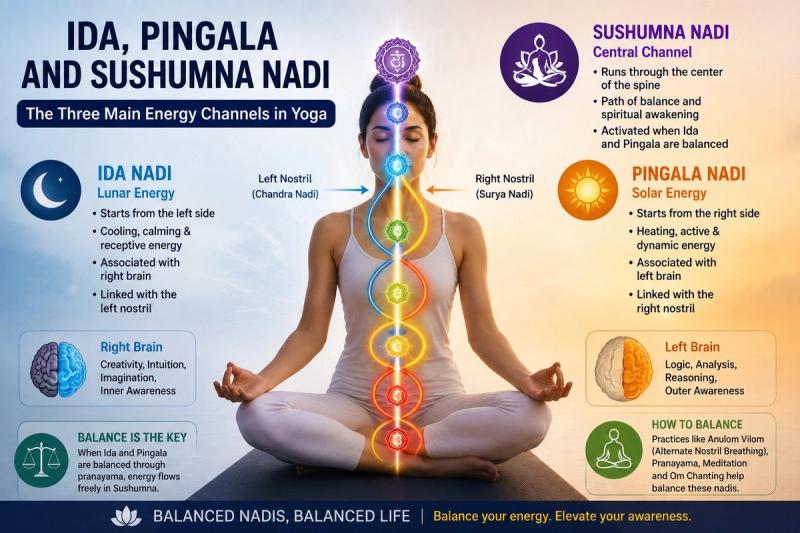
Ida, Pingala and Sushumna Nadi Understanding the Three Main Energy Channels in Yoga
Ida, Pingala and Sushumna Nadi Understanding the Three Main Energy Channels in Yoga Traditional yogic philosophy asserts that humans consist of much more than just the physical form. Ancient yogic texts describe the…
Ida, Pingala and Sushumna Nadi Understanding the Three Main Energy Channels in Yoga
Traditional yogic philosophy asserts that humans consist of much more than just the physical form.
Ancient yogic texts describe the body and mind being accompanied by a fine energy system. In this system, there are three main energy channels:
- Ida Nadi
- Pingala Nadi
- Sushumna Nadi (the central channel)
Beliefs show that these energy channels are central to many practices of yoga, pranayama, and meditation.
What Are Nadis?
In the traditions of yoga, nadis are known as the pathways for flowing prana, or universal life force energy.
Much like the flow of blood in veins, the flow of prana is said to happen in energy channels known as nadis.
Among the various sets of nadis found in yoga, the three major nadis are Ida, Pingala and Sushumna.
Ida Nadi: The Lunar Energy Channel
Ida Nadi Traditionally contains cooling, calming and receiving characteristics.
Ida Nadi is often used for:
- Calmness
- Stable Feeling
- Recalling Through Memory
- Internal Awareness *
Occasionally, the Yogic Philosophy connects the Ida Nadi to the Moon or the lunar energy.
Pingala Nadi: The Solar Energy Channel
The Pingala Nadi has qualities that can be called ‘active’ and ‘dynamic’.
Pingala relates to:
- Activity
- Dynamic qualities
- The source of motivation
- The energy required for movement
In almost all yogic traditions, it is often referred to as the energy of the sun or solar energy.
Why Is Balance Important?
Yoga teaches us that living a healthy, balanced life requires a balance of both types of energy.
When one type of energy is more influential than the other, people frequently feel out of sync with their thoughts and emotions and have problems performing everyday activities.
This is the basis for many of the techniques that yogis use to create balance between the Ida and Pingala energies.
The Role of Anulom Vilom Pranayama
Anulom Vilom, as an established yogic practice, is considered an effective method for balancing the body's energy channels, known as Pingala and Ida. To perform this technique, you need only follow three simple steps:
- Breathe in through one side of your nose
- Breathe out through the other side
- Breathe in again from the opposite side
By using this method of controlled breathing while keeping your breath regular, you will help to balance the two energies in your body (solar and lunar) and create harmony within yourself.
What Is Sushumna Nadi?
Sushumna Nadi is considered the main energy channel, generally known as the Sushumna.
Traditional thinking holds that Sushumna runs from the base of the spinal cord to the top of the head and connects major chakras.
Many teachings on yoga state that once a person balances out the Ida and Pingala (i.e., right and left), then Sushumna will be more accessible; consequently, it has been identified as the most significant energy pathway in advanced yogic practices.
FINAL CONCLUSION
In Yogic philosophy, Ida, Pingala, and Sushumna Nadi describe how energy is used within the body.
Ida embodies a more passive, calming energy, while Pingala represents a more active, fiery energy, and Sushumna embodies a stable, neutral form of energy (since it balances the other two).
Traditional yoga practices, which include Anulom-Vilom, Pranayama, Meditation, and Chanting of "Om," are used to help balance the Energy Systems of the body, the mind, and consciousness to ultimately harmonise the Body, Mind & Breath experience.
Related collection
Explore Featured Pieces
Compare certified pieces, treatment disclosures, and lab certificates.
Related Articles
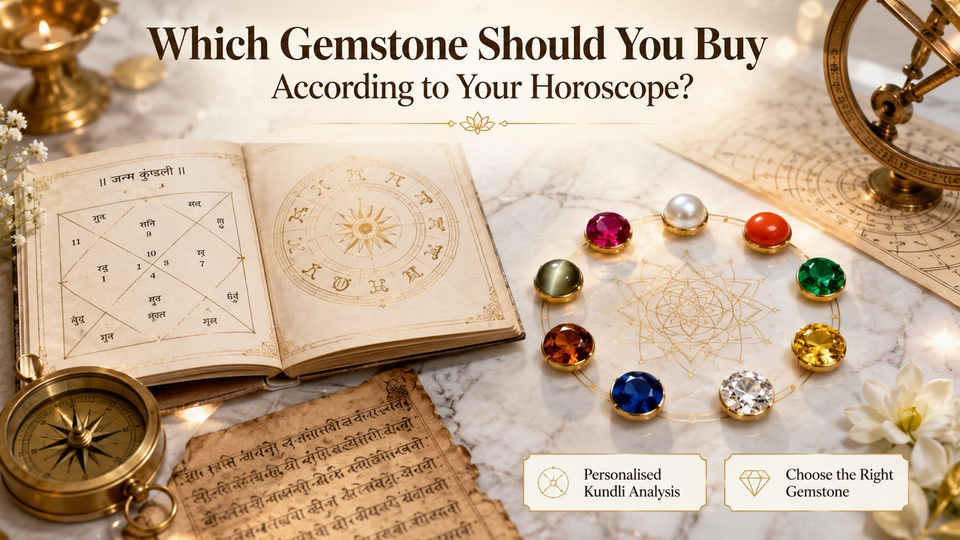
Which Gemstone Should You Buy According to Your Horoscope? | Kundli Guide
Which Gemstone Should You Buy According to Your Horoscope? | Kundli Guide This question gets asked constantly, and it gets answered badly almost as often. Generic birthstone charts match a stone to a birth month. Sun…
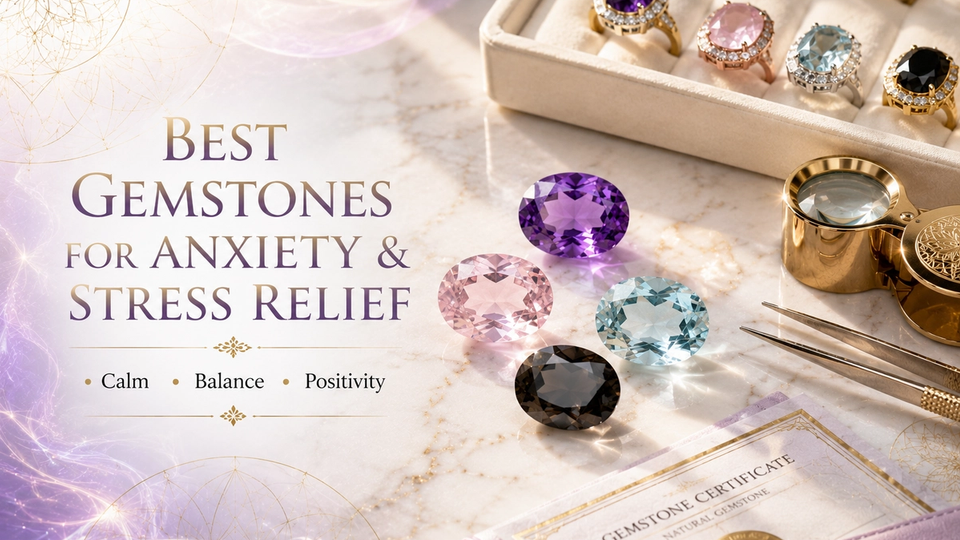
A Personal Look at the Best Gemstones for Anxiety and Stress Relief
A Personal Look at the Best Gemstones for Anxiety and Stress Relief Let's be straight about something before anything else. A stone isn't a therapist. It won't ask what happened in your childhood. It won't do the…
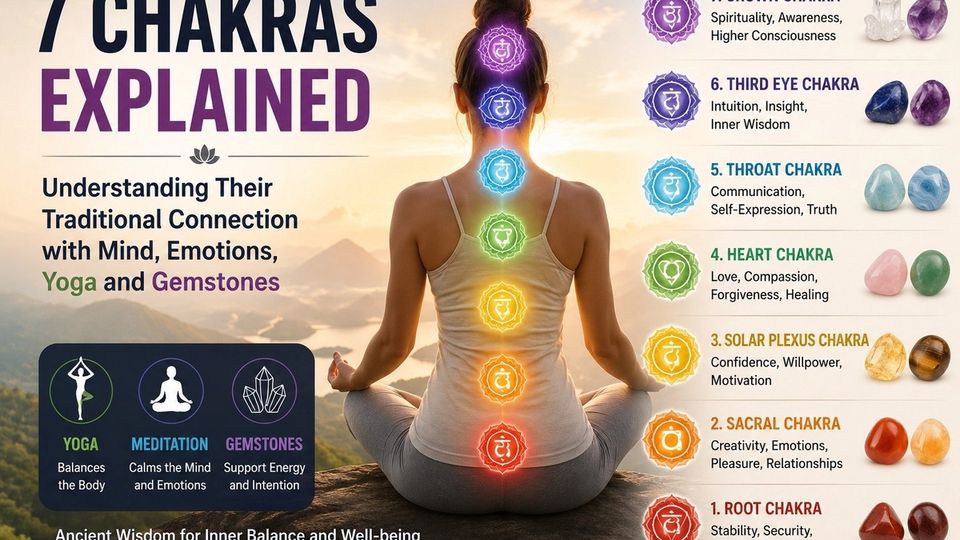
7 Chakras Explained Understanding Their Connection with Mind Emotions and Yoga
7 Chakras Explained: Understanding Their Traditional Connection with Mind, Emotions and Yoga According to yogic philosophy, humans exist as far more than their physical form. Many ancient cultures believe in multiple…
Comments
Checking account…
Loading…